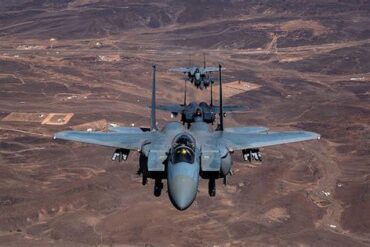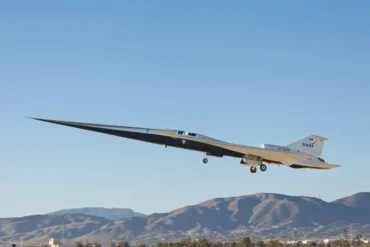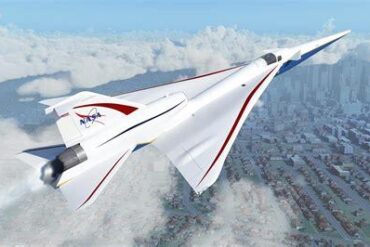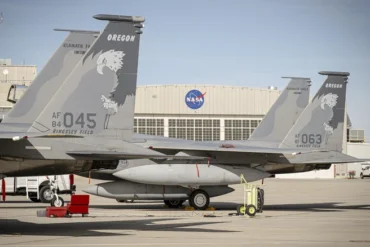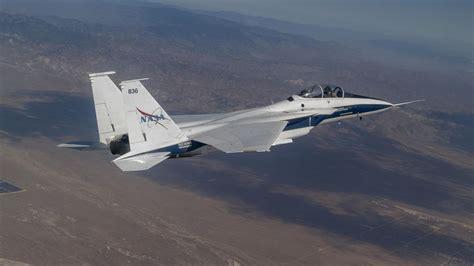
High above the Mojave Desert, a pair of NASA F-15 research aircraft recently took to the skies in a mission-critical operation to validate sophisticated instrumentation built to capture and analyze the shock waves produced by the agency’s X-59 Quiet SuperSonic Technology (Quesst) aircraft. These flights, conducted in May, mark a pivotal phase in NASA’s ongoing endeavor to enable commercial supersonic travel over land by minimizing the disruptive effects of sonic booms.
The campaign, carried out by NASA’s Schlieren, Airborne Measurements, and Range Operations for Quesst (SCHAMROQ) team, is more than just another flight test series. It is the culmination of years of engineering innovation, turning legacy military aircraft into finely tuned scientific instruments.
Transforming Tactical Fighters into Precision Research Platforms
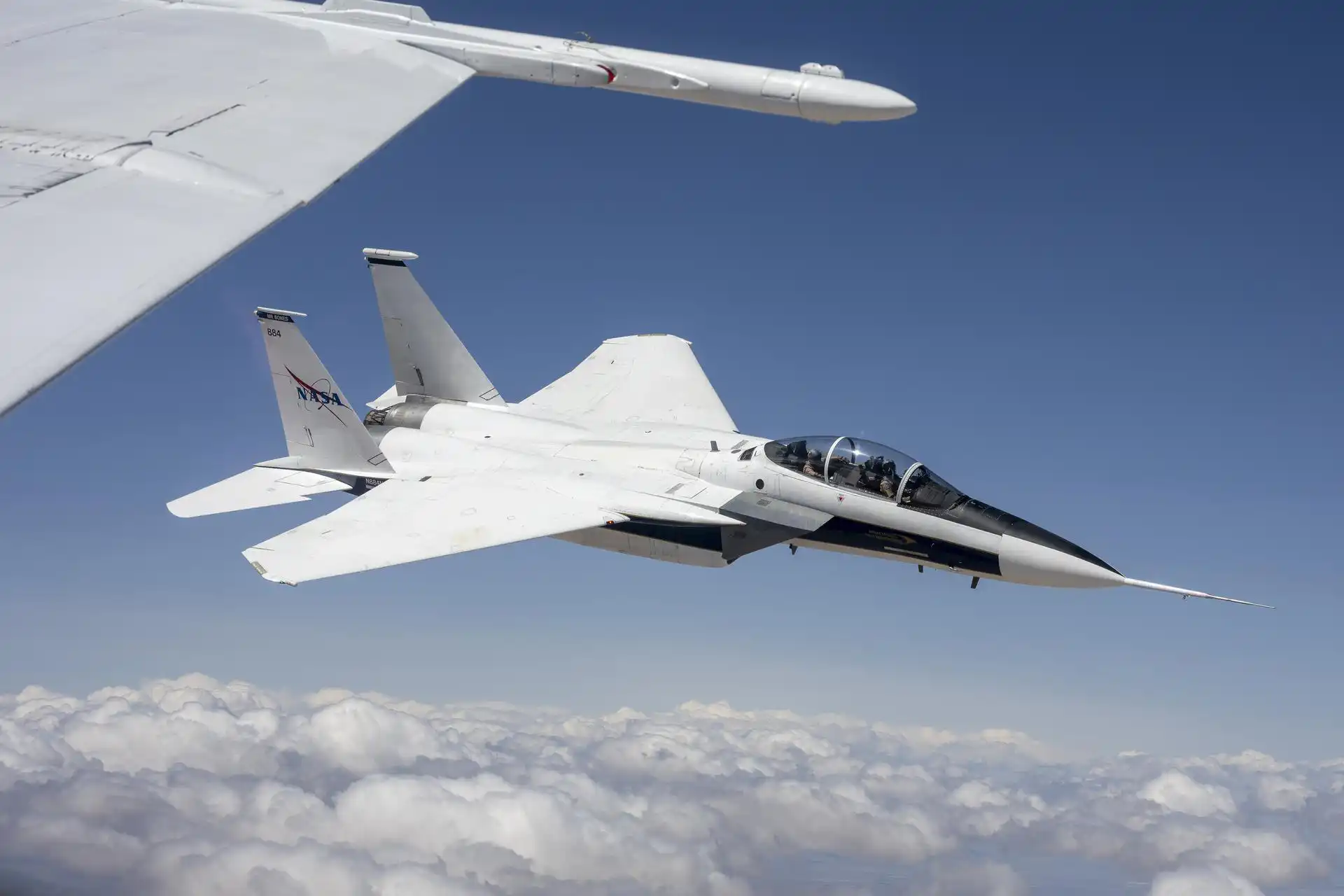
When the F-15D, a twin-seat tactical jet from the U.S. Air Force, arrived at NASA’s Armstrong Flight Research Center in Edwards, California, it lacked the instrumentation necessary for scientific research. It was a warplane—without telemetry, high-definition video systems, or even basic data acquisition capability. NASA engineers transformed it from a combat-ready fighter into a high-end research platform equipped with custom-designed tools.
The F-15D, now fully instrumented, works in concert with its sibling, the F-15B, a more versatile platform long used at Armstrong for pilot training and experimental payload testing. These two aircraft formed the backbone of the dual-ship flight tests critical to the Quesst mission.
Validating the Triad of Shock-Sensing Tools
The dual F-15 campaign focused on three cornerstone systems:
- Near-Field Shock-Sensing Probe – Mounted on the nose, this device directly measures the pressure variations created by shock waves in supersonic flight.
- Airborne Location Integrating Geospatial Navigation System (ALIGNS) – A pilot-assist navigation system that ensures optimal aircraft alignment for measurements.
- Airborne Schlieren Photography System (ASPS) – A handheld, high-speed camera rig used to visualize air density changes, revealing shock waves in flight.
Each of these tools plays a specific role in the upcoming X-59 campaign, which will involve chasing and imaging the aircraft at Mach 1.4 and altitudes exceeding 50,000 feet.
Simulated Supersonic Scenarios: Flying Faster Than Sound
The May flights were far from symbolic. The F-15s accelerated beyond Mach 1 to replicate the aerodynamic environment the X-59 will encounter. In the dual-ship formation, both aircraft carried the near-field probes and cross-collected data from each other’s shock waves. This allowed for direct validation under real-world flight dynamics.
Each aircraft played a distinct role. The F-15D acted as the primary sensor platform, while the F-15B provided backup support and testing redundancy. The use of two aircraft enabled simultaneous collection of synchronized data streams, improving the fidelity of validation and providing the necessary dataset for the X-59 mission calibration.
ALIGNS: The Unsung Hero of Supersonic Precision
In supersonic flight, precise positioning is paramount. Enter ALIGNS, NASA’s custom-developed software tool, which uses real-time GPS telemetry from both aircraft to guide pilots into exact geometries. The system runs on ruggedized tablets mounted in the cockpit and delivers continuous feedback, ensuring each aircraft is in the correct location for either shock-sensing or schlieren imaging.
“ALIGNS acts as a guidance system for the pilots,” explained Troy Robillos, the lead engineer behind the software. “It shows them where to position the aircraft to either probe a shock wave at a specific point or to get into the correct geometry for schlieren photography.”
With shock-sensing, small misalignments can skew data; with schlieren, even the sun’s position becomes a factor.
Schlieren Photography: Capturing the Invisible
The ASPS is a marvel of applied physics. Using a method known as schlieren imaging, it can make visible the otherwise invisible: the compressions and rarefactions in air density created by shock waves. These photographic sequences require one vital element—the sun. The photographer must manually aim the camera through the cockpit’s side window at the sun, while the target aircraft flies through a 100-foot-wide alignment corridor.
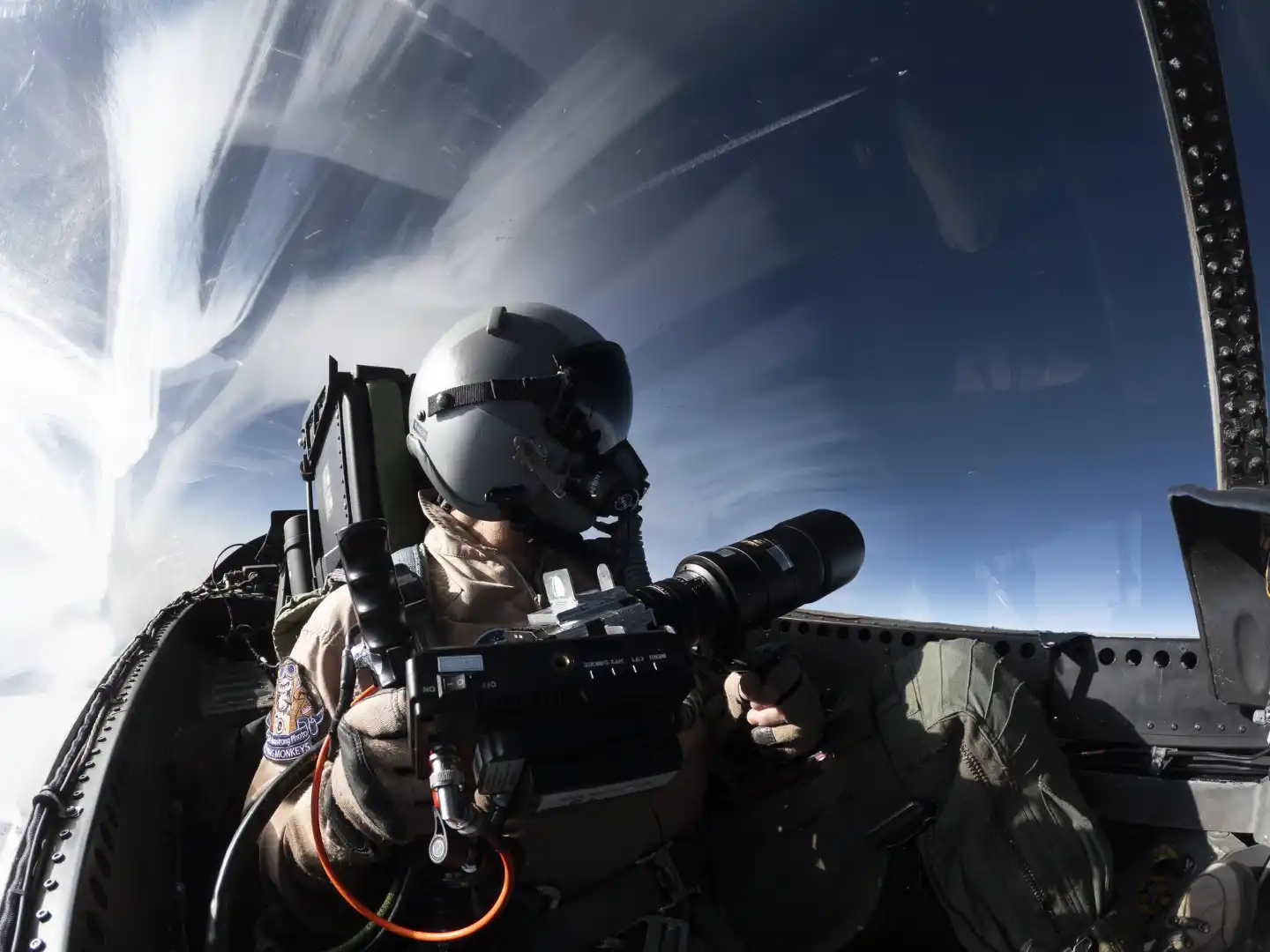
The setup is difficult to execute. “It’s like trying to take a photo through a straw while flying supersonic,” said Robillos. The tiniest deviation from center alignment can blur the shot or render it unusable. To combat this, NASA conducts multiple passes, each an exercise in both pilot skill and scientific discipline.
Graduation Day for Research Integration
NASA’s Cheng Moua, engineering project manager for SCHAMROQ, compared the validation campaign to a graduation exercise. “It brings all the pieces together in their final configuration and proves that they will work.”
The tools and techniques developed—hardware, software, and procedural—are not just placeholders. They represent the operational foundation for real-time shock wave analysis of the X-59, a jet specifically engineered to eliminate the sonic boom. Instead of the thunderous crack traditionally associated with supersonic flight, the X-59 aims to produce a barely audible sonic “thump.”
Why These Tools Matter for Supersonic Travel
While traditional supersonic aircraft generate disruptive sonic booms that restrict overland flight paths, the X-59 is poised to rewrite that rulebook. If NASA can prove through validated data that the X-59 produces only a soft thump, it could lead to regulatory shifts enabling quiet supersonic commercial flight over populated areas.
Here’s why each tool validated by the F-15s is critical:
- Shock-Sensing Probe: Confirms theoretical pressure predictions, validating computer models and X-59 design features.
- ALIGNS: Ensures pilots can fly with centimeter-level accuracy, enabling data reproducibility.
- ASPS (Schlieren): Provides visual proof of airflow phenomena not easily captured through other means.
These tools also cross-validate each other. The pressure probe data is correlated with schlieren imagery, which is geometrically validated through ALIGNS data.
Paving the Way for X-59’s First Flight
All systems are now in place for the next phase of the Quesst mission. When the X-59 takes flight, the F-15D will follow it, equipped with the near-field probe, capturing minute pressure differences that define its shock wave signature. Simultaneously, pilots and photographers will use ALIGNS and ASPS to align for and record critical visual data.
These early validation flights are not only a technical milestone; they also embody NASA’s forward-thinking approach to aerospace research. The seamless transformation of two legacy aircraft into synchronized supersonic research instruments represents a triumph of systems engineering, interdisciplinary collaboration, and scientific rigor.
Conclusion: Quesst Takes One Giant Leap Toward Supersonic Future
The successful validation of shock-sensing tools aboard NASA’s F-15 aircraft is a resounding affirmation of the readiness for the X-59’s upcoming supersonic tests. As the centerpiece of the Quesst mission, the X-59 is expected to become the most thoroughly analyzed supersonic aircraft ever flown.
Armed with these tools, NASA stands at the threshold of a transformative chapter in aviation history—quiet supersonic travel that could redefine both commercial flight and regulatory landscapes.
Through meticulous testing, refined instrumentation, and engineering precision, NASA’s Quesst mission edges ever closer to unlocking the skies for a new era of high-speed, overland air travel—without the boom.