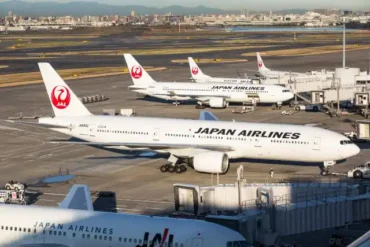
Japan Airlines has imposed a rare executive-level accountability measure after a cabin crew alcohol-related incident disrupted operations and prompted regulatory scrutiny. The airline announced that CEO Mitsuko Tottori will take a temporary 30% salary reduction following an investigation into cabin crew members who breached company alcohol policies during a layover. The decision has attracted attention across the aviation industry, not only because of the operational disruption involved, but because it highlights an increasingly important question in airline governance: should senior leadership be held financially responsible for frontline compliance failures?
The incident originated from a routine pre-flight alcohol screening conducted before a domestic Japan Airlines service. One flight attendant assigned to operate Flight JL252 between Hiroshima Airport and Tokyo Haneda Airport tested positive for alcohol and was immediately declared unfit for duty. As a result, the airline was forced to find a replacement crew member at short notice, causing a departure delay of approximately 40 minutes.
The event quickly escalated beyond a single failed alcohol test. An internal investigation later determined that two flight attendants had consumed alcohol during a layover period in excess of company limits. While the drinking occurred before the day of departure, investigators concluded that the crew members had violated Japan Airlines’ established fitness-for-duty policies.
Safety Compliance Failure Leads To Operational Disruption
In commercial aviation, alcohol-related violations are treated with exceptional seriousness. Airlines worldwide enforce strict rules governing alcohol consumption before duty because even minor impairment can affect judgment, reaction times, communication, and overall operational safety. Japan’s aviation sector is particularly stringent, with routine alcohol testing forming a standard part of pre-flight procedures.
The Hiroshima-to-Tokyo service affected by the incident is part of one of Japan Airlines’ most important domestic corridors. Haneda Airport serves as the carrier’s primary domestic hub, handling significant passenger volumes every day. Any disruption on these high-frequency routes creates operational challenges that extend beyond a single flight.
The failed alcohol screening effectively demonstrated that the airline’s detection systems functioned as intended. However, the subsequent investigation revealed deeper concerns regarding compliance with existing policies. Rather than being viewed as an isolated incident involving one employee, the event exposed a broader issue involving crew conduct during layovers and raised questions about whether current monitoring procedures were sufficient.
For airlines operating under intense public scrutiny, even a relatively short delay can evolve into a reputational issue when safety compliance becomes part of the story. That reality likely influenced the scope and severity of Japan Airlines’ response.
Why The CEO Accepted A 30% Salary Reduction
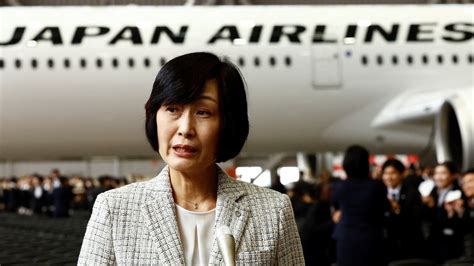
The most notable aspect of the airline’s response was the decision to extend accountability beyond the employees directly involved. CEO Mitsuko Tottori accepted a 30% salary reduction for two months, while several other senior executives also agreed to temporary pay cuts.
Safety manager Yukio Nakagawa and cabin services manager Junko Nakano each received a 20% salary reduction for one month. Other directors accepted a 10% reduction during the same period. Collectively, the measures signal that Japan Airlines views safety oversight as a shared responsibility rather than solely an individual matter.
This approach reflects a management philosophy frequently seen in Japan’s corporate culture, where senior leaders often accept responsibility for failures occurring under their supervision. The principle extends beyond identifying individual wrongdoing and instead focuses on whether organizational systems, training, oversight, and corporate culture adequately prevented the incident from occurring.
For Mitsuko Tottori, the decision carries additional symbolic weight. Tottori became the first female CEO in Japan Airlines history after joining the company as a flight attendant in 1985. Her career progression from cabin crew member to chief executive has made her one of the most prominent figures in the global airline industry.
By voluntarily accepting a substantial pay reduction, Tottori reinforces a message that accountability must extend throughout every level of the organization, including the executive suite.
New Alcohol Restrictions For More Than 6,000 Flight Attendants
Japan Airlines has paired disciplinary action with significant policy changes. The airline announced stricter alcohol rules affecting more than 6,000 flight attendants across its network.
The revised policy effectively removes ambiguity surrounding layover alcohol consumption. While previous regulations focused on limits and timing restrictions, the updated approach tightens controls considerably and strengthens enforcement mechanisms designed to prevent similar incidents in the future.
The airline’s response demonstrates a common pattern in aviation safety management. When a compliance breach occurs, carriers typically avoid relying solely on punishment. Instead, they seek to identify procedural weaknesses and implement corrective measures that reduce future risk.
The goal is not simply to address a single event but to strengthen the entire safety framework surrounding operational personnel.
Government Reprimand Increases Pressure On The Airline
The incident also drew attention from Japan’s transport ministry, which formally reprimanded Japan Airlines and required the carrier to submit preventive measures addressing compliance shortcomings.
Regulatory involvement raises the stakes considerably for airlines. Aviation authorities expect carriers to maintain robust systems capable of identifying and preventing safety risks before they affect operations. When violations occur, regulators often focus on whether existing oversight mechanisms were effective enough to detect warning signs.
For Japan Airlines, the ministry’s intervention adds another layer of scrutiny. The carrier must now demonstrate that its revised policies, monitoring procedures, and training programs are sufficient to prevent future violations.
Industry observers have noted that the airline’s rapid and highly visible response may help reassure regulators and passengers alike that the issue is being addressed comprehensively.
Japan Airlines Continues Major Fleet And Network Expansion
The controversy arrives during a period of significant growth and modernization for Japan Airlines. The carrier currently operates a fleet of roughly 150 aircraft spanning both Airbus and Boeing families and remains one of Asia’s most influential airline groups.
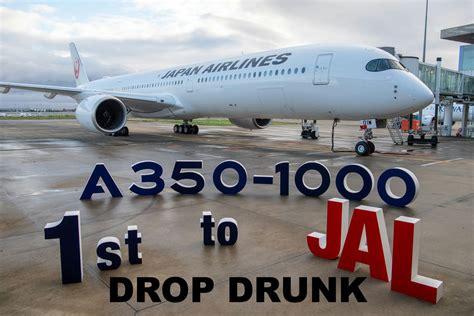
Its long-haul strategy increasingly revolves around the Boeing 787 Dreamliner and Airbus A350 families. The flagship Airbus A350-1000 is gradually replacing the Boeing 777-300ER on premium international routes, offering improved fuel efficiency, enhanced passenger comfort, and lower operating costs.
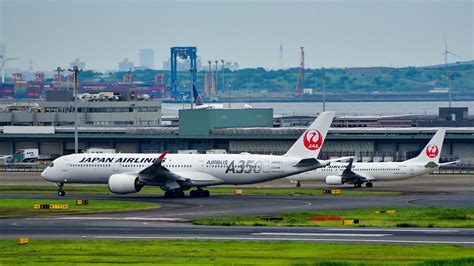
Domestically, the airline continues to depend heavily on Boeing 737 aircraft and Airbus A350-900 jets to support one of the world’s busiest domestic aviation networks. Strong passenger demand has fueled impressive financial performance, with the JAL Group reporting annual revenue exceeding $12 billion and carrying more than 46 million passengers during the latest financial year.
Looking ahead, Japan Airlines remains committed to a large-scale fleet renewal program involving Airbus A321neo aircraft, additional A350 variants, and Boeing 737 MAX 8 jets. These investments are designed to improve efficiency, reduce maintenance costs, and standardize operations across the network.
While the alcohol-related incident represents a temporary setback, the airline’s aggressive response underscores the importance of safety culture in modern aviation. The decision to impose financial consequences on senior leadership may ultimately become one of the most discussed aspects of the case, serving as a high-profile example of how accountability is increasingly being defined in the airline industry.