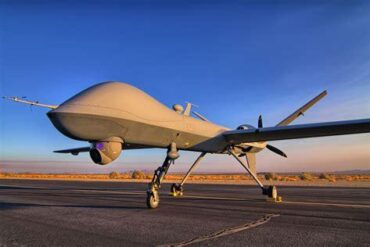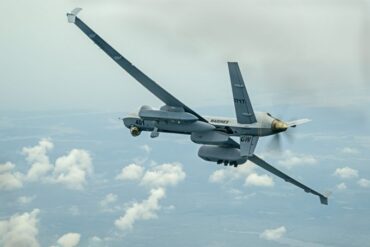
A JetBlue flight from New York City to Puerto Rico faced an unexpected aerial delay due to a military drone mishap on the runway of Rafael Hernández Airport (BQN). Flight B6 2839, operating on January 1, was placed into a 20-minute holding pattern above Bahía de Aguadilla, after a disabled MQ-9 Reaper—a U.S. Air Force drone—rendered the airport temporarily inaccessible.
Military Drone Incident Forces Commercial Holding Pattern
The JetBlue Airbus A320, tail number N794JB, departed from John F. Kennedy International Airport at 11:07 PM, already over an hour behind its scheduled time of 9:50 PM. Despite the late start, the southbound journey to Puerto Rico’s second-busiest airport proceeded smoothly—until it reached Aguadilla airspace.
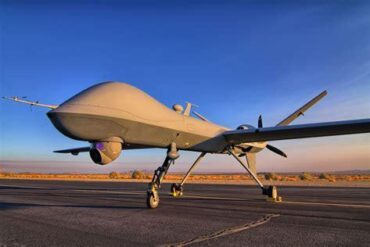
According to @r4streando on social media platform X, the aircraft was forced into a circular holding pattern over water, a maneuver used to keep planes safely airborne when landing is not immediately possible. The cause: a damaged MQ-9 Reaper, referred to by callsign SPARK21, was disabled and stuck on the runway.
After circling for about 20 minutes, the JetBlue aircraft was finally cleared to land. The touchdown occurred at 3:41 AM, culminating in a three-hour and 34-minute flight. The delay, while relatively minor, highlights the increasing interplay—and occasional conflict—between military and commercial aviation operations.
Rafael Hernández Airport: A Dual-Purpose Hub with Strategic Importance
Rafael Hernández Airport, located in Aguadilla, serves both civilian and military functions. With the longest runway in the Caribbean—spanning over 11,700 feet—it accommodates large aircraft for both passenger and cargo operations. The airport is a base for U.S. Customs and Border Protection, Coast Guard, and other defense-related activities.
Passenger service includes flights from:
- JetBlue (New York JFK, Fort Lauderdale, Orlando)
- Frontier Airlines (Miami, Orlando)
- United Airlines (Newark)
The facility is also a significant cargo gateway, utilized by:
- FedEx Express & FedEx Feeder
- Emirates SkyCargo
- Ameriflight
- Air Cargo Carriers
This blend of commercial and defense operations makes coordination essential—particularly in scenarios like the one involving the MQ-9 Reaper.
What Is the MQ-9 Reaper and Why Was It There?
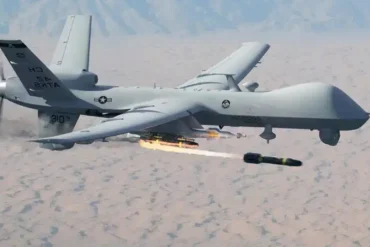
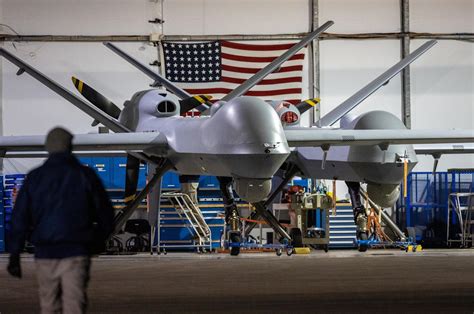
The MQ-9 Reaper is an armed, medium-altitude, long-endurance remotely piloted aircraft (RPA) used by the U.S. Air Force. Capable of performing intelligence, surveillance, reconnaissance, and precision strike missions, it is remotely operated by pilots thousands of miles away via satellite feed.
Originally activated in 2007 by the 432nd Wing at Creech Air Force Base, the Reaper has seen combat deployment in Iraq and Afghanistan. It can be equipped with Hellfire missiles or laser-guided bombs, making it a formidable tool in modern asymmetric warfare.
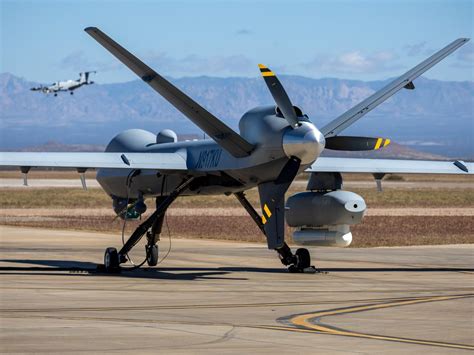
Although details remain sparse about what exactly occurred on January 1, it’s confirmed that the drone was disabled on the active runway, effectively closing BQN to incoming traffic. Whether the incident was the result of a mechanical issue, operator error, or environmental factors is yet to be disclosed by the U.S. Air Force.
Passenger Experience: A Minor Inconvenience with Larger Implications
Passengers onboard flight B6 2839 were unaware of the exact nature of the delay until after landing. The holding pattern, while relatively short, exemplifies how military presence at civilian airports can directly impact commercial flight operations. No injuries or emergencies were reported, and disembarkation proceeded normally once the aircraft was safely on the ground.
JetBlue has not yet issued a public comment regarding the delay or any potential coordination challenges with military authorities. The aircraft in question, a 14-year-old Airbus A320, swiftly returned to New York as flight B6 2838, departing at 6:01 AM and landing at 8:55 AM, demonstrating operational resilience despite the disruption.
A Growing Intersection Between Civilian and Military Aviation
Incidents like this are becoming increasingly common as the skies grow more congested and military assets expand operations in and around civilian airfields. Puerto Rico’s strategic location in the Caribbean makes it a prime location for U.S. military presence, including operations by Customs, the Coast Guard, and Air Force.
This event mirrors recent aviation headlines, such as a near-miss between a JetBlue A320 and a U.S. military tanker over Curaçao, where the tanker was flying with its transponder off, underscoring broader issues in airspace transparency and coordination.
Regulatory Oversight and the Need for Coordination
Civil aviation authorities, including the Federal Aviation Administration (FAA) and Puerto Rico Ports Authority, will likely review the events surrounding the MQ-9 incident to ensure smoother handling of future joint-use conflicts. Questions remain:
- Was there advance notice given to air traffic controllers about potential military use of the runway?
- Did the disabled drone present a risk to other aircraft or ground operations?
- What emergency protocols were initiated to clear the runway in a timely manner?
The answers to these will determine not just accountability but also whether infrastructure investments or operational changes are necessary at joint-use airports like BQN.
Conclusion: A Brief Delay, But a Wake-Up Call
While a 20-minute delay may seem minor, its cause—a disabled military drone—raises critical questions about the fragile balance between military and civilian aviation operations. With Puerto Rico serving both strategic military and logistical commercial purposes, such incidents spotlight the urgent need for synchronized airspace and runway management protocols.
The JetBlue flight landed safely, passengers went on their way, and the aircraft returned to service without issue. But behind the scenes, this delay reveals a larger narrative—one where defense priorities and public transportation are interwoven in increasingly complex ways.
As military technologies like the MQ-9 Reaper become more embedded in domestic operations, so too must the infrastructure, communication protocols, and regulatory oversight evolve to prevent future airspace conflicts.