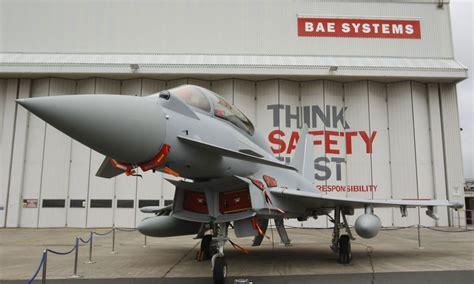
The UK’s ability to produce world-class military aircraft is under mounting scrutiny as production of the Eurofighter Typhoon at BAE Systems’ Warton facility in Lancashire effectively comes to a standstill. This development has sparked a fierce national security debate, with union leaders warning the Labour government of the critical risks posed to British defence capabilities.
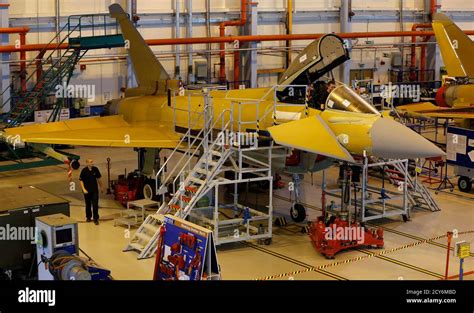
The final Typhoon jet, part of a £5 billion order from Qatar secured in 2017, is now languishing inside the Warton plant, awaiting a few final components and painting. Once this aircraft is delivered, the historic assembly line — a cornerstone of Britain’s aerospace defence manufacturing — will fall silent for the first time in decades.
Union Leaders Sound the Alarm on Defence Industry Decline
Sharon Graham, the outspoken General Secretary of Unite, has delivered a sharp rebuke to Labour ministers, accusing them of failing to safeguard British defence jobs, innovation, and industrial sovereignty. Graham’s concerns reflect fears that the UK is sleepwalking into a strategic vulnerability by neglecting domestic fighter jet production.
“Workers at BAE and across the UK defence industry will be asking how a government promising to turn defence spending into ‘British growth, British jobs, British skills, British innovation’ could let this happen,” Graham warned.
Her comments underscore a deepening anxiety within defence circles that halting Typhoon production could result in a catastrophic loss of critical aerospace skills. Once lost, such expertise is notoriously difficult — and costly — to regenerate, leaving future defence programmes exposed.
Britain’s Waning Commitment to Indigenous Fighter Jet Manufacturing
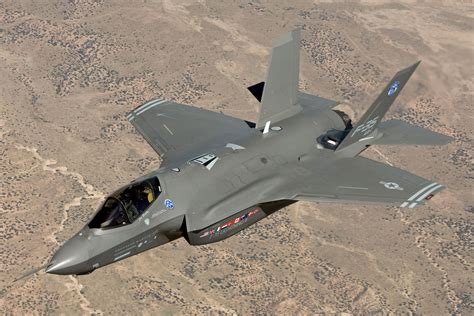
The UK government has not placed a domestic order for new Typhoons since 2009, instead pivoting towards purchasing American-made F-35A fighter jets, a decision that has drawn controversy. Defence Secretary John Healey recently confirmed to Parliament’s defence select committee that Britain plans to acquire 27 F-35s, with initial deliveries expected by the decade’s end.
This order includes 12 F-35As, a cheaper, conventional take-off variant capable of carrying tactical nuclear weapons — a feature some argue reinforces the UK’s NATO commitments but further sidelines British aerospace manufacturing.
In contrast, all other nations in the pan-European Typhoon consortium — including Germany, Italy, and Spain — have placed fresh orders for upgraded models of the aircraft. These moves aim to sustain production lines and protect high-value technical jobs. The UK’s refusal to follow suit has raised fears that Britain may lose its sovereign capacity to design, assemble, and deliver frontline military aircraft.
Political Fallout and National Security Implications
Conservative MP Andrew Snowden, whose constituency lies close to BAE Systems’ Warton site, has issued a stark warning. “If the government fails to confirm this order soon, we face the very real prospect of losing a vital national capability — the ability to design, assemble, and deliver world-class military aircraft independently,” Snowden declared.
His remarks highlight growing bipartisan concern that Britain’s defence industrial base is eroding at a dangerous pace. Many see maintaining continuous combat aircraft assembly as essential not only for strategic independence but also to preserve thousands of high-skill, high-wage jobs across the country.

Defence analysts echo these warnings. Tim Robinson, editor of the Royal Aeronautical Society’s Aerospace magazine, described the impending production gap as a “temporary blip” between export orders for the Typhoon and the next-generation Global Combat Air Programme (GCAP).
However, Robinson cautioned: “The longer the gap, the more risk there is of a loss of key skills and critical experience that will be needed for next generation fighter aircraft.” In other words, a short production hiatus could evolve into a long-term capability crisis.
Export Hopes vs. Domestic Complacency
While BAE executives remain engaged in negotiations with Qatar, Saudi Arabia, and Turkey over potential Typhoon export deals, no firm agreements have been announced. The lack of guaranteed export orders exacerbates the uncertainty for British aerospace workers, many of whom have built careers around the Typhoon programme.
The Typhoon, developed by a consortium of BAE Systems, Airbus, and Leonardo, has been a mainstay of the Royal Air Force (RAF) since entering service in 2003. RAF Typhoons have played a pivotal role in air defence, NATO operations, and global quick reaction missions.
Despite their proven track record, the government’s preference for U.S.-built jets, coupled with a lack of domestic investment in newer Typhoon variants, raises strategic and economic questions.
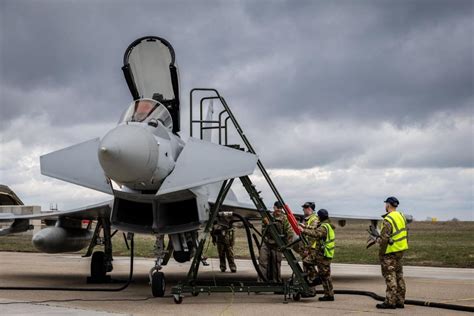
Unite’s Sharon Graham remains resolute in pressing for immediate action, stating, “I have repeatedly told government ministers how much is at risk in terms of jobs, skills, and national security if we stop assembling our own fighter planes.”
Strategic Risk of Losing Aerospace Expertise
The aerospace sector’s complexity demands constant, hands-on experience to maintain a nation’s ability to produce advanced fighter aircraft. The loss of skilled engineers, technicians, and systems integrators during production pauses is not easily reversible.
Industry insiders warn that once these specialised workers move on, they often cannot be enticed back — especially as other nations, including the United States and European allies, ramp up defence recruitment and aerospace investment.
Moreover, Britain’s long-term defence ambitions hinge on the successful development of the GCAP, a sixth-generation stealth fighter designed in partnership with Japan and Italy. But without an unbroken production pipeline, critics fear the UK will enter this project at a severe disadvantage.
Conclusion: A Critical Juncture for British Defence Policy
The halt in Typhoon assembly represents more than an industrial slowdown; it signals a potential fracture in Britain’s defence self-reliance. While export negotiations continue behind closed doors, union leaders, defence experts, and politicians alike are calling for urgent domestic orders to bridge the production gap.
Labour, under Prime Minister Keir Starmer, faces mounting pressure to deliver on pledges of “British growth, British jobs, British skills, British innovation” — promises that ring hollow if core defence manufacturing capabilities wither.
The coming months will determine whether the UK recommits to indigenous fighter jet production or further cedes ground to foreign suppliers, with consequences not just for Lancashire’s workforce but for the nation’s long-term security and technological edge.