Leeds Bradford Airport (LBA) stands as Yorkshire’s primary aviation hub, uniquely situated between the two major cities of Leeds and Bradford. With its commanding elevation of 681 feet (208 metres), LBA is not only geographically distinctive, but increasingly vital to the region’s economic and tourism infrastructure. As the 13th busiest airport in the UK, it handled over 4.2 million passengers in 2024, marking an aggressive post-pandemic recovery and positioning itself for a dramatic leap toward its 2030 target of 7 million annual passengers.
Historical Evolution: From Grassland to Global Gateway
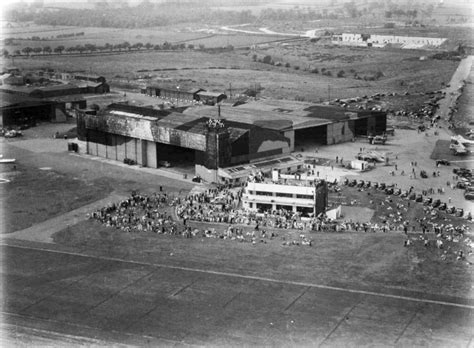
Opened on 17 October 1931 as Leeds and Bradford Municipal Aerodrome, the airport began its journey on a modest 60-acre grassland site. Initial services in 1935 connected cities such as London, Blackpool, and Newcastle, laying the foundation for what would become a vital northern air link. However, World War II dramatically transformed its trajectory.
During the war years, the airfield became home to the Avro shadow factory, one of the most significant wartime industrial sites in Europe. This colossal facility, built just north of the aerodrome, was responsible for producing over 5,500 military aircraft, including iconic models like the Avro Lancaster and Avro York.
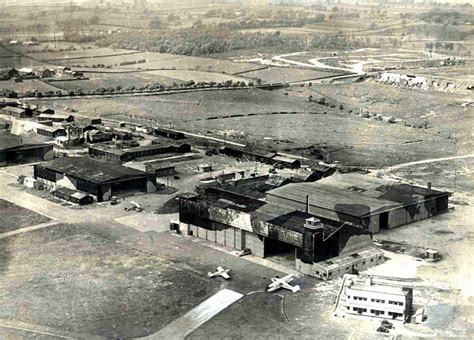
Following the resumption of civil flights in January 1947, the airport gradually expanded. By 1968, a new runway and modern terminal were inaugurated, allowing for more regular services to destinations such as Belfast, Jersey, and Düsseldorf. These infrastructural advancements led to LBA’s designation as a regional airport in the 1980s, following the extension of the runway over the A658 in 1984 — a pivotal move enabling wide-body aircraft to operate more efficiently.
Jet Age and Charter Boom: 1980s to 2000s
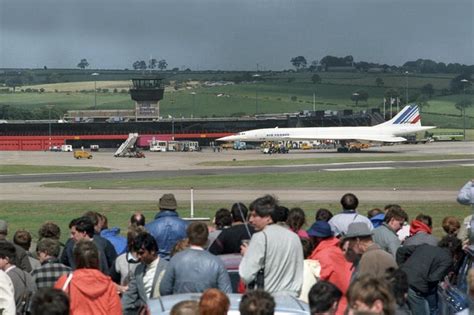
LBA’s charter ambitions took flight with the arrival of Wardair’s transatlantic Toronto services aboard Boeing 747s in the mid-1980s. This same decade saw Air France’s Concorde land at the airport for chartered flights — a glamorous feather in the cap for LBA’s global aspirations.
The airport achieved 24-hour operational status in 1994, prompting a wave of terminal expansions that began in 1996. As air travel surged into the 21st century, LBA witnessed dramatic passenger growth, jumping from 1.25 million in 1997 to 2.9 million by 2007. However, this momentum was not without setbacks. While it briefly hosted Islamabad flights via Shaheen Air, operational inconsistency saw these replaced by Pakistan International Airlines.
Modern Era: Resilience, Recovery and Regeneration
The COVID-19 pandemic marked a turbulent period for LBA, introducing severe operational disruptions and a controversial ‘Preparation Zone’ in the terminal. Staff shortages and extensive security queues followed the pandemic’s wake, earning the airport unfavorable headlines and a critical CAA report for its poor handling of disabled passenger assistance in 2022.
Yet, this adversity has catalyzed a transformation. In 2022, LBA absorbed several Wizz Air and TUI flights following the closure of Doncaster Sheffield Airport, expanding its catchment and solidifying its strategic importance in the north. New Moroccan routes, due in 2024, reflect the airport’s renewed commitment to diversifying its international reach.
LBA:REGEN and Sustainable Growth Plans
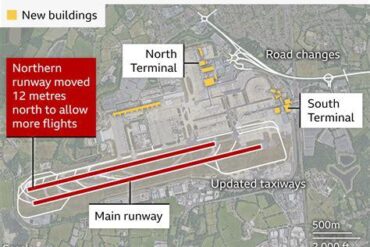
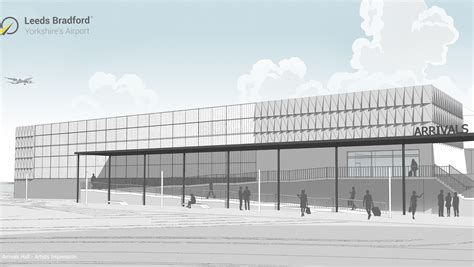
With a clear vision for the future, the LBA:REGEN project, a £100 million redevelopment plan, is currently underway. Scheduled between 2023 and 2026, the scheme includes major terminal expansion, enhanced retail zones, improved passenger accessibility, and upgraded sustainability credentials.
This development follows the 2017 masterplan and a subsequent approval in 2019, positioning LBA as a net-zero ready facility aligned with both local council and national environmental targets. The investment includes upgrades to heating systems, energy-efficient lighting, and modern airfield infrastructure that supports both passenger and cargo operations.
Airport Infrastructure and Operational Capacity
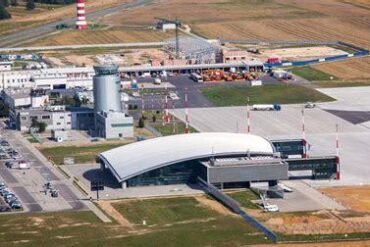
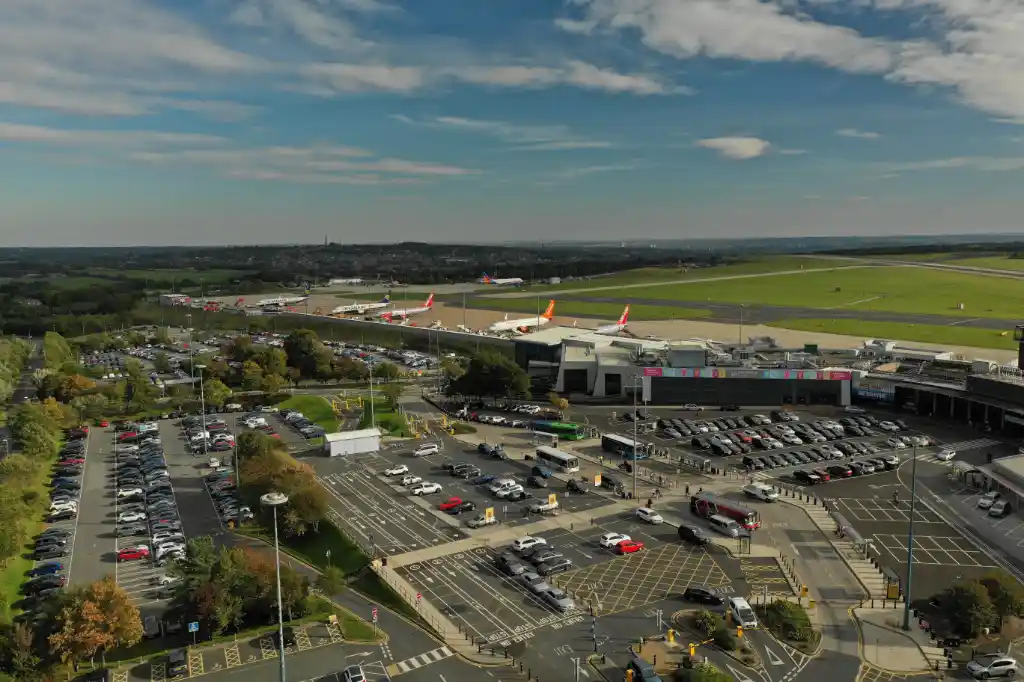
LBA operates with a single 2,250-metre concrete runway (14/32), supported by a compact yet versatile terminal. Despite spatial limitations, the airport features two air bridges, 21 aircraft stands capable of accommodating up to Boeing 757s, and two check-in halls. There are 7,000 car parking spaces spread across short, mid, and long-stay facilities, as well as two dedicated cargo sheds servicing regional freight needs.
Three passenger lounges — including executive and business-class options — provide comfort and exclusivity, while retail offerings continue to grow as part of the LBA:REGEN vision. The airport is also home to Multiflight, a fixed-base operator offering general aviation and flight training services, as well as the Aviation Academy managed by Craven College.
Airlines, Routes and Strategic Bases
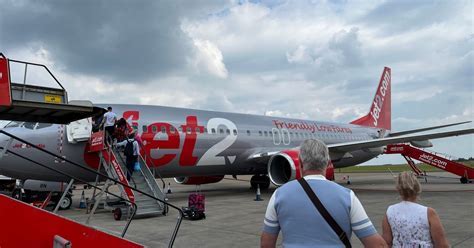
LBA is a principal base for Jet2.com, which accounts for a significant portion of the airport’s European and Mediterranean operations. Ryanair also maintains a growing presence, offering routes across Europe. Other scheduled carriers include:
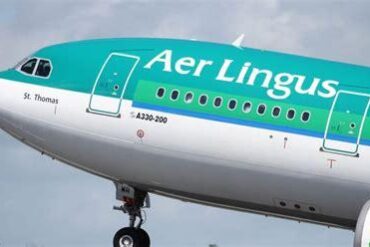
- Aer Lingus – operating services to Dublin and connections to transatlantic flights
- KLM – with Amsterdam as a key hub for international transfer traffic
- TUI, SunExpress and Wizz Air – servicing leisure destinations across southern Europe, Turkey and North Africa
- Aurigny and easyJet – providing additional connectivity
With long-haul flights poised for revival by 2027, LBA’s strategic ambition is to offer a global gateway for Yorkshire, reducing reliance on Manchester and London for intercontinental travel.
Ownership and Governance Transitions
Formerly a publicly owned entity, LBA was sold in 2007 to Bridgepoint Capital for £145.5 million. In 2017, ownership transferred to AMP Capital, under whose stewardship the airport’s modern regeneration plans were conceived and executed. This shift to private ownership has allowed for more agile financial planning and long-term capital investment.
Connectivity and Ground Transport Integration
LBA remains well-connected to the broader West Yorkshire region via Transdev Blazefield’s Flyer bus network, featuring the A1 route to Leeds city centre, A2 to Harrogate and Bradford, and A3 to Otley and Bradford. Despite this, criticism continues over the lack of direct rail access, a factor that hampers seamless intermodal connectivity.
Efforts have been proposed to integrate LBA into the regional rail network, although progress has been slow. Enhanced shuttle services and road upgrades remain a priority in the interim to ease airport access.
Safety Record and Notable Incidents
While LBA has generally maintained a strong safety record, a few incidents remain noteworthy:
- 1985: A British Airtours Tristar overran the runway due to a navigation error; no serious injuries occurred.
- 1995: A fatal crash involving Knight Air’s Embraer EMB 110, which claimed 12 lives following an instrument failure shortly after takeoff.
- 2005: An LTE Airbus A320 experienced brake failure on landing; no injuries.
- 2023: A TUI Boeing 737 overran the runway; again, all passengers were safely evacuated.
These incidents have driven continuous improvements in airfield safety and emergency response protocols.
RAF Yeadon Legacy and Military Role
Before its exclusive civil use, the airport was known as RAF Yeadon, playing a critical role from 1936 to 1957. Hosting 609 Squadron, it functioned as a training and maintenance base throughout the Second World War and beyond. The RAF’s final departure in 1959 marked the full transition to commercial operations.
Challenges and Criticism: A Call for Accountability
Despite its successes, LBA has not escaped scrutiny. The airport exceeded its night-flight allowance by 747 movements during BST 2022, drawing criticism from local authorities and noise pollution activists. Additionally, recurring delays and extensive security queues have led to calls for stronger operational accountability, especially after poor rankings in customer satisfaction surveys.
Disability access was particularly poor in 2022, with the CAA rating LBA among the worst performers in the UK. While recent improvements have been introduced, including staff retraining and equipment upgrades, consistent monitoring remains essential.
The Road Ahead: Yorkshire’s Aerial Future
Leeds Bradford Airport is in the midst of a defining era. Positioned as a northern air gateway, its ambitions to host long-haul services, achieve net-zero status, and double its annual passenger traffic within a decade represent a bold vision. The balance between community accountability, environmental sustainability, and commercial success will determine whether LBA can truly evolve into a world-class facility that meets the needs of both travellers and the region it serves.
As the transformation continues, all eyes are on this elevated platform in West Yorkshire — one that has lifted wartime bombers, Concordes, and charter dreams alike — to now soar into a future where Leeds Bradford Airport is no longer a secondary alternative, but a first-choice international hub.