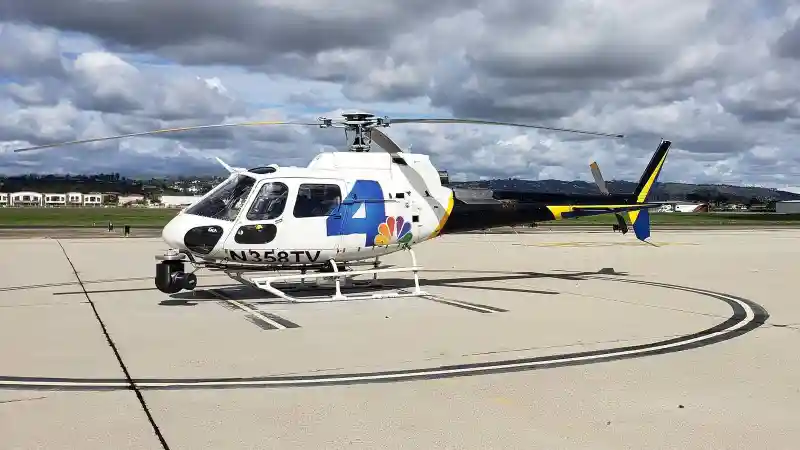
A news helicopter covering a deadly traffic collision in Los Angeles crashed shortly before 7:00 p.m., killing three people and leaving two others hospitalized. The Eurocopter AS350 B2, operated by Angel City Air for NBC 4 and Telemundo 52, went down in a commercial area of Chatsworth on Tuesday evening while its crew was providing aerial coverage of the incident.
Those killed included KNBC-TV aerial journalist Eliana Moreno and pilot George Marciniw, who were the only two people aboard the helicopter. A third person on the ground also died in the crash. The aircraft came down in a parking area near North Mason Avenue, where the impact ignited nearby vehicles and created a fire that firefighters subsequently brought under control.
The crash has drawn particular attention because video and audio transmitted from the helicopter captured its final moments in the air. The recording begins with aerial coverage of the fatal collision involving a Metro bus and an SUV, but the situation changes rapidly as the helicopter begins losing altitude. Several alarms can be heard, followed by Moreno asking, “You can’t pull up?” before the recording ends.
NTSB says it is investigating the Sept. 15 crash of the Eurocopter AS 350 B2 news helicopter in Chatsworth, California. pic.twitter.com/qn6cA0kgHJ
— Breaking Aviation News & Videos (@aviationbrk) September 16, 2026
What the Final Video Shows Before the Helicopter Crash
The footage provides an unusually direct record of the aircraft’s final moments, but it does not reveal what caused the emergency. As the helicopter continues its aerial assignment, the camera view remains focused on the traffic collision below. The aircraft then appears to descend, while warning sounds become audible in the background.
Moreno’s question has become one of the most striking elements of the recording because it indicates that the crew was dealing with an apparent loss of altitude or aircraft performance. However, the words alone cannot determine what was happening mechanically or aerodynamically. A helicopter that cannot maintain altitude can be affected by numerous factors, including engine performance, rotor-system issues, flight controls, weight and environmental conditions, or other system failures.
The recording therefore provides investigators with valuable timing information rather than an immediate explanation. The sounds captured on the transmission may help investigators determine which warning systems were active, while the conversation can help establish what the crew perceived during the emergency. The distinction is important: the video documents what happened immediately before impact, but it does not establish why it happened.
Witnesses Describe the Helicopter Losing Altitude
People on the ground also reported seeing the aircraft behaving unusually before it disappeared behind nearby buildings. One witness told NBC Los Angeles that the helicopter appeared to be swaying before gradually descending. He continued watching as it lost altitude until nearby structures blocked his view, after which he saw smoke and fire.
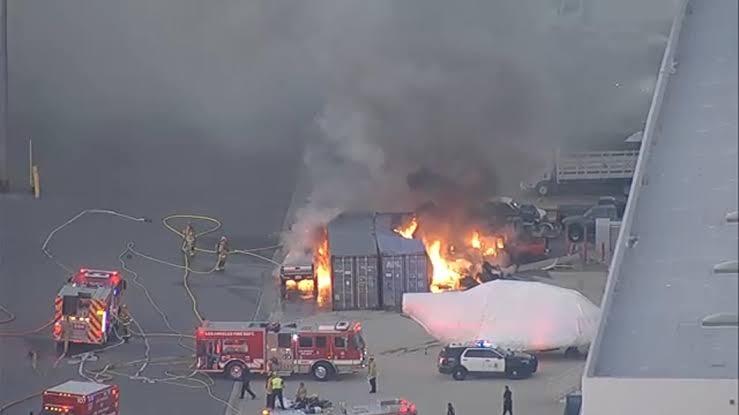
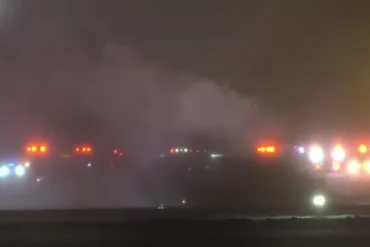
The helicopter ultimately crashed into a parking area between commercial buildings on North Mason Avenue, striking storage containers and setting nearby vehicles on fire. Firefighters responded to the scene and contained the resulting blaze. The surrounding buildings were not struck, limiting the extent of the ground damage despite the aircraft coming down in a commercial area.
The crash occurred only a short distance from the traffic collision the crew had been covering. Moreno and Marciniw had been working together since 2023 and had accumulated hundreds of hours flying together during coverage of major Southern California news events, including wildfires, police pursuits and breaking-news incidents.
That experience makes the circumstances particularly significant for investigators, although experience alone cannot establish what happened during the final flight. The investigation must reconstruct the aircraft’s condition and the crew’s actions second by second.
NTSB and FAA Investigate the Los Angeles Helicopter Crash
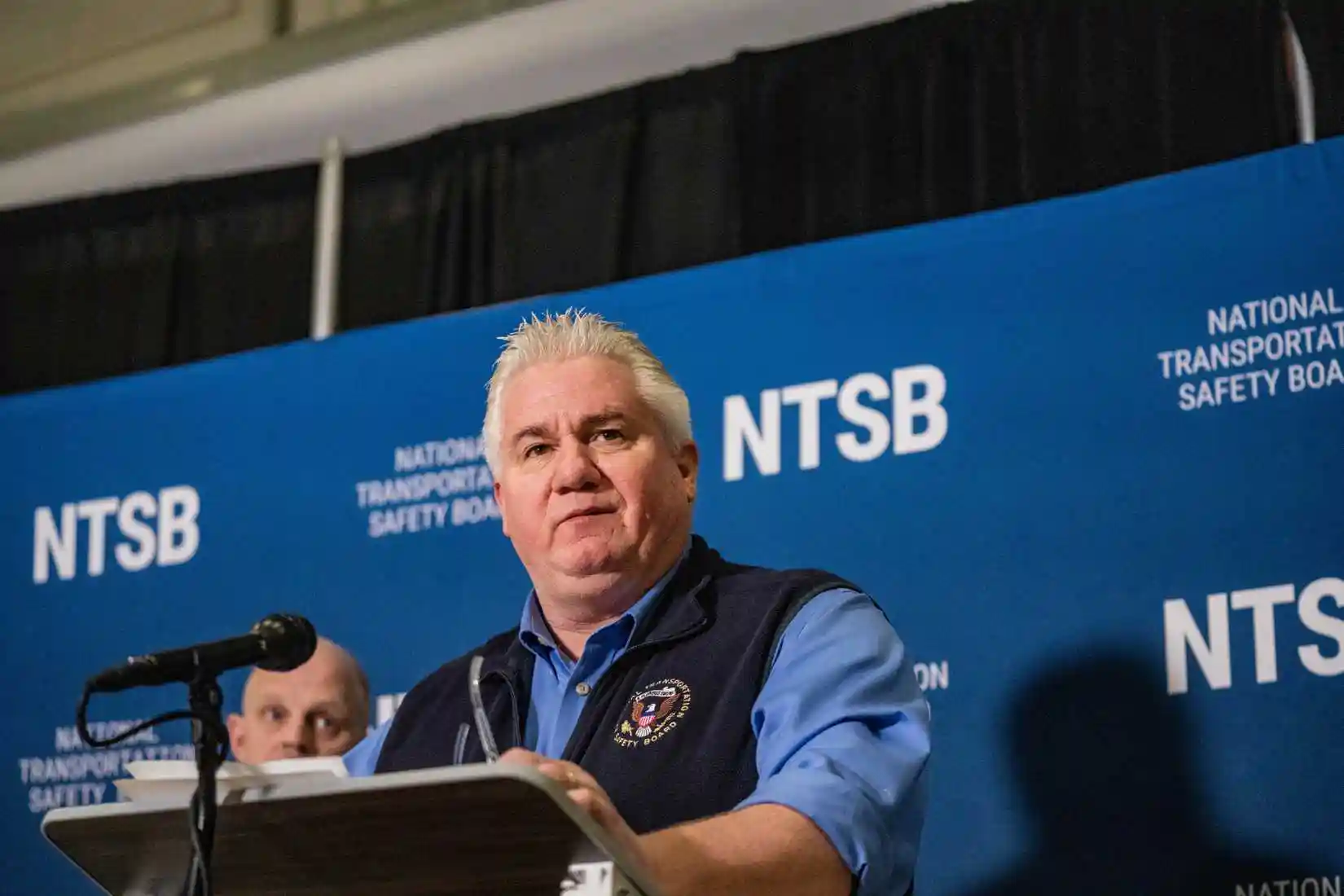
The National Transportation Safety Board (NTSB) is leading the investigation, with the Federal Aviation Administration (FAA) also involved. Investigators are expected to examine the wreckage alongside the helicopter’s maintenance records, operating history, communications, flight path and available aircraft-system information.
The final transmission could become an important component of that reconstruction. Investigators can compare the audible alarms with the helicopter’s systems and determine whether the warning sounds correspond to a known malfunction. They can also examine whether the aircraft’s physical condition supports or contradicts possible explanations suggested by the recording.
Weather and environmental conditions will also form part of the investigation. Even when an aircraft appears to experience a straightforward loss of altitude, determining the initiating event can require analysis of multiple interacting factors. Investigators must establish what changed, when it changed, how the crew responded, and whether the helicopter remained capable of recovering.
Why the “You Can’t Pull Up?” Exchange Matters
Moreno’s final question is likely to remain a central point of public attention because it captures the crew recognizing a serious problem in real time. Yet interpreting the statement too broadly could lead to conclusions that the available evidence does not support.
The question does not prove that the engine failed, nor does it establish that the helicopter suffered a rotor-system malfunction or control problem. It simply demonstrates that, during the final seconds recorded by the transmission, Moreno perceived that the helicopter was descending or was unable to climb as expected.
That distinction will matter as investigators reconstruct the crash. Wreckage evidence, maintenance records, aircraft performance data and communications can provide information that the final video cannot. The NTSB’s eventual findings may determine whether the descent began with a mechanical problem, an operational circumstance, or another factor.
For now, the disturbing recording remains a document of the helicopter’s final moments rather than a definitive explanation of its failure. The loss of Moreno, Marciniw and a person on the ground has turned an ordinary news assignment into a fatal aviation accident, while the investigation continues to determine exactly why the aircraft could not recover from its rapid descent.