The opening weeks of 2026 delivered an unexpected reminder of how quickly scientific misinformation can metastasize online. A viral claim asserted that Earth would temporarily lose gravity for seven seconds in August, triggering global catastrophe while governments quietly shielded elites. The allegation ricocheted across platforms with cinematic confidence, blending scientific jargon, secret projects, and ominous timestamps. The result was predictable: fear traveled faster than facts.
At the center of the claim sat NASA, portrayed as both omniscient and complicit. According to the conspiracy, the agency had known for years that a gravitational anomaly would strike on August 12, 2026, yet chose silence to avoid mass panic. The story’s hook was potent because it borrowed the language of real astrophysics while discarding the rules that govern it. Gravity, however, does not behave like a light switch.
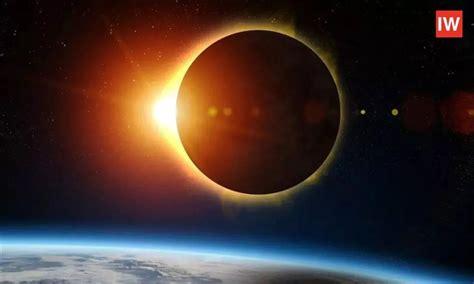
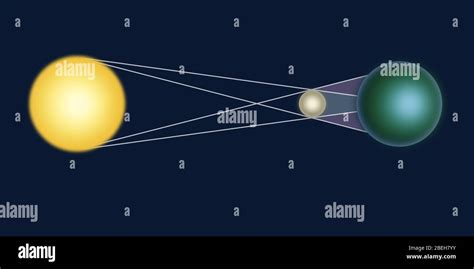
The rumor gained traction precisely because it exploited a genuine celestial event. On August 12, 2026, a total solar eclipse will occur, a predictable alignment of the Sun, Moon, and Earth calculated decades in advance. Eclipses are visually dramatic, emotionally resonant, and scientifically mundane. They offer no mechanism capable of altering Earth’s gravitational hold, yet they provided the perfect backdrop for a narrative primed to alarm.
How the Gravity Loss Conspiracy Took Shape
The conspiracy originated from an Instagram account that published a lengthy warning on December 31, 2025. The post described a supposed NASA initiative named “Project Anchor,” allegedly funded with $89 billion to protect select individuals during a “seven-second gravitational anomaly.” The author claimed leaked documents, predictive models dating back to 2019, and an improbably precise probability figure of 94.7 percent. These details created an illusion of rigor while remaining entirely unverifiable.
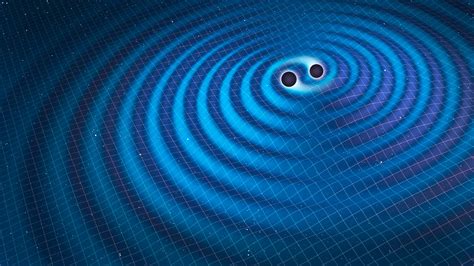
According to the post, two gravitational waves emitted by distant black holes would converge on Earth at exactly 14:33 UTC, canceling gravity worldwide. During those seven seconds, unsecured objects and people would float upward before crashing back down, producing tens of millions of deaths and a decade-long economic collapse. The narrative read like a disaster screenplay, yet it circulated as fact, amplified by reposts, reaction videos, and algorithmic enthusiasm.
Why the Scenario Collapses Under Physics
Gravity is not an environmental condition that fluctuates minute by minute. Earth’s gravity is determined by its mass, the combined total of its core, mantle, crust, oceans, atmosphere, and everything bound to it. For gravity to vanish, Earth would need to suddenly lose a substantial portion of that mass, an event that would itself be planet-ending rather than momentary.
Gravitational waves, while real, are extraordinarily weak by the time they reach Earth. Detected only with instruments of extreme sensitivity, they pass through planets without measurable effect. Even the collision of massive black holes billions of light-years away cannot meaningfully tug on Earth, let alone neutralize gravity. The conspiracy’s core mechanism fails at the most basic level of astrophysics.
NASA’s Direct and Unequivocal Response
As the rumor spread, NASA issued a clear statement dismissing the claim in its entirety. The agency explained that Earth will not lose gravity on August 12, 2026, or on any other date. A total solar eclipse has no unusual impact on Earth’s gravitational force, and the gravitational interactions between Earth, the Moon, and the Sun are well understood, precisely modeled, and entirely predictable.
NASA emphasized a key distinction often lost in viral explanations. While the Moon and Sun influence tidal forces, causing ocean tides to rise and fall, they do not alter Earth’s total gravity. Tides are surface-level effects, not changes to the planet’s fundamental ability to hold itself together. The eclipse is an alignment of shadows and light, not a cosmic stress test.
The Role of Social Media and Synthetic Content
The persistence of the gravity hoax illustrates how modern misinformation ecosystems operate. Even after the original account was deleted, the claim continued to circulate, detached from its source and repeated as hearsay. Short-form video platforms rewarded dramatic delivery over accuracy, while reposts stripped away context with each iteration.
Compounding the problem is the rise of AI-generated content, capable of producing convincing images, documents, and videos that mimic legitimate sources. Fabricated diagrams, fake screenshots, and authoritative-sounding narration can create a false sense of consensus. Once embedded in a viral loop, debunking becomes a slower, quieter process than spreading the myth itself.
Scrutinizing the Messenger, Not Just the Message
Investigations into the account behind the original post revealed a trail of contradictory self-descriptions, ranging from technology professional to psychiatrist to hospice worker. None aligned with aerospace research or planetary science. No credible evidence of “Project Anchor” appeared in reputable media, academic literature, or government records. The absence of corroboration is telling, especially for a project of such alleged scale and cost.
The post also contained internal inconsistencies, including conflicting timelines about when the supposed warning period began. These discrepancies suggest the story was either fabricated outright or repackaged from earlier fringe claims, repurposed to exploit the upcoming eclipse as a deadline.
What Actually Happens on August 12, 2026
On August 12, observers along the eclipse path will experience a brief period of daytime darkness as the Moon passes in front of the Sun. Temperatures may dip slightly, animals may react to the sudden change in light, and skies will offer a rare and awe-inspiring spectacle. Earth’s gravity will remain exactly as it was before, during, and after the event.
The episode serves as a case study in why scientific literacy matters in a hyperconnected world. Extraordinary claims demand mechanisms that obey known laws of nature. When those mechanisms collapse under scrutiny, the narrative deserves skepticism, not shares. The cosmos is already strange enough without inventing disasters that physics itself refuses to support.