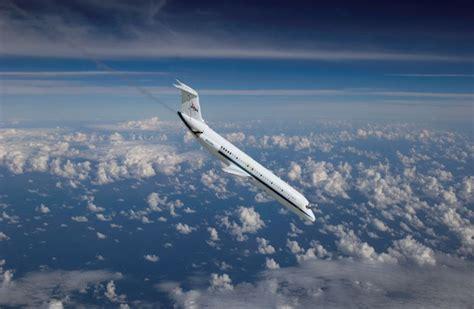
NASA is preparing to end an era. For decades, the agency’s parabolic flight aircraft—famously nicknamed the “Vomit Comet”—has provided one of the most accessible gateways to microgravity research on Earth. Now, with aging airframes and rising maintenance complexity, NASA has formally begun searching for a new platform to carry its zero-gravity flight program into the coming decades. The decision marks more than a routine fleet update. It signals a structural shift in how the United States will sustain one of its most valuable scientific proving grounds.
Parabolic flight occupies a narrow but indispensable niche between ground simulation and orbital launch. During each maneuver, the aircraft arcs upward under high thrust, transitions over the crest, and descends in a controlled trajectory that cancels out gravitational acceleration. The result: approximately 20 seconds of weightlessness per parabola. Multiply that across 15 to 40 parabolas per flight, and researchers can accumulate more than 10 minutes of microgravity exposure in a single sortie. For experiments that demand real fluid behavior, combustion physics, or human vestibular response in reduced gravity, that window is priceless.
Operations have historically centered around Ellington Field in Houston, Texas, though contracted flights occur across multiple U.S. locations. Several campaigns are conducted each year, supporting internal NASA programs, universities, international partners, and commercial clients. The system works—but it relies heavily on aircraft that were never designed with 21st-century supply chains in mind.
The End of the 727 Era: Why NASA Must Replace Its Zero-G Aircraft

NASA’s current contractor, Zero Gravity Corporation, operates a heavily modified Boeing 727-200, known as G-Force One. The tri-jet first entered service more than half a century ago. Its reliability is proven, and its cabin modifications have enabled thousands of successful experiments. But aviation economics do not forgive age. As fleets retire worldwide, spare parts become scarcer, maintenance intervals grow more complex, and operational downtime increases.
Parabolic flight is not a typical mission profile. Each maneuver subjects the airframe to repeated transitions between approximately 1.8g during pull-up and near-zero gravity at the apex. That cycling introduces stress patterns uncommon in standard commercial operations. Over years of service, structural endurance becomes a strategic concern, not just a maintenance issue.
NASA’s solicitation for new Parabolic Flight Services reflects the reality that continuity matters. The aircraft must safely perform demanding flight profiles while carrying research payloads and teams. Cabin space must be adaptable. Redundant systems must ensure safety margins remain uncompromised. Downtime must be minimized because the platform is not merely a training aid—it is a national research asset.
Why Parabolic Flight Remains Essential to Space Research
Microgravity research sounds exotic, but its applications are deeply practical. Fluid dynamics behaves differently without buoyancy-driven convection. Flames form spherical structures instead of teardrops. Biological cells respond uniquely when gravity-driven sedimentation disappears. These phenomena cannot be fully replicated in drop towers or neutral buoyancy tanks.
Each parabolic campaign can host dozens of experiments simultaneously. For student researchers, these flights often represent the final validation phase before a payload earns a ticket to orbit. For commercial firms, parabolic testing reduces risk before committing hardware to launch vehicles that cost tens or hundreds of millions of dollars.
NASA estimates that hundreds of researchers participate annually. Biotechnology firms exploring protein crystallization, materials scientists studying alloy solidification, and aerospace engineers validating guidance systems all rely on these short bursts of weightlessness. It is a cost-effective gateway to orbital ambition.
The expansion of commercial space activity has intensified demand. Private companies developing satellite systems, life-support modules, or in-space manufacturing tools increasingly require reliable microgravity access. Parabolic flights serve as a filter—eliminating flawed designs before they ever approach a rocket fairing.
A Legacy Stretching Back to the 1950s
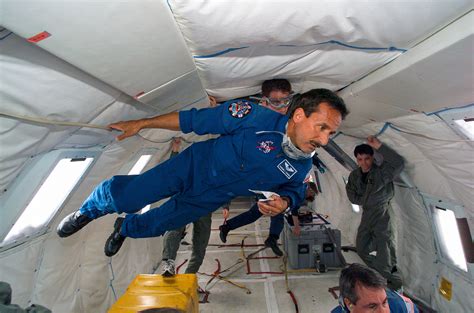
NASA’s parabolic heritage predates the Apollo program. In the late 1950s and early 1960s, modified military jets introduced astronauts to the physical disorientation of weightlessness. The KC-135 became synonymous with early microgravity training, later succeeded by the C-9. These aircraft defined generations of research and astronaut preparation.
The nickname “Vomit Comet” reflects the physiological reality of repeated gravity shifts. Even seasoned flyers can feel their inner ear protest as forces swing from hypergravity to freefall. Yet participation demand has never waned. The discomfort is temporary; the data is enduring.
Beyond science, these flights play a role in astronaut familiarization and public engagement. Crews bound for orbital missions experience realistic gravitational transitions without leaving Earth’s atmosphere. The psychological value of that exposure cannot be overstated. When gravity disappears for the first time in space, it is not an alien sensation—it is a practiced one.
What the Next-Generation Vomit Comet Could Deliver
Replacing the aircraft opens possibilities that extend beyond maintenance efficiency. A modern platform could offer advanced flight decks, improved fuel efficiency, and digital avionics architectures that simplify long-term sustainment. Cabin interiors might become modular, enabling rapid reconfiguration between research payloads, astronaut training, and educational programs.
Fuel efficiency matters not only economically but environmentally. Newer twin-engine platforms may reduce operational costs while maintaining the structural robustness required for repeated parabolas. Improved data integration could allow real-time telemetry streaming, expanding collaboration between onboard researchers and ground teams.
Some observers speculate that NASA’s selection could foster deeper collaboration with commercial microgravity providers. As suborbital tourism companies and private research platforms mature, interoperability may become strategic. A new aircraft might function not just as a replacement, but as a hub in a broader microgravity ecosystem.
The core requirement remains unchanged: reliable, repeatable access to short-duration weightlessness. That accessibility has defined the program’s strength. Compared to orbital missions, parabolic flights are affordable, flexible, and rapidly deployable. Removing or weakening that capability would ripple through academic and commercial research pipelines.
Who Will Fly the Next Zero-G Missions?
The question is not merely about aircraft type; it is about stewardship. NASA’s Armstrong Flight Research Center is seeking capable providers who can meet stringent performance, safety, and availability standards. Structural endurance, cabin adaptability, and operational resilience are non-negotiable.
Few aircraft globally are suitable for sustained parabolic operations. The airframe must tolerate cyclic stress. The cabin must be spacious enough to host floating researchers and secured equipment. Flight control systems must handle repeated precision arcs without degradation.
Whether the successor is a modern narrow-body jet, a specialized derivative platform, or an innovative adaptation remains to be seen. What is clear is that NASA is not abandoning parabolic flight. It is reinforcing it.
In the broader context of expanding lunar missions, commercial space stations, and deep-space ambitions, microgravity access on Earth remains foundational. The next Vomit Comet will not merely replace an aging jet. It will preserve a bridge between gravity-bound laboratories and the frontier beyond the atmosphere.
NASA’s monopoly on government-sponsored zero-g research may be evolving, but the need for controlled, repeatable microgravity will not vanish. The aircraft that wins this contract will carry more than payloads. It will carry the continuity of a program that has quietly enabled thousands of experiments—and, in doing so, sustained the scientific backbone of human spaceflight.