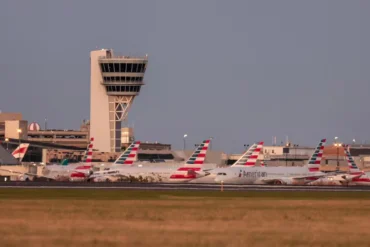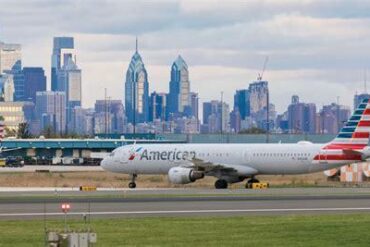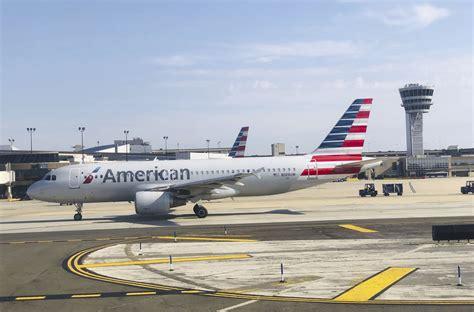
A quiet but consequential shift is underway in American Airlines’ transatlantic strategy, and it is centered squarely on Philadelphia International Airport (PHL). Once viewed as a complementary East Coast hub, Philadelphia is now being sharpened into the airline’s most versatile launchpad for secondary European destinations, a role that reflects hard geography, disciplined fleet planning, and a sharper focus on premium economics. This is not growth for growth’s sake. It is targeted, deliberate expansion designed to unlock markets that sit just beyond the reach of traditional hub logic.
American’s planned nonstop service from Philadelphia to Porto (OPO), slated for summer 2027 pending approvals, captures this evolution perfectly. Porto joins a growing list that includes Budapest (BUD) and Prague (PRG), both launching in summer 2026. These routes are not accidents of availability. They are the product of a hub that aligns unusually well with the airline’s next-generation aircraft and its appetite for long, thin, high-potential transatlantic markets.
A New Title: Philadelphia Ascendant — How American Airlines Is Rewriting Its Transatlantic Playbook at PHL
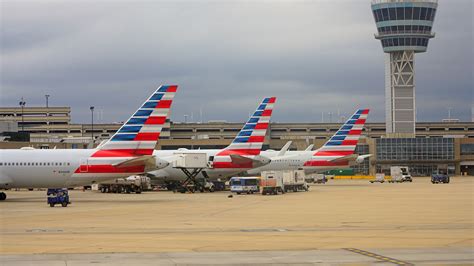
Philadelphia’s rise within American’s network reflects a recalibration away from overburdened mega-hubs toward a gateway that behaves like a precision instrument. From the Northeast and Midwest, PHL sits within a dense catchment area of premium and leisure demand. From Europe, it is far enough south to avoid the congestion penalties of New York, yet far enough north to efficiently serve Central and Southern Europe. Geography, in this case, is not destiny, but it is an enormous advantage.
Philadelphia’s Geography Favors the Next Wave of Europe
The transatlantic map rewards balance, and PHL’s Atlantic-facing position offers just that. Flights from the eastern half of the United States reach Europe with shorter stage lengths, improving aircraft utilization and schedule reliability. For destinations like Porto, Prague, and Budapest, these marginal gains matter. They allow American to structure routes that are competitive on block time without requiring the passenger volumes that hubs like Dallas/Fort Worth (DFW) depend on.
What truly distinguishes Philadelphia is how effectively it gathers domestic feed. American is increasingly channeling traffic from across the Midwest, Southeast, and Northeast into PHL, then redistributing it across Europe. This hub-and-spoke elasticity is critical for cities where local demand alone would never justify a widebody on a year-round basis.
The A321XLR Changes the Math
At the heart of American’s Philadelphia strategy sits the Airbus A321XLR, an aircraft that redefines what is possible across the Atlantic. With its extended range and lower trip costs, the XLR allows American to serve markets that are too thin for a Boeing 787 yet too long for traditional narrowbodies. Porto is a textbook example: a city with strong seasonal leisure appeal, growing premium interest, and insufficient year-round demand to sustain widebody capacity.
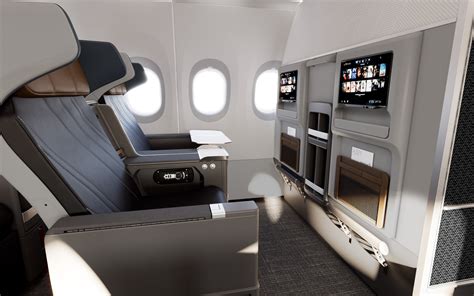
The A321XLR’s Flagship Suite configuration adds another layer of intent. This is not a high-density leisure product. It is a premium-forward cabin designed to extract yield from passengers who value nonstop access to secondary European cities. Paired with Philadelphia’s upgraded ground experience, the aircraft becomes a revenue tool rather than a compromise.
Widebodies Where They Still Make Sense
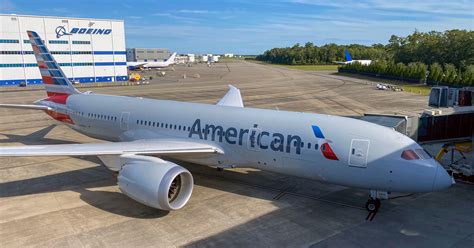
American’s approach at PHL is not narrowbody-only. The planned launches to Budapest and Prague, both beginning May 21, 2026, will be operated by the Boeing 787-8 on a summer-seasonal basis. This choice reflects careful capacity matching. The 787-8 provides widebody economics without the seat oversupply risk of larger variants, making it ideal for Central European markets that surge in summer and soften in winter.
What matters is not the aircraft itself, but the discipline behind its deployment. By anchoring these routes in Philadelphia, American avoids cannibalizing higher-yield opportunities at DFW, where widebodies are better utilized on thick, year-round intercontinental routes. The result is a network that expands in breadth without distorting its core.
Why Philadelphia Wins Over DFW and Charlotte
Philadelphia’s ascent becomes clearer when contrasted with American’s other major hubs. DFW excels at scale, but that scale comes with opportunity cost. Every experimental European route launched from North Texas displaces a potentially stronger deployment elsewhere. Charlotte Douglas International Airport (CLT), meanwhile, thrives on dense domestic connectivity, but its heavily banked structure is less forgiving for niche transatlantic services that require flexibility and premium positioning.
PHL occupies a middle ground. It is large enough to support a broad European network, yet uncongested enough to absorb new routes without operational strain. This balance allows American to trial new destinations, adjust seasonality, and refine schedules with less systemic risk.
Premium Ground Investment as a Strategic Weapon
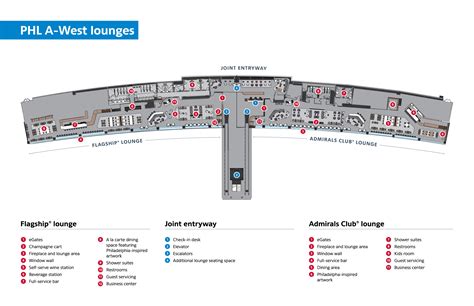
Air routes do not sell themselves. American’s ongoing investment in its Flagship Lounge at Philadelphia is a critical, and often underestimated, component of the strategy. Premium passengers heading to emerging European destinations expect continuity on the ground as well as in the air. A strong lounge proposition elevates the entire itinerary, making routes like Porto viable at yields that would be difficult to sustain from less differentiated hubs.
This premium ecosystem also reinforces customer confidence. When launching service to a new city, perceived reliability matters. Philadelphia’s positioning as American’s principal transatlantic gateway sends a clear signal that these routes are not experimental afterthoughts, but integrated pieces of a coherent network.
Cost Structure and Risk Containment
Operating economics quietly underpin every network decision, and Philadelphia offers American a relatively cost-efficient operating environment. Lower comparative costs reduce downside risk on routes with volatile demand profiles. Cities like Porto, Budapest, and Prague experience pronounced seasonal swings, and PHL’s cost base allows American to ride those fluctuations without bleeding margin.
The combination of right-sized aircraft, disciplined seasonality, and a cost-effective hub creates a buffer against market uncertainty. This is particularly valuable as airlines navigate an environment where fuel prices, geopolitical shifts, and demand elasticity remain in constant motion.
Philadelphia as a Platform for Future Growth
American’s leadership has been explicit that more routes are coming. While specifics remain under wraps, the pattern is unmistakable. Philadelphia is being groomed as the airline’s gateway for European breadth, a place where new dots on the map can be added without destabilizing the network as a whole.
This strategy also future-proofs American’s transatlantic presence. As competitors concentrate growth into a handful of mega-hubs, PHL offers differentiation. It provides passengers with nonstop access to cities that would otherwise require connections through crowded European gateways, enhancing American’s value proposition on both sides of the Atlantic.
A Hub Reimagined
Philadelphia’s rise is not about nostalgia or regional loyalty. It is about alignment. The airport’s geography, American’s evolving fleet, and the economics of modern long-haul flying converge here in a way that few hubs can replicate. By doubling down on PHL, American Airlines is not merely adding routes. It is redefining how a legacy carrier grows internationally in an era that rewards precision over brute force.
In that sense, Philadelphia is no longer a supporting actor in American’s network. It is the stage where the airline’s most forward-looking transatlantic ideas are being tested, refined, and increasingly proven.