As the summer travel season looms, three heavyweights of the Australasian aviation industry — Qantas, Virgin Australia, and Air New Zealand — are positioning themselves for an intense rivalry that promises to redefine the travel landscape across Australia and New Zealand. With Qantas ramping up its capacity, Virgin’s return to the stock market, and Air New Zealand’s defensive strategies, passengers are poised to benefit from an influx of new flight options and lower ticket prices. However, behind the scenes, the competition is heating up in ways that could change the industry’s dynamics in profound ways.
Qantas: Aggressive Expansion and Strategic Moves
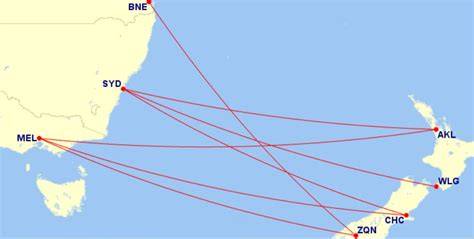
Qantas, Australia’s flagship carrier, is preparing for a high-stakes summer by increasing its flight capacity across some of its busiest routes. After an impressive post-pandemic recovery, buoyed by the departure of former CEO Alan Joyce, Qantas is shifting gears to meet the growing demand for both leisure and business travel. The airline has announced a 20% increase in its trans-Tasman flights, injecting an additional 60,000 seats into its December-January schedule.
This surge in capacity signals a bold move to dominate the Australia-New Zealand market, a critical route for both leisure and business travelers. But that’s not all — Qantas is also ramping up its presence on high-demand Asian routes like Singapore and Bali, positioning itself to capture market share as the region continues to recover from the pandemic’s aftermath. To fuel this growth, Qantas has made a surprising move by shutting down its Jetstar Asia subsidiary, redeploying its fleet to focus on core markets. By removing Jetstar from Southeast Asia, Qantas is reinforcing its domestic and trans-Tasman operations, signaling a strategic reorientation that prioritizes profitability over regional competition.
Virgin Australia’s Return: A Fresh Challenge to Qantas
Amid Qantas’s aggressive strategy, Virgin Australia is making its comeback. After a turbulent history and eventual collapse five years ago, the airline has undergone a remarkable turnaround, refocusing on domestic and short-haul leisure markets. With its books now in solid shape, Virgin is poised to re-enter the Australian Securities Exchange (ASX) after being privately acquired by Bain Capital and backed by a 25% stake from Qatar Airways.
Virgin’s re-entry into the public market, along with its revamped strategy, is sure to intensify competition. Private equity and Qatar’s involvement add a unique layer of unpredictability. The alliance with Qatar Airways is especially important, given that the Doha-based carrier has long sought to increase its stake in the Australian market. Qatar’s interest in Virgin suggests that the airline could leverage Qatar’s global reach to challenge Qantas more effectively. This shift adds a wildcard element, as Qatar Airways has already seen its previous efforts to expand into Australia blocked by Qantas, making this partnership potentially a game-changer.
Air New Zealand: Defensive Strategies in a High-Stakes Environment
Not to be outdone, Air New Zealand is preparing its own strategic moves to defend its turf and remain competitive. As one of the key players in the Australasian aviation market, the airline is no stranger to fierce competition. Historically, Air New Zealand has carved out a strong niche in both domestic and trans-Tasman markets, capitalizing on the close relationship between New Zealand and Australia.
However, as Qantas and Virgin ramp up their offerings, Air New Zealand is expected to counter with aggressive pricing and expanded flight options for customers. This competitive landscape puts pressure on Air New Zealand to continue offering excellent service while managing costs effectively to maintain profitability. The airline has also been focused on fleet renewal and ensuring that it maintains an edge in service quality as it faces mounting pressure from its larger competitors.
A Summer of Competitive Turbulence for Passengers
As Qantas, Virgin, and Air New Zealand prepare for their respective summer campaigns, passengers stand to benefit significantly from this newfound rivalry. More flights and lower fares will likely dominate the Australasian skies, especially during the peak travel months of December and January. For travelers, this means more options, increased accessibility to high-demand destinations, and the potential for significantly reduced airfare prices.
However, this competition comes with a price for the airlines themselves. Both Qantas and Virgin are expected to face pressure on profit margins due to increased fare wars. Virgin, as a newly public company, will need to grow market share quickly, likely through deep discounts and promotional offers. This could hurt its ability to generate strong profits in the short term. Meanwhile, Qantas has warned that its fleet renewal plans could pose a significant cost burden in the coming years, particularly as it faces increasing competition and pressure to maintain its market dominance.
Despite these potential challenges, the competition will create an exciting environment for travelers. Whether it’s cheaper flights, more destinations, or better in-flight services, the customer is bound to reap the rewards of this summer showdown.
The Impact of Fleet Age on Qantas’ Strategy
One of the critical challenges facing Qantas as it ramps up its fleet is the age of its aircraft. Qantas operates one of the oldest fleets among global airlines, and its need for fleet renewal is becoming increasingly urgent. While the airline is currently enjoying strong financial performance, the pressure to replace aging planes is mounting. This factor is compounded by the rising costs of fuel and maintenance, which are squeezing profit margins.
A strategic issue for Qantas’s new CEO, Vanessa Hudson, will be balancing fleet modernization with the realities of a competitive price war. The challenge lies in ensuring the airline maintains profitability while dealing with both internal and external pressures. If the market-share war between Qantas, Virgin, and Air New Zealand intensifies, the cost of maintaining these fleets could strain the airline’s resources and future growth.
Learning from Past Mistakes: The Perils of Market Share Wars
Qantas has a history of aggressive moves in the domestic market, some of which have not paid off. In the past, Qantas and Virgin Australia engaged in costly fare wars, resulting in massive losses for Qantas, nearly pushing the airline to the brink of bankruptcy. Former CEO Alan Joyce famously vowed that Qantas would never let its domestic market share fall below 65%, but this came at a significant cost — losses totaling almost AU$3 billion.
Hudson, as Qantas’s new leader, must avoid repeating these costly mistakes. The prospect of another full-blown market-share war could leave Qantas in a vulnerable position, particularly given the looming costs of fleet upgrades. The airline industry’s cyclical nature means that external shocks, such as fluctuating fuel prices or health crises, can easily tip the scales in favor of its rivals.
Conclusion: The Road Ahead for Qantas, Virgin, and Air New Zealand
As Qantas, Virgin, and Air New Zealand prepare for an exhilarating summer season, the future of Australasian aviation is set to be reshaped by this intense rivalry. The competition is expected to lead to more affordable and accessible travel options for customers, especially on domestic and trans-Tasman routes. However, for the airlines, navigating this increasingly competitive landscape will require a delicate balance of growth, profitability, and market share protection.
For Qantas, the upcoming months will be critical in ensuring that it maintains its dominance without jeopardizing long-term profitability. Virgin Australia will need to prove that its post-bankruptcy rebirth is sustainable, while Air New Zealand faces the task of defending its market share in a rapidly changing environment.
The stakes are high, and the skies are set for a dramatic, high-octane summer showdown.