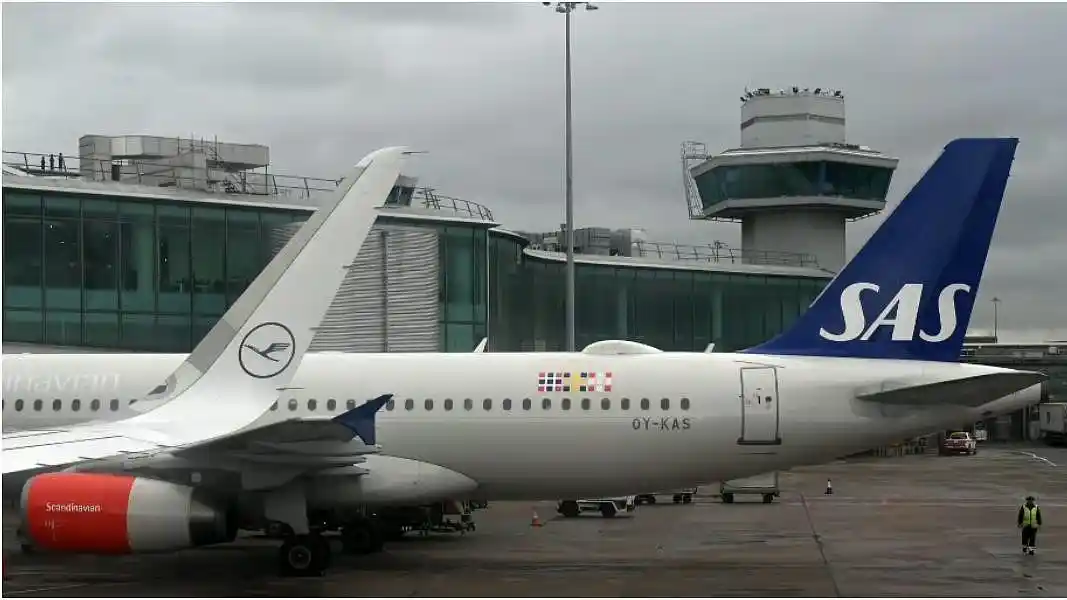
Scandinavian Airlines’ long-awaited return to India after a 17-year absence suffered an extraordinary setback when its inaugural Copenhagen-to-Mumbai service was forced to turn back midway through the journey due to unresolved regulatory paperwork. What was intended to be a landmark moment for the carrier instead became a costly and highly public demonstration of how critical aviation approvals remain in an industry governed by complex international regulations.
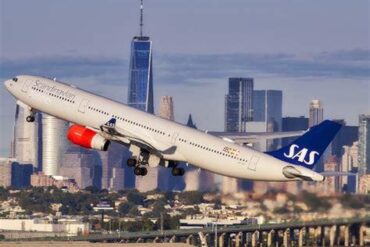
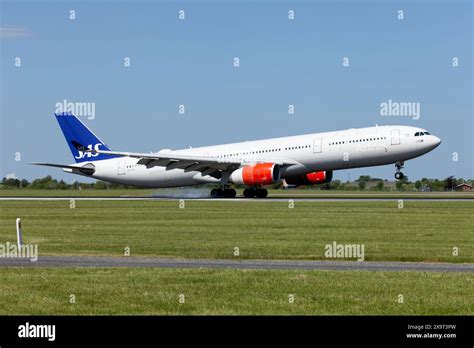
The incident involved Flight SK969, operated by an Airbus A330-300, which departed Copenhagen Airport several hours behind schedule before eventually reversing course over Azerbaijan and returning to Denmark. The unexpected diversion came after final route authorization from Indian aviation authorities failed to materialize while the aircraft was already en route to Mumbai.
SAS’ Historic Return to India Ends Before Reaching Destination
For Scandinavian Airlines, commonly known as SAS, the Mumbai route represented far more than the launch of another international destination. The service marked the airline’s first scheduled connection to India since withdrawing from the market during the aftermath of the global financial crisis in 2009.
The Copenhagen-Mumbai route was designed as a cornerstone of SAS’ renewed long-haul growth strategy. The airline planned to operate the service five times per week, reconnecting Scandinavia with one of the world’s fastest-growing aviation markets. Industry observers viewed the route as a significant milestone following SAS’ extensive corporate restructuring and transition into a new strategic era.
Expectations surrounding the launch were high. Mumbai Airport preparations reportedly included plans for a traditional inaugural water cannon salute, while airport personnel and airline representatives anticipated celebrating the arrival of a route that had never previously been operated by any airline.
Instead, the aircraft never came close to Indian airspace.
After approximately four hours of flight time, the crew received instructions that would dramatically alter the mission.
Flight SK969 Becomes an Unexpected Journey Back to Copenhagen
Passengers boarding Flight SK969 expected to arrive in India’s financial capital after a routine long-haul journey. Instead, they experienced what aviation professionals sometimes refer to as a “flight to nowhere”—a trip that ultimately returns to its origin without reaching its intended destination.
As the Airbus A330-300 cruised across Azerbaijan, the absence of final regulatory clearance became impossible to ignore. Without the necessary authorization, continuing toward Mumbai was no longer an option.
The aircraft executed a turnback procedure and began the lengthy return journey to Copenhagen.
For passengers, the consequences extended far beyond inconvenience. Travelers effectively spent roughly twelve hours onboard an aircraft only to arrive back at the same airport from which they had departed. The lost time likely disrupted carefully planned itineraries involving domestic Indian flights, hotel reservations, train connections, business meetings, family events, and organized tours.
While airlines typically rebook affected customers, secondary expenses can create significant complications. Missed connections, non-refundable reservations, and disrupted business schedules often generate financial losses that extend well beyond the value of the original airline ticket.
The incident also highlighted the risks associated with launching new international routes where final approvals remain pending until the last stages of implementation.
Regulatory Approval Delays Trigger Operational Crisis
According to statements attributed to SAS, the airline believed the remaining approval process would be completed while the aircraft was already en route to India.
That expectation ultimately proved incorrect.
The carrier indicated that it had anticipated receiving confirmation before the flight reached a point where operational decisions became unavoidable. When the authorization failed to arrive, the airline had little choice but to terminate the mission and return to Copenhagen.
Neither India’s Directorate General of Civil Aviation nor the country’s aviation ministry immediately issued detailed public explanations regarding the situation. The absence of official clarification intensified industry interest in the event, particularly given the high-profile nature of the route launch.
International aviation operations require multiple layers of approval involving route rights, operational permissions, traffic agreements, scheduling authorizations, and regulatory compliance reviews. Even when most requirements have been satisfied, a single outstanding authorization can prevent an airline from legally operating a service.
In this case, the missing approval proved sufficient to halt a flight already thousands of miles into its journey.
The Financial Impact of an Aborted Long-Haul Flight
The financial implications of the failed inaugural service are likely substantial.
Operating a widebody aircraft on a long-haul international route involves significant costs before a single passenger arrives at the destination. Fuel represents one of the largest expenses, particularly during periods of elevated global energy prices. A multi-hour round-trip involving an Airbus A330-300 can consume enormous quantities of fuel, creating immediate financial losses when the flight generates no intended transportation outcome.
Additional expenses include crew salaries, airport charges, maintenance allocations, catering services, ground handling fees, passenger compensation obligations, and potential reaccommodation costs.
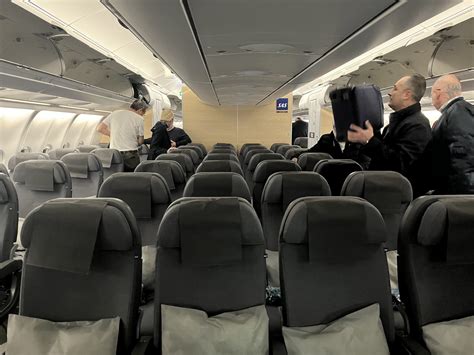
The A330-300 used for the route is configured with 266 seats and serves as the lowest-capacity widebody aircraft within the SAS long-haul fleet. Although this makes it a logical choice for developing emerging routes where demand remains uncertain, the economics of an aborted flight remain painful regardless of aircraft size.
Industry analysts suggest that the total financial damage could extend into hundreds of thousands of dollars once all direct and indirect costs are considered.
The carrier may also face the challenge of securing alternative transportation for affected passengers, often requiring the purchase of last-minute seats on competing airlines.
Why Mumbai Remains Central to SAS’ Growth Strategy
Despite the unsuccessful inaugural attempt, SAS continues to view Mumbai as a strategically important destination.
India’s aviation market continues to expand at one of the fastest rates globally, driven by rising incomes, growing international business ties, expanding tourism demand, and increasing connectivity between Europe and South Asia.
For SAS, Mumbai offers a particularly attractive opportunity. The route can be operated efficiently without relying on Russian airspace, a consideration that has become increasingly important for many European carriers. The geography allows relatively direct operations while maintaining competitive economics compared with several other long-haul markets.
The launch also aligns with the airline’s broader transformation strategy following restructuring efforts and alliance changes. As newer Airbus A350 aircraft assume premium long-haul responsibilities across North America and other flagship markets, the A330 fleet can be deployed to develop emerging routes with lower capacity requirements.
A Setback Rather Than an Ending
Although the inaugural flight failed to reach Mumbai, SAS has emphasized that the setback is temporary rather than permanent. The airline continues to work with relevant authorities to secure the remaining approvals necessary for service commencement.
The episode serves as a powerful reminder that modern aviation depends not only on aircraft, crews, and passenger demand but also on the intricate regulatory framework governing international air travel. Even after years of planning, millions of dollars in investment, and widespread anticipation, a single unresolved authorization can bring an ambitious launch to an abrupt halt.
For SAS, the first flight to India in seventeen years became a memorable event for reasons nobody intended. Yet the strategic logic behind the Copenhagen-Mumbai route remains unchanged, and once the final regulatory hurdles are cleared, the airline is expected to make another attempt at reconnecting Scandinavia with one of the world’s most important and rapidly growing aviation markets.