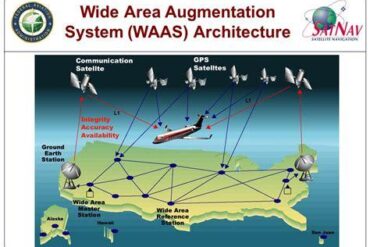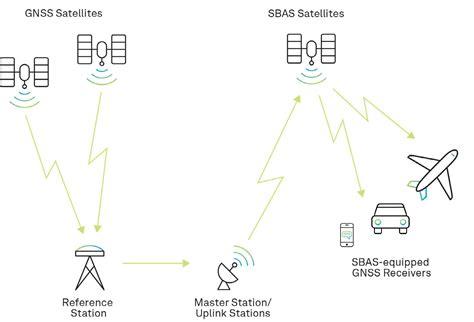
A Satellite Based Augmentation System (SBAS) is a technology that enhances Global Navigation Satellite System (GNSS) signals across wide areas. It employs several geostationary satellites to broadcast essential GNSS data. This data is enriched with information from a network of ground stations, which provide ranging, integrity, and correction details. The main goal of SBAS is to ensure the reliability of navigation signals. Additionally, it boosts accuracy and minimizes position errors to under one meter.
In Europe, the European Geostationary Navigation Overlay Service (EGNOS) serves as the SBAS version. Meanwhile, the United States has the Wide Area Augmentation System (WAAS), which was the first to go live in 2003. WAAS covers the continental US, Canada, Alaska, and Mexico, supporting over a thousand airports with instrument approaches.
Japan utilizes its Multi-functional Satellite Augmentation System (MSAS) for similar SBAS capabilities. India has also initiated its own SBAS program, while both Korea and China are working on launching their respective SBAS implementations.