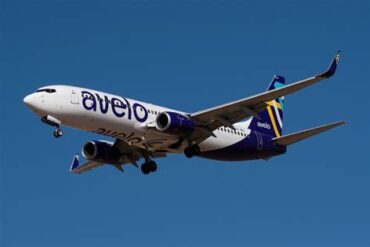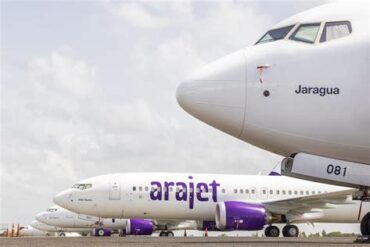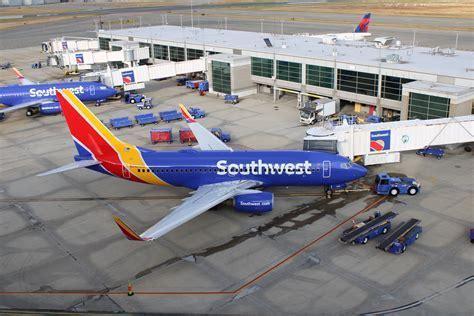
Southwest Airlines has spent more than half a century redefining short-haul air travel in the United States, building a cult-like following around simplicity, affordability, and a stubborn refusal to behave like a traditional airline. That identity is now undergoing its most dramatic evolution yet. In 2026, Southwest is stepping onto the transatlantic stage, not with its own widebody aircraft roaring toward Europe, but through a carefully engineered web of international partnerships that quietly but decisively extend its reach across the Atlantic Ocean.
This move is not a side project or a marketing flourish. It is a structural shift that signals how Southwest intends to survive and grow in a world where domestic margins are tightening, customer expectations are fragmenting, and investors are demanding returns that nostalgia alone cannot provide. The result is a long-haul strategy that looks unconventional on the surface, yet deeply calculated beneath it.
By leveraging interline agreements with Turkish Airlines, Condor, and Icelandair, Southwest is transforming itself from a purely domestic powerhouse into a global connector. The airline remains firmly rooted in its Boeing 737 fleet and point-to-point DNA, but its passengers will soon find themselves boarding a single itinerary that begins in a mid-sized American city and ends in Europe, Africa, or the Middle East. The Atlantic, once a hard boundary for Southwest’s ambitions, is becoming a bridge.
A Historic Pivot for a Domestic Icon
For decades, Southwest Airlines was defined by what it did not do. It did not fly widebodies. It did not serve Europe. It did not assign seats. It did not charge for checked bags. These absences were not limitations; they were strategic choices that powered one of the most successful airline business models in history.
That clarity has eroded under modern pressures. Rising costs, intensified competition from legacy carriers, and a prolonged profit slump forced Southwest to confront a difficult truth: the old model, while beloved, was no longer sufficient on its own. The airline’s decision to pursue transatlantic connectivity is best understood as part of a broader reinvention rather than an isolated experiment.
Southwest’s international flying until now was deliberately modest, limited to near-abroad markets in Mexico, the Caribbean, and Canada. Europe was always out of reach, not only because of distance, but because crossing the Atlantic traditionally demands long-haul aircraft, complex crew rules, and a level of capital exposure that clashes with a low-cost carrier’s instincts. The breakthrough came not through hardware, but through partnerships.
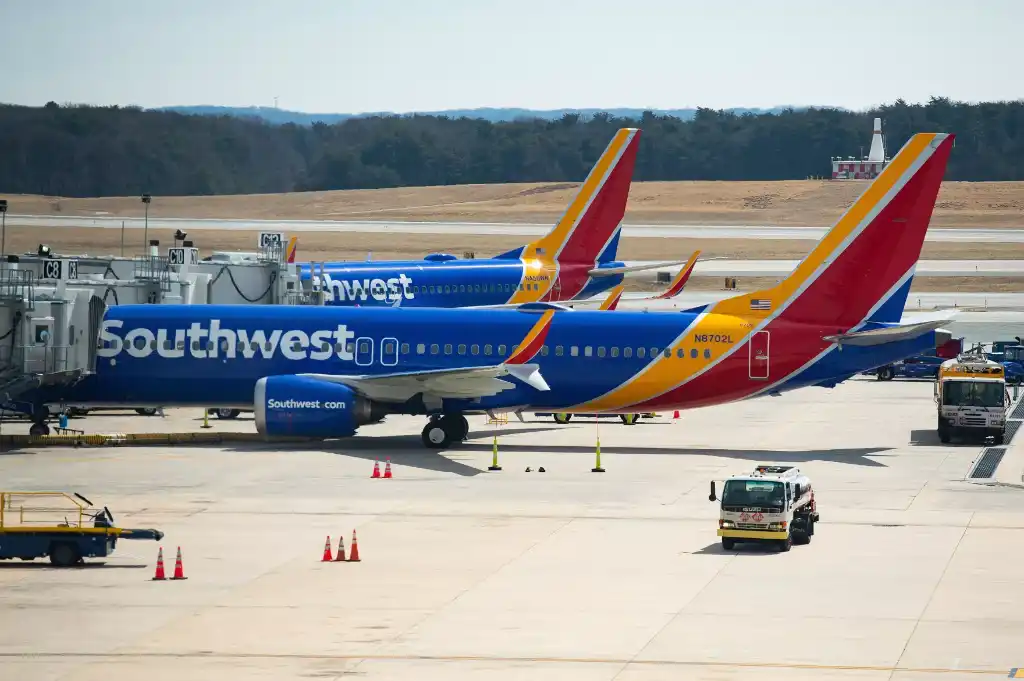
By tapping into the networks of established long-haul airlines, Southwest gains global access without rewriting its fleet plan. This is a watershed moment: the airline is no longer constrained by how far a 737 can fly, but empowered by how intelligently it can connect.
The Partnership Model That Makes Europe Possible
Southwest’s transatlantic strategy rests on a deceptively simple idea. Instead of flying across the ocean itself, the airline feeds passengers from its vast domestic network into international partners that specialize in long-haul operations. The traveler experiences a single, continuous journey, even though multiple airlines are involved.
This approach allows Southwest to remain asset-light while instantly becoming relevant to global travelers. It also positions the airline as a powerful domestic feeder, something international carriers value enormously in the competitive U.S. market.
The backbone of this strategy is a trio of interline agreements, each serving a distinct geographic role. Turkish Airlines provides global reach beyond Europe, Condor delivers leisure-focused transatlantic access, and Icelandair offers a uniquely efficient gateway through the North Atlantic.
The Turkish Airlines Connection and Global Reach
The most ambitious of Southwest’s new relationships is its partnership with Turkish Airlines. Through this interline agreement, Southwest passengers can connect from major U.S. gateways to Istanbul International Airport, one of the world’s fastest-growing aviation hubs.
From Istanbul, Turkish Airlines operates a sprawling network of more than 350 destinations across Europe, Asia, Africa, and the Middle East. This instantly gives Southwest customers access to regions that were previously unreachable without juggling separate tickets and airlines.
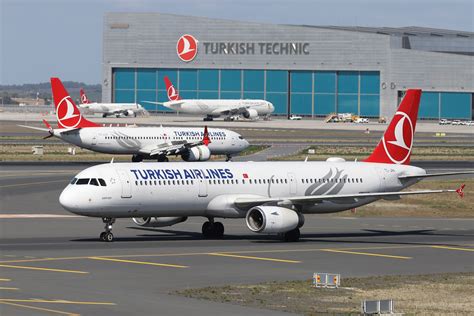
The practical benefits for travelers are significant. A single ticket covers both the Southwest domestic leg and the Turkish Airlines long-haul flight. Baggage is checked through to the final destination, eliminating one of the most stressful aspects of international travel. While bookings are initially handled through Turkish Airlines’ systems rather than Southwest’s own website, the seamlessness of the journey marks a major leap forward in convenience.
Strategically, this partnership is a masterstroke. Southwest gains global exposure with minimal financial risk, while Turkish Airlines gains access to one of the most comprehensive domestic networks in the United States. The absence of loyalty reciprocity may disappoint frequent flyers, but from a corporate perspective, the deal is about reach and relevance rather than perks.
Condor and the Leisure-Focused Transatlantic Play
If Turkish Airlines represents global breadth, Condor represents targeted depth. The German leisure carrier specializes in connecting North America with European holiday destinations, and its hub in Frankfurt serves as a natural gateway for Southwest passengers.
Southwest’s partnership with Condor enables connections from cities such as Boston, Las Vegas, Los Angeles, San Francisco, Seattle, and Portland. These are markets where Southwest already commands strong domestic demand and where leisure travel flows naturally toward Europe.
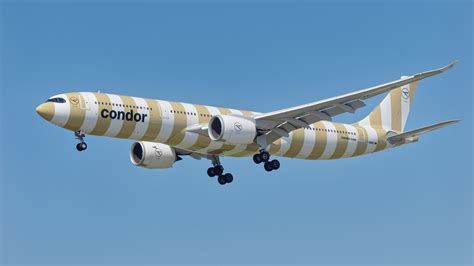
Condor’s network extends beyond Germany to nearly 70 destinations across Europe, Africa, and Asia, with seasonal expansions to cities like Barcelona, Budapest, and Venice. For Southwest customers, this means access to a diverse set of destinations that align closely with vacation travel patterns.
Bookings are available through Condor and third-party platforms, and passengers benefit from through-checked baggage and coordinated itineraries. Rapid Rewards points can be earned on the Southwest-operated segments, reinforcing loyalty without complicating the partnership structure.
Unlike alliance-bound carriers, Condor’s independent status leaves room for the relationship to deepen over time. This flexibility is valuable for Southwest, which is still testing how far it wants to push its international ambitions.
Icelandair and the North Atlantic Gateway
The most geographically elegant of Southwest’s partnerships is with Icelandair. Long before ultra-long-haul flights became commonplace, Icelandair perfected the art of connecting North America and Europe via Reykjavik, using narrowbody and mid-range aircraft to great effect.
Southwest’s interline agreement with Icelandair was its first foray into international partnerships, and it remains a cornerstone of the airline’s transatlantic strategy. Connections are offered through U.S. cities such as Baltimore, Nashville, Denver, Orlando, Pittsburgh, and Raleigh-Durham, funneling passengers toward Reykjavik and onward to roughly 35 European destinations.
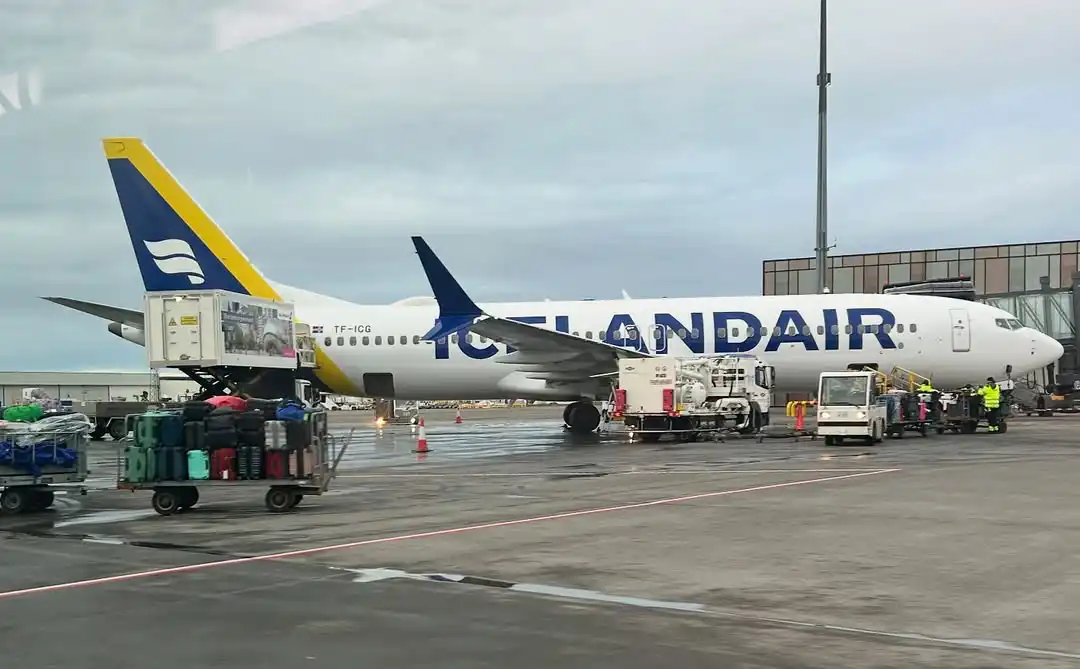
The theoretical possibility of Southwest-operated flights to Iceland adds an intriguing layer to this partnership. Reykjavik sits within the operational range of the Boeing 737, particularly with favorable winds and payload management. While no such routes have been officially announced, the idea alone signals how the partnership could evolve.
For now, the value lies in simplicity. Single-ticket itineraries, baggage handled end-to-end, and access to major European capitals create a compelling proposition for travelers who previously saw international trips as a logistical headache.
Open Skies and the Door to Future Direct Flights
Beyond partnerships, Southwest has quietly laid regulatory groundwork that hints at a more assertive future. By filing for authorization to operate flights to over 130 countries under the Open Skies Agreement, the airline has given itself strategic optionality.
This does not mean a sudden pivot to widebody aircraft or daily flights to London and Paris. It means Southwest is keeping the door open. Routes such as Baltimore to Reykjavik are technically feasible with existing aircraft, and as the airline’s new revenue model matures, the economics of limited long-haul flying may become more attractive.
The Atlantic, once an absolute barrier, is now a gradient. Southwest can choose how far to step across it.
A Transatlantic Strategy Shaped by Internal Transformation
Southwest’s international expansion cannot be separated from its internal overhaul. The airline is dismantling several pillars of its traditional identity, replacing them with a more segmented, revenue-optimized model.
Assigned seating replaces the open seating system that defined the Southwest experience for generations. New cabin categories introduce extra legroom and preferred seating, aligning the airline more closely with legacy competitors. Fare structures have been rebranded to emphasize choice and upsell opportunities, while basic fares introduce restrictions that would have been unthinkable just a few years ago.
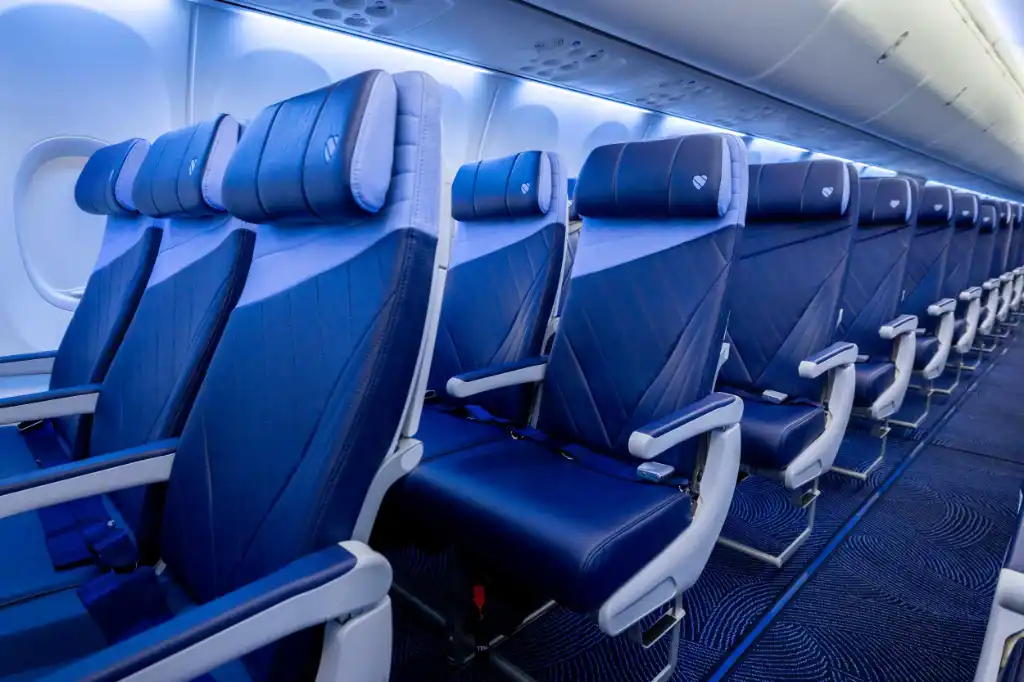
Even the sacred “Bags Fly Free” policy has been curtailed, with fees now applied to many passengers outside elite tiers and premium fares. These changes have sparked vocal backlash from loyalists, yet internal data suggests broad acceptance among both current and potential customers.
This transformation is not cosmetic. It is designed to fund growth, including international partnerships, without eroding profitability. Premium seating, ancillary fees, and improved aircraft utilization through red-eye flights all contribute to a revenue base capable of supporting a more complex network.
What Travelers Should Realistically Expect
For passengers, Southwest’s transatlantic expansion is less about flashy announcements and more about quiet convenience. There will be no Southwest-branded jets crossing the Atlantic in the near term, and the inflight experience on long-haul segments will be dictated by partner airlines.
What changes is access. Travelers in cities long ignored by international carriers can now book a single itinerary that carries them from a Southwest domestic flight to a transatlantic departure, with bags checked through and schedules coordinated.
The absence of loyalty reciprocity and direct booking on southwest.com is a temporary friction point, not a structural flaw. As the airline completes its technology and fare model upgrades, deeper integration is widely expected.
A New Chapter Written in Connections, Not Aircraft
Southwest Airlines’ move into transatlantic travel is not a betrayal of its roots. It is an adaptation, shaped by economic reality and executed with characteristic pragmatism. By choosing partnerships over planes, the airline preserves its operational simplicity while dramatically expanding its relevance.
This strategy reflects a broader truth about modern aviation. Network power no longer comes solely from owning metal and flying long distances. It comes from intelligent connectivity, from stitching together journeys that feel effortless to the traveler even when multiple airlines are involved.
Southwest is not becoming a legacy carrier. It is becoming something else: a global connector with a low-cost soul and a newly sharpened commercial edge. The Atlantic crossing, once symbolic of everything Southwest was not, now marks the beginning of what it is becoming.