For travelers flying across the Pacific in 2026, business class is no longer simply about getting a lie-flat bed. Airlines have spent years adding privacy doors, larger screens, direct aisle access, better storage, and increasingly elaborate suites. Yet as these features become widespread, the premium cabin has entered a new phase: airlines must find ways to make the actual experience feel different, not merely more expensive.
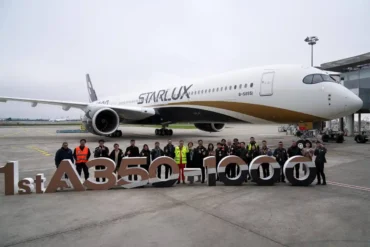
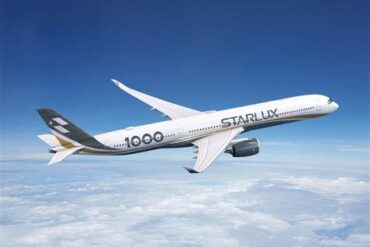
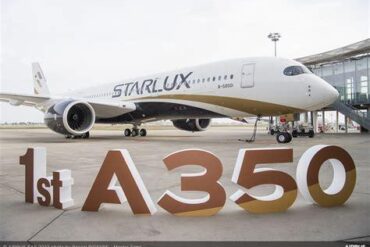
That is where STARLUX Airlines has made an unusually bold move. The young Taiwanese carrier is introducing its new Airbus A350-1000 as a flagship aircraft with a business-class product designed around privacy, personal space, technology, and physical comfort. Rather than treating the seat as just another piece of cabin furniture, STARLUX has made it one of the central elements of its brand identity.
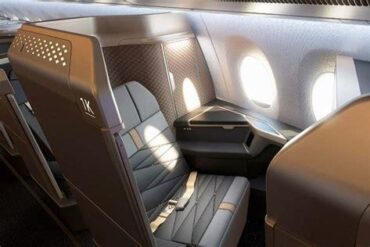
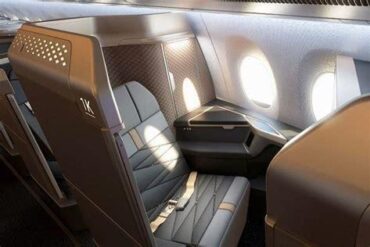
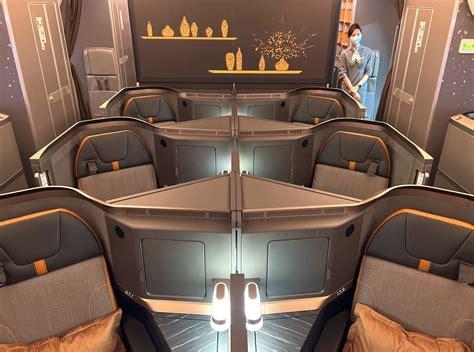
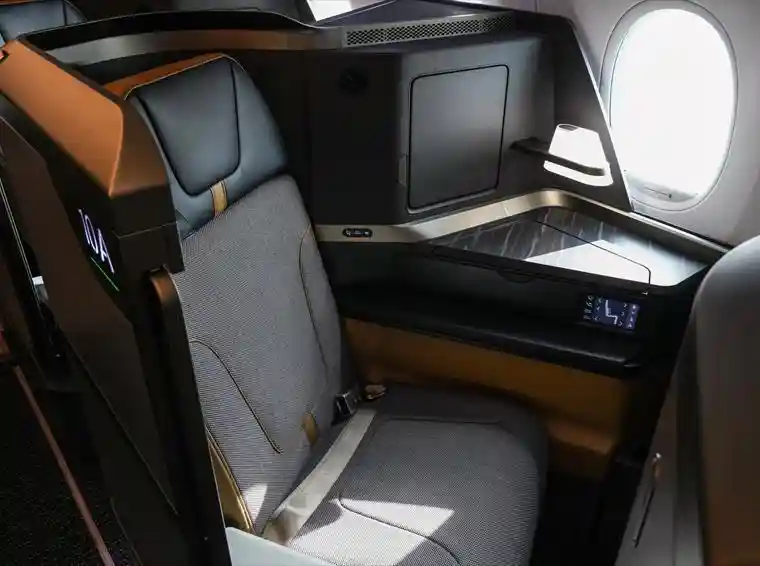
The result is a business-class seat that stands out in a market increasingly crowded with sophisticated suites. Its combination of a 1-2-1 reverse-herringbone layout, sliding privacy doors, oversized entertainment screens, and NASA-inspired “Zero G” seating mode gives STARLUX a compelling proposition for passengers facing long transpacific flights. More importantly, the airline is attempting to redefine what passengers should expect from a modern business-class seat.
Why STARLUX Airlines Is Betting So Heavily on Premium Travel
STARLUX is a remarkably young airline by international standards. Founded by former EVA Air chairman Chang Kuo-wei, the Taiwanese carrier began operations in 2020 and quickly developed a reputation for placing design, service, and cabin quality at the center of its strategy.
Its base at Taipei Taoyuan International Airport (TPE) gives the airline an important geographical advantage. Taiwan sits naturally between major Asian markets and North America, allowing STARLUX to develop a network where long-haul premium travel can become an important part of its growth strategy.
Instead of trying to imitate a traditional global network carrier, STARLUX has positioned itself more like a boutique luxury airline. That distinction matters. A huge carrier can compete through frequency, connectivity, and fleet scale, while a smaller airline needs passengers to remember why its product is worth choosing.
STARLUX has therefore built its identity around the details passengers notice. Its all-Airbus fleet includes the A321neo, A330-900neo, A350-900, and A350-1000, creating a relatively streamlined operational structure while giving the airline access to aircraft suitable for both regional and long-haul markets.
The arrival of the A350-1000 takes that strategy another step forward. It is not simply another aircraft joining the fleet. STARLUX is using the type as a new flagship, and its cabin configuration makes the airline’s ambitions particularly clear.
The A350-1000 Brings a Much Larger Business Class Cabin
The most obvious change is the size of the business-class cabin.
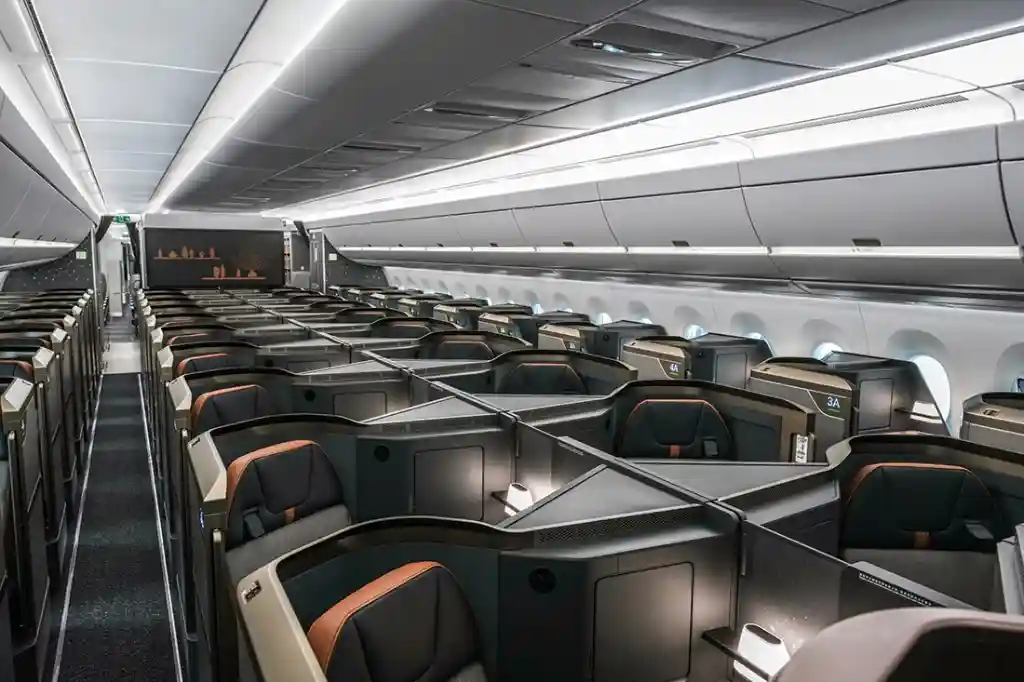
STARLUX’s A350-900 features 26 business-class seats, while the new A350-1000 increases that number to 40. That represents an increase of more than 50%, giving the airline substantially more premium capacity while retaining a distinctly upscale cabin.
At first glance, putting more business-class seats onto an aircraft might sound like the opposite of luxury. More seats can mean more passengers, greater cabin density, and less exclusivity. STARLUX, however, has taken a different approach.
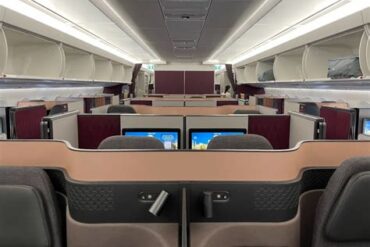
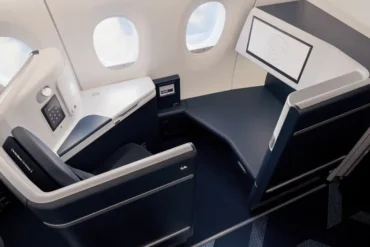
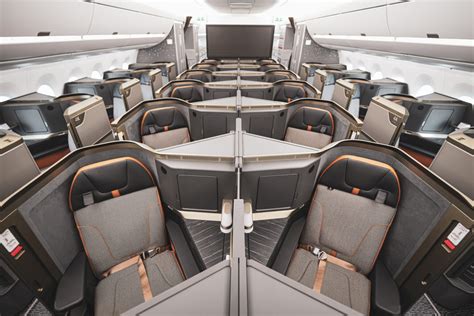
The 40 seats are arranged in a 1-2-1 reverse-herringbone configuration, meaning every business-class passenger receives direct access to the aisle. This has become one of the most important benchmarks in modern long-haul business class because passengers no longer want to climb over a seatmate simply to leave their seat.
The underlying seat platform is based on Collins Aerospace Elements, a proven architecture that gives STARLUX a sophisticated foundation while allowing the airline to add its own design touches.
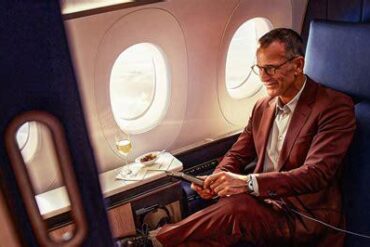
Those touches are particularly important. The seats include sliding privacy doors, helping create individual personal spaces even though the cabin contains 40 passengers. Large entertainment displays further reinforce the sense that every seat is intended to function as a private environment rather than merely one position within a dense aircraft cabin.
The “Zero G” Mode Is the Real Innovation
Privacy doors and large screens are impressive, but they are no longer enough to make a business-class product genuinely groundbreaking.
The feature that gives STARLUX’s new seat its strongest identity is the “Zero G” recline mode.
The concept is inspired by a posture associated with NASA research and is intended to position the passenger’s body in a way that can reduce pressure and create a more naturally supported resting position. Instead of simply moving the seat backward into a conventional bed position, the seat raises the passenger’s head while shaping the body into a soft W-like posture.
That distinction is important because long-haul comfort is about more than whether a seat technically becomes flat.
A passenger can have a fully flat bed and still wake up with discomfort after several hours. Pressure points, posture, circulation, shoulder positioning, and the ability to change position all influence how restorative sleep actually feels.
STARLUX’s approach recognizes this problem. The airline is effectively treating the business-class seat as a wellness product, rather than simply a luxury product.
That is an interesting evolution. The first generation of modern business class competed heavily on space and bed length. The next generation added privacy doors and increasingly sophisticated suites. STARLUX is attempting to add another layer: ergonomic comfort designed around the human body.
For a 12- or 13-hour transpacific journey, that could matter considerably more than another decorative feature.
Why Ergonomics Could Become the Next Business Class Battleground
The premium aviation industry has become remarkably good at creating beautiful cabins.
Walk through the latest business-class products from major Asian and Middle Eastern airlines and the formula is familiar: private seating, elegant finishes, high-resolution entertainment systems, extensive dining, storage compartments, and beds designed to make long flights more tolerable.
The challenge is that passengers eventually stop being impressed by the same features.
A privacy door was once a major differentiator. Now, it is increasingly becoming an expectation at the top end of the market. A large screen is also becoming standard. Direct aisle access has moved from a luxury feature to something sophisticated travelers often expect when paying a premium fare.
That leaves comfort engineering as a potentially valuable area for differentiation.
STARLUX’s Zero G concept gives the airline a way to talk about the business-class experience in practical terms. Instead of telling passengers simply that the seat looks luxurious, the airline can emphasize how the seat is designed to support them during a long flight.
That is a subtle but powerful marketing shift.
The passenger is not buying a seat merely because it looks expensive. The passenger is buying an environment designed to help them arrive less exhausted.
A Four-Cabin Flagship Designed Around Premium Demand
The A350-1000’s significance extends beyond business class.
STARLUX is configuring the aircraft with four cabin classes: first class, business class, premium economy, and economy. The inclusion of first class immediately establishes the aircraft as something more important than a high-capacity long-haul workhorse.
The 40-seat business-class cabin sits between that first-class experience and the rest of the aircraft, giving STARLUX a substantial premium offering without abandoning the broader passenger market.
This configuration also reflects a wider shift in long-haul airline economics. Premium passengers can generate considerably more revenue than economy travelers, particularly on routes connecting major financial and technology centers.
For STARLUX, that makes the Pacific especially attractive.
The airline has expanded into North America while building a reputation for premium service, and the A350-1000 gives it a larger platform on which to pursue that strategy. Reports of competitive round-trip business-class fares around $2,600 on some U.S.-Taipei itineraries make the proposition even more interesting.
A premium seat becomes much more compelling when passengers do not have to pay the extreme prices associated with some established luxury carriers.
STARLUX Versus EVA Air, China Airlines and Asia’s Premium Giants
STARLUX’s strongest competitive advantage becomes clearer when its product is placed within the broader Asian market.
Its Taiwanese rival EVA Air has long been respected for its Royal Laurel business-class product. EVA’s cabins offer excellent privacy, comfortable reverse-herringbone seating, and a strong reputation for service. However, STARLUX’s newer A350-1000 seat brings a more contemporary visual identity and a stronger emphasis on privacy and ergonomic innovation.
China Airlines also offers a highly capable A350 business-class product. Its reverse-herringbone seats provide the fundamentals expected from a modern long-haul cabin, but STARLUX’s product feels more deliberately designed as a boutique flagship experience.
The competition becomes much tougher when looking beyond Taiwan.
All Nippon Airways (ANA) and Japan Airlines (JAL) have introduced some of the industry’s most impressive business-class suites, while Cathay Pacific’s Aria Suite has raised expectations around privacy, technology, and personal space. JAL’s enclosed suites, in particular, demonstrate how far business class has evolved from the open seating arrangements of previous generations.
STARLUX therefore cannot claim that privacy doors alone make its product unique.
Its more convincing argument is that it combines modern suite-style privacy with an unusually strong design identity and the Zero G ergonomic concept. That combination gives the seat its personality.
The Seat Is Also a Branding Tool
One of the most interesting aspects of STARLUX’s strategy is how closely the seat is connected to the airline’s overall identity.
For a large legacy carrier, a business-class seat is an important product component, but the airline’s brand is often much bigger than the cabin. For STARLUX, which is still establishing itself internationally, every passenger interaction matters.
The aircraft exterior, lounge experience, cabin lighting, seat design, food presentation, service style, and entertainment system all contribute to the same impression.
That makes the business-class seat a form of brand advertising at 35,000 feet.
Passengers notice the door. They notice the screen. They notice how the seat moves. They notice whether they can sleep comfortably. And, increasingly, they share those impressions through travel reviews and social media.
A memorable seat can therefore help a relatively small airline punch above its weight.
The Biggest Challenge Is Not the Seat
There is, however, one important limitation to STARLUX’s premium strategy: network scale.
A brilliant business-class seat can attract passengers, but an airline still needs convenient schedules and destinations. Larger competitors such as JAL, EVA Air, and other major Asian network carriers can connect travelers through extensive route systems that STARLUX cannot yet match.
That means STARLUX has to make the individual journey compelling enough to overcome any network disadvantage.
This is precisely why the A350-1000 matters so much. The aircraft allows the airline to put its strongest product onto long-haul routes where passengers are most likely to notice the difference.
The strategy is straightforward: if STARLUX cannot yet compete with the biggest airlines on global scale, it can compete aggressively on quality, design, and the overall premium experience.
That is a sensible approach for a young carrier.
Why STARLUX’s Business Class Stands Out in 2026
Calling any single airline’s business-class seat the “world’s most innovative” is inevitably subjective. There are outstanding products across the industry, and airlines such as JAL, ANA, Cathay Pacific, Qatar Airways, and others continue to push the category forward.
But STARLUX has created something particularly compelling.
Its A350-1000 business class does not depend on one flashy feature. Instead, it brings together direct aisle access, sliding privacy doors, large entertainment screens, a sophisticated seat platform, a premium cabin design, and the Zero G seating mode into one coherent product.
The most important innovation may therefore be the philosophy behind the seat.
STARLUX understands that passengers flying long distances do not simply want to feel wealthy for 13 hours. They want to sleep, work, relax, dine, watch movies, and arrive feeling human.
That sounds obvious, but designing an aircraft seat around those competing requirements is surprisingly difficult.
The A350-1000 suggests that STARLUX is willing to treat that challenge as a central part of its product development rather than an afterthought.
The Future of Business Class May Be More Human
The evolution of business class has traditionally been measured in inches, doors, screen sizes, and bed dimensions. STARLUX’s latest product hints at a different future.
The next major leap may come from making premium seats more responsive to the human body.
A passenger spending an entire night in the air does not care how futuristic a seat looks if it becomes uncomfortable after four hours. Likewise, a giant entertainment screen means little to someone who cannot find a comfortable sleeping position.
STARLUX’s Zero G concept addresses that fundamental reality. It attempts to make the physical experience of flying better, not merely make the cabin look more luxurious.
That is why the airline’s new A350-1000 business class deserves attention in 2026.
STARLUX may not yet have the largest network, the most aircraft, or the longest list of destinations. What it does have is a willingness to challenge the established formula for premium travel.
With 40 business-class seats, a four-cabin flagship configuration, private doors, enormous screens, and an ergonomically focused Zero G mode, the A350-1000 represents far more than a fleet expansion.
It is a statement of intent.
And if the future of business class is ultimately about helping passengers arrive at their destination feeling better rather than simply looking more exclusive, STARLUX Airlines may be pointing the industry in a very interesting direction.