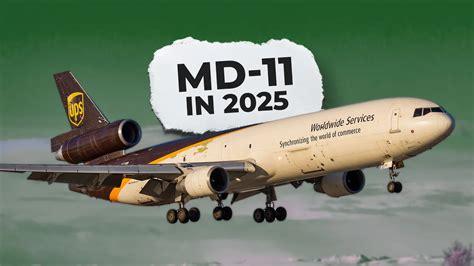
The Legacy of a Trijet Icon: The McDonnell Douglas MD-11
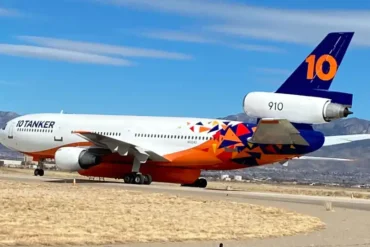
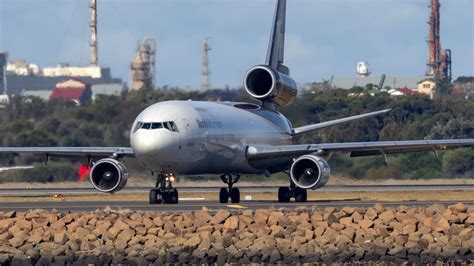
When the McDonnell Douglas MD-11 first took flight in January 1990, it was heralded as a bold evolution of the DC-10. A widebody aircraft featuring a three-engine configuration, stretched fuselage, and all-glass cockpit, the MD-11 promised to bridge long-haul gaps with efficiency and power. Yet, from its inception, the MD-11 battled against fast-evolving twin-engine competitors like the Boeing 777 and Airbus A330, which quickly outpaced it in fuel economy and operational flexibility. Production ceased after only 200 units, and by the early 2010s, its role as a passenger aircraft had all but disappeared.
Still, the MD-11 refused to go quietly. Its resurrection in the cargo sector gave it a second life, with FedEx Express, UPS Airlines, and Western Global Airlines relying on its heavy payload capabilities and cost-effective performance. Even as newer aircraft joined the skies, the MD-11’s trijet silhouette remained a fixture over global logistics routes, particularly in North America. But that resilience may now be coming to an end.
A Tragic Turning Point: The Louisville Crash and Its Aftermath
On November 4, 2025, the MD-11 story reached a new chapter—one marked by tragedy. A UPS-operated MD-11 experienced a catastrophic engine separation shortly after takeoff from Louisville, Kentucky. The left engine detached violently, and the aircraft lost control, ultimately crashing into airport infrastructure. The resulting inferno claimed 14 lives and injured over 20 more. This was not only one of the most devastating cargo crashes in recent U.S. history—it was a wake-up call for the entire aviation community.
UPS responded swiftly, grounding its entire MD-11 fleet out of caution. The Federal Aviation Administration (FAA) followed suit, mandating emergency inspections and barring the aircraft from flight until a full technical review could determine airworthiness. The consequences were immediate and far-reaching. During peak holiday shipping season, both UPS and FedEx scrambled to reroute freight, deploy alternative aircraft, and manage strained operations.
Understanding the MD-11’s Niche in Modern Cargo
The MD-11, despite being a product of late Cold War-era design, maintained a surprising edge in the 21st century cargo landscape. It boasted:
- Main-deck pallet capability, enabling large-volume shipments
- Lower acquisition and ownership costs, due to its age
- Long-haul range, suitable for transcontinental and intercontinental missions
- High reliability in mature airframes operated by experienced crews
Unlike the sleek twins that dominate modern skies, the MD-11 was a workhorse, not a showpiece. It fit into a unique operational pocket where volume and cost-efficiency often outweighed newer aircraft advantages. By 2025, however, the aircraft’s age—many over 30 years old—was beginning to show, with maintenance delays becoming more frequent.
Who Was Still Flying the MD-11 in 2025?
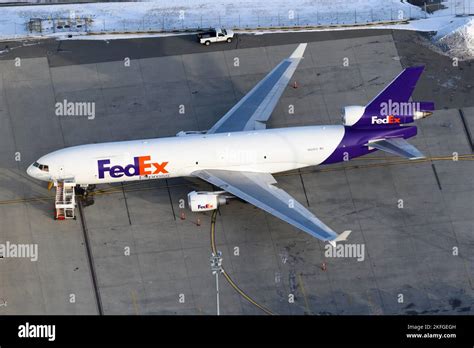
By the time of the Louisville crash, the MD-11 had become a niche legacy platform. Only three main operators still flew it in any meaningful capacity:
UPS Airlines
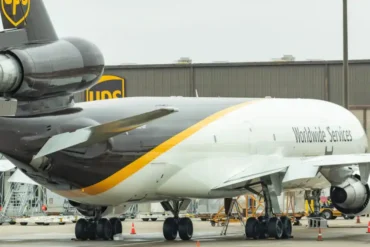
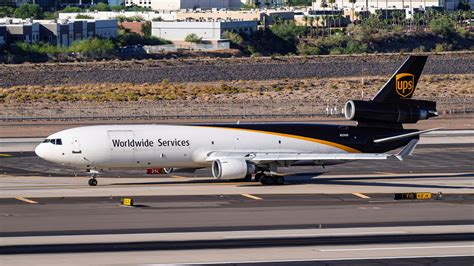
UPS was the largest remaining user, with a fleet of MD-11Fs integrated into its hub-and-spoke system, especially on long-range routes connecting the U.S. to Europe and Asia. The aircraft played a central role during peak demand seasons and were often deployed from key hubs like Louisville and Ontario.
FedEx Express
FedEx had gradually scaled down its MD-11 usage in favor of more efficient aircraft like the Boeing 767F and 777F. Nevertheless, MD-11s still supported international routes and supplemental capacity needs. Crews were trained, logistics networks were aligned, and the type remained vital in select lanes.
Western Global Airlines
A much smaller operator, Western Global leaned heavily on MD-11Fs for ad-hoc charter work and ACMI (Aircraft, Crew, Maintenance, and Insurance) contracts. Without a diversified fleet or deep spare-parts inventory, this operator faced the highest operational risk post-grounding.
Could the MD-11 Fly Again?
The million-dollar question: Will the MD-11 ever return to active service?
As of December 2025, the answer is far from definitive. The FAA has yet to finalize inspection requirements or repair criteria, meaning the aircraft could remain grounded well into 2026. Several factors will determine its fate:
- Regulatory timelines: Approval for inspections and repair protocols could stretch for months, delaying any meaningful return.
- Operator readiness: Both FedEx and UPS already have trained crews, logistical frameworks, and significant sunk costs tied to their MD-11s.
- Economic viability: If repair costs exceed the residual value of the aircraft, or if parts become too scarce, many airframes could be retired permanently.
There remains a path to return, but it is narrow and fading. The age of the aircraft means corrosion, fatigue, and other long-term issues could compound. Even if inspections identify fixable faults, many airframes may be deemed too costly or time-intensive to justify re-certification.
What’s Next for Cargo Operators?
The MD-11’s grounding has forced carriers to accelerate fleet modernization strategies. UPS, for example, has options to scale its Boeing 747-8F and 767F operations, while FedEx can lean into its 777F routes for long-haul missions. But none of these aircraft are perfect substitutes. The MD-11 offered a unique blend of capacity and range at a fraction of the price of newer widebodies.
Meanwhile, charter operators and integrators have stepped in to fill immediate gaps. This comes at a premium, further challenging the economics of the peak shipping season. Unless MD-11s are cleared by spring 2026, carriers may look to permanently phase out the trijet, finally retiring one of aviation’s most recognizable silhouettes.
The Aviation Industry’s Response
The MD-11’s crisis has reignited discussions on fleet aging, maintenance oversight, and risk tolerance in cargo operations. Although passenger carriers have largely moved on from legacy airframes, cargo fleets often continue to fly older jets well beyond their commercial prime. This model, while cost-effective, introduces new safety variables that regulators and manufacturers must now scrutinize more closely.
Boeing, which inherited the MD-11 program through its merger with McDonnell Douglas, has committed to supporting the FAA’s inspection process. However, with parts supply already thin and production lines long shuttered, the sustainability of long-term MD-11 operations remains in serious doubt.
A Symbolic Farewell?
Even if some MD-11s return to service, the symbolic end of the aircraft may already be here. The Louisville crash served not just as a tragedy, but as a catalyst for systemic change. Airlines, regulators, and logistics providers are being forced to confront the reality that the era of the trijet is drawing to a close.
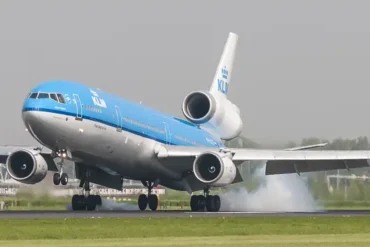
KLM’s farewell to passenger MD-11s in 2014 marked the beginning of this slow goodbye. The events of 2025 may have now written the final chapter. In an industry that prizes innovation and efficiency, legacy aircraft like the MD-11 are finding fewer safe harbors.
Conclusion: The MD-11’s Complex Legacy
The McDonnell Douglas MD-11 was never a perfect aircraft. It struggled to meet its initial performance promises, fell short in the face of competition, and was ultimately sidelined from passenger service faster than anticipated. But in the world of cargo, it found purpose—reliably crossing oceans with heavy freight and extending the life of an ambitious design that once aimed to dominate global skies.
Now, the aircraft stands at a crossroads. Grounded, aging, and under scrutiny, the MD-11 may never again play a central role in global logistics. But its contributions are undeniable. For more than three decades, it filled a unique niche with strength and resilience.
Whether it flies again or becomes a static monument to aviation’s past, the MD-11 has earned its place in the skies—and in the history books.