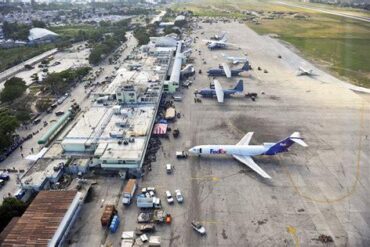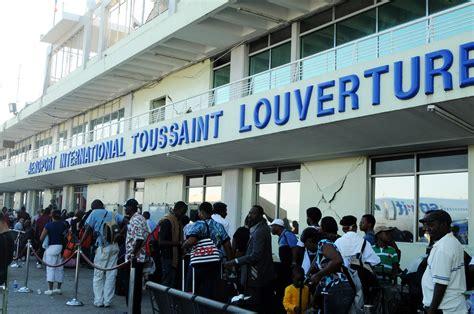
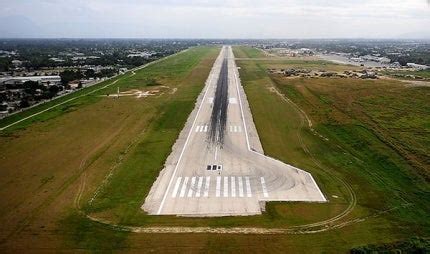
Located in the northeastern district of Tabarre, within the vibrant capital of Port-au-Prince, Toussaint Louverture International Airport (IATA: PAP, ICAO: MTPP) serves as the primary international gateway to Haiti. Known informally as Maïs-Gâté Airport, the facility sits at an elevation of 109 feet and is operated by the Autorité Aéroportuaire Nationale. Despite its turbulent history, including natural disasters and political instability, this airport remains a symbol of Haitian resilience and ambition. It is currently the main hub for Sunrise Airways and a vital node for both passenger and cargo movement in the region.
The airport’s evolution over the past century reflects not only the political and economic shifts in Haiti but also broader changes in Caribbean aviation. From its military origins to its modern rebranding in honor of Toussaint Louverture, the revered Haitian revolutionary leader, the airport tells a story far deeper than its terminal walls.

From Bowen Field to Global Gateway: A Century of Transformation
The airport’s earliest incarnation traces back to Bowen Field, also known as Chancerelles Airport, constructed around 1942 by the United States Marine Corps. This airstrip was initially developed to support the reconnaissance operations of the Haitian Air Corps, specifically for its fleet of Curtiss O-38 aircraft. By 1943, Bowen Field had evolved into a mail distribution point, and by 1944, commercial passenger flights began operating, marking the embryonic phase of Haiti’s civil aviation sector.
During the Cold War era, Bowen Field gained further strategic importance, functioning as a U.S. military base throughout the 1950s and 60s. This militarized infrastructure served not just defense purposes but catalyzed local aviation development. In 1961, the domestic airline Compagnie haïtienne de transports aériens initiated regular operations at the airfield, turning it into a more structured civilian airport.
By 1965, with funds sourced from both U.S. development grants and Haitian tax revenues, a new airport was constructed to replace Bowen Field. Named François Duvalier International Airport after the then-president, it stood as a monumental project located northeast of its predecessor. With the fall of Jean-Claude Duvalier in 1986, the airport was promptly renamed Port-au-Prince International Airport to mark a political transition. Finally, in 2003, President Jean-Bertrand Aristide renamed the airport once more, this time to honor the nation’s revolutionary hero: Toussaint Louverture.
Earthquakes, Assassinations, and Attacks: Testing Infrastructure and Spirit
The airport’s facilities were gravely affected during the devastating earthquake of January 12, 2010. The arrival terminal suffered catastrophic damage, forcing authorities to undertake an emergency reconstruction project. By November 25, 2012, a newly built terminal reopened, offering modern amenities and an updated architectural presence.
However, disaster struck again on July 7, 2021, when the airport was closed following the assassination of President Jovenel Moïse. This period of political upheaval suspended most commercial operations, intensifying concerns over national stability.
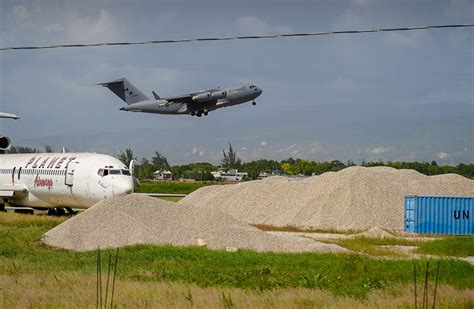
Most recently, in March 2024, the airport endured yet another crisis when it was attacked during a massive jailbreak operation in Port-au-Prince. As violence spilled into the airport’s perimeter, all commercial flights were halted. The U.S. military later intervened, delivering over 500 tons of humanitarian aid and overseeing the clearance of more than 350 illegal structures around the premises. On May 20, 2024, commercial operations resumed, marking a crucial step toward recovery and normalization.
Facilities: A Terminal Reflecting Modernity and Constraint
Toussaint Louverture International Airport features a two-story concrete-and-glass International Terminal, equipped with check-in counters, departure gates, immigration and customs facilities, VIP lounges, and a modest retail section. The Guy Malary Terminal, designated for domestic flights, provides essential services for regional carriers.
The airport includes:
- Three jet bridges
- Ramp space for twelve aircraft simultaneously
- Limited parking and vehicle access facilities on-site
While these features mark significant improvements from earlier decades, they have often proven insufficient to accommodate the surging demand for both regional and long-haul air travel.
Expansion and Development: Striving for International Standards
In response to increasing aviation traffic and infrastructure limitations, an ambitious expansion plan was unveiled with a target completion date of 2015. The proposed redesign included:
- An enlarged main terminal
- Fourteen additional gates
- Modernized taxiways and improved runway access
Though political delays and natural disasters hindered full realization of these goals, notable progress has been made. As of June 15, 2016, the China National Automation Control System had begun construction of a new taxiway, aimed at relieving runway congestion and enhancing aircraft turnaround times.
Passenger and Cargo Operations: Regional Links and Global Aspirations
Before the March 2024 suspension, Toussaint Louverture International Airport serviced a variety of international carriers, linking Haiti to major cities in North America, Europe, and the Caribbean.
Passenger services included:
- Air France (Pointe-à-Pitre)
- Air Caraïbes (Paris–Orly)
- Air Transat (Montréal–Trudeau)
- American Airlines (Miami)
- JetBlue Airways (Fort Lauderdale, JFK–New York)
- Spirit Airlines (Fort Lauderdale)
- Sunrise Airways (Caribbean regional)
- InterCaribbean Airways, Caicos Express, Winair (various Caribbean cities)
Cargo operators included:
- Amerijet International
- IBC Airways
These routes have proved vital for both Haiti’s tourism economy and its diaspora population, which frequently travels between Haiti and cities with large Haitian communities such as Miami, New York, and Montreal.

Ground Access: Limited but Functional
Toussaint Louverture International is accessible by private vehicle and National Bus Route 1. Terminal-side parking is available, though often limited. Ongoing urban security concerns and poor road conditions in Port-au-Prince continue to challenge efficient ground access, particularly for time-sensitive cargo and emergency services.
Accidents and Security Incidents: A Checkered Record
The airport’s operational history has been marred by multiple aviation incidents, highlighting both infrastructural and regulatory weaknesses:
- September 8, 1974: TAISA Curtiss C-46 crash, 4 fatalities.
- March 3, 1980: Learjet charter crash, 3 fatalities.
- July 12, 1980: Douglas C-47 carrying narcotics crashes, 3 fatalities.
- September 15, 1980: JMG DC-6 ditches at sea, 4 fatalities.
- December 7, 1995: Air St. Martin Beechcraft 1900D hits mountain, 20 fatalities.
- February 12, 1996: Haiti Express GAF Nomad crashes post-takeoff, 10 fatalities.
- August 31 and September 11, 2007: Caribintair Cessna accidents (no fatalities).
- May 26, 2013: Brazilian Air Force KC-137 runway incident.
- November 11, 2024: Spirit Airlines A320neo grazed by gunfire near runway; no serious injuries, but U.S. carriers suspended flights temporarily.
These events underscore the necessity for continued investment in safety protocols, radar upgrades, and secure perimeters.
Conclusion: Haiti’s Resilient Aviation Epicenter
Toussaint Louverture International Airport is far more than a travel hub. It is a symbol of national endurance, economic aspiration, and historical depth. Named after a revolutionary titan who fought for liberty and sovereignty, the airport echoes Haiti’s broader struggle for stability and progress.
Despite facing extraordinary challenges—both natural and man-made—it continues to rise, rebuild, and reconnect Haiti with the rest of the world. Its rebirth in May 2024 following gang-related disruptions serves as a powerful metaphor: when cleared of the chaos, even the most battered infrastructure can become a pillar of hope and progress. As Haiti moves forward, the global community will watch to see how this airport—and the nation it serves—can evolve into a safer, more reliable cornerstone of Caribbean aviation.