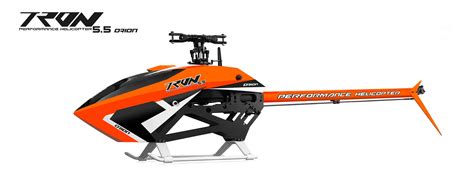
On a brilliant November day in Las Vegas, we took to the skies with two of the most impressive 550-size RC helicopters currently available: the Tron 5.5 Orion and the Tron 5.5 Gemini. These two machines, while sharing much of their DNA, bring subtle yet impactful differences that make each one stand out for pilots seeking precision, power, and durability. Today, we dive deep into their construction, electronics, and flight performance to give you an uncompromising look under the hood—and in the air.
A Closer Look at the Canopy and Frame Differences
While the Tron Orion and Tron Gemini may appear nearly identical at first glance, their distinctions begin with the canopy design and lower frame architecture. The Orion sports a slightly sleeker, more aerodynamically contoured canopy, while the Gemini opts for a robust, slightly wider profile designed to enhance visibility and durability in aggressive maneuvers. Both canopies are constructed from lightweight composite materials, ensuring minimal weight penalty without sacrificing resilience.
Beneath the canopy, we find that the lower frame structures are subtly altered to accommodate their respective setups. The Orion’s frame integrates reinforced mounting points and a slightly different bracing pattern to optimize torque handling under high-G loads. Conversely, the Gemini features a marginally broader lower frame that enhances structural rigidity—a design nuance aimed at pilots who push their helicopters through extreme 3D routines.
Shared Electronics with Tailored Powerplants
Under the hood, both the Tron Orion and Gemini are powered by the formidable Hobbywing 150A ESC, a unit known for its smooth throttle control and reliable thermal management even during high-amperage bursts. Yet the real divergence arises from their chosen motors.
Inside the Orion hums the Scorpion HK5-426 1115KV motor, a powerhouse engineered for sustained high-RPM operations with outstanding torque delivery across the throttle curve. This motor pairs beautifully with the Orion’s aerodynamic profile, providing blistering punchouts and steady cyclic authority.
The Gemini, on the other hand, features the Tron Dynamic 4025 1100KV motor, slightly lower in KV but designed for buttery-smooth power delivery and superior efficiency under load. This makes the Gemini a favorite among pilots who prioritize precision over sheer aggressiveness, allowing for controlled yet expressive 3D performance.
Both helicopters are tuned to 6S LiPo power systems, typically running 5000mAh to 5600mAh packs. This power setup balances flight time with performance, offering 4-6 minutes of adrenaline-fueled acrobatics without risking battery sag or thermal overload.
Servo Systems: Torque and Responsiveness Aligned
Both the Tron Orion and Gemini rely on Torque servos, but with slightly different models tailored to each build. The Orion is equipped with Torque BLS1809 mini-size tail servo and matching mini-size cyclic servos, a configuration that reduces weight while retaining high-speed actuation critical for tight maneuvers.
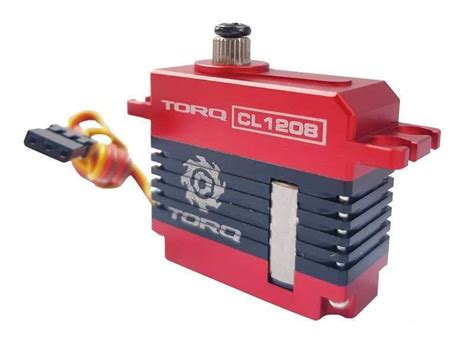
Meanwhile, the Gemini features the Torque CL1208 servos across the board—full-size units that deliver even more torque at the expense of slight weight increase. This choice complements the Gemini’s more robust frame design, providing pilots with an ultra-precise response without compromising authority during heavy pitch or roll inputs.
Gyros, Radios, and Blades: Tuning for Perfection
Flight control is handled by Futaba CGY760R gyros on both machines, offering unmatched stabilization and programmable flight characteristics tailored to pilot preferences. Combined with RT T69 radios, these gyros provide near-instantaneous command translation from sticks to rotors, ensuring the helicopter reacts exactly as intended.
Both helicopters are fitted with RT 560 Ultimate blades, renowned for their balance between aggressive pop and smooth tracking. These blades amplify cyclic response without sacrificing tracking precision, allowing pilots to push boundaries in smack 3D or elegant aerobatics alike.
Flight Impressions: Precision vs Power
In the air, the Tron Orion presents itself as a razor-sharp precision instrument. Its lighter tail servo and mini-size cyclic servos translate into snappier pitch and roll rates, giving it a nimble feel perfect for tight, technical routines. The Scorpion motor’s higher KV lends itself to aggressive climbs and explosive collective inputs, rewarding pilots who favor high-RPM flying styles.
In contrast, the Tron Gemini offers a more grounded, powerful presence. The full-size Torque CL1208 servos deliver superior authority when muscling through power-hungry maneuvers like piro flips and elevator tic-tocs. The Dynamic motor’s slightly lower KV allows for more linear throttle response, providing buttery-smooth transitions between hover and full-power climbs.
Where the Orion excels in precision flicks and rapid transitions, the Gemini dominates in flow and authority, carving wide arcs through the sky with effortless grace. Both helicopters are remarkably quiet for their class, a testament to their efficient drivetrain design and balanced rotor systems.
Which One Should You Choose?
Ultimately, the choice between the Tron 5.5 Orion and the Tron 5.5 Gemini comes down to your flying style and preferences:
Choose the Orion if you prioritize lighter control feel, rapid cyclic rates, and high-RPM agility.
Opt for the Gemini if you seek greater control authority, smoother throttle transitions, and more robust handling under extreme load.
Both helicopters deliver exceptional build quality, thoughtful engineering, and outstanding flight performance that stands tall in the 550-size category. Whether carving precise patterns or commanding powerful 3D sequences, either model will serve as a reliable, exhilarating platform for pushing your RC helicopter skills to new heights.
In the end, it’s not just about specs—it’s about feeling connected to the machine in the air. And in both the Tron Orion and Gemini, that connection is nothing short of extraordinary.