South Korea’s budget carrier T’way Air has made a daring debut in the transpacific aviation sector by launching a no-frills Airbus A330-300 service from Seoul Incheon to Vancouver, Canada. This marks the airline’s first non-stop destination on the North American mainland, signaling an ambitious step beyond its short-haul and regional routes into long-haul international territory. With this, T’way joins a small but growing group of low-cost carriers that aim to upend premium airline dominance across the Pacific, and the implications are far-reaching for passengers, competitors, and the broader aviation industry.
A Strategic Entry Into a High-Stakes Market
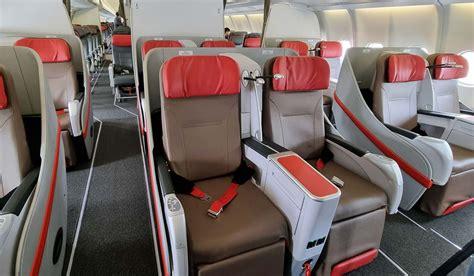
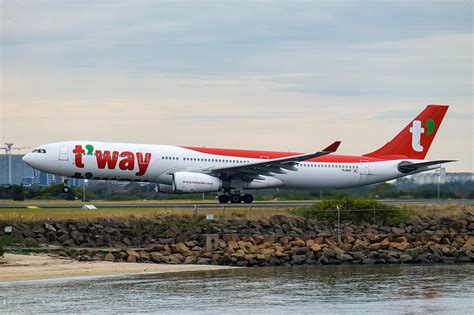
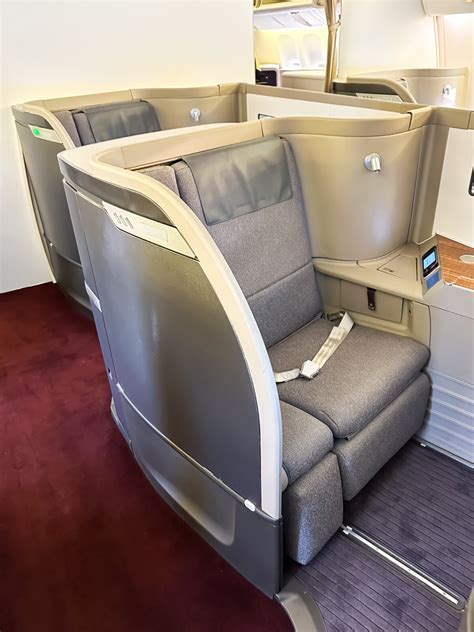
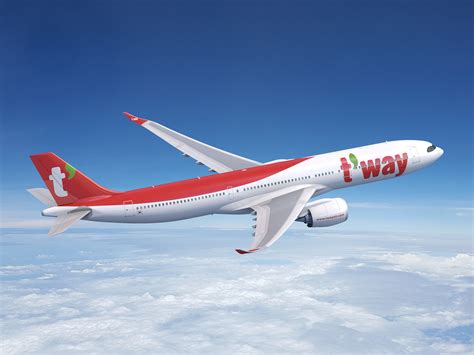
T’way’s inaugural flight landed at Vancouver International Airport (YVR) on July 12, 2025, introducing four-times-weekly service between Seoul and Vancouver year-round. Operating with a 359-seat Airbus A330-300, the aircraft offers 12 fully flat Business Saver Class seats in a 2-2-2 layout and 335 economy class seats arranged in 2-4-2. While it lacks traditional seatback entertainment screens, even on its longest segments, the airline includes meals, carry-on, and checked luggage in its base economy fares — a move that positions it somewhere between ultra-low-cost and hybrid service models.
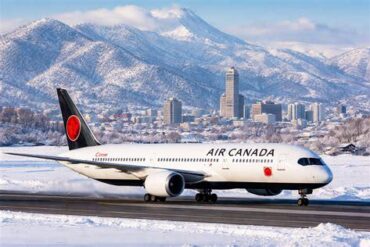
Rather than chase connecting traffic through Seoul, T’way’s point-to-point strategy aims squarely at local demand. With over 180,000 annual round-trip passengers between Vancouver and Seoul, the route is already serviced by Air Canada and Korean Air, both offering superior onboard features like inflight entertainment and more luxurious cabin amenities. Yet, despite this competitive field, T’way’s entry illustrates that not all flyers prioritize comfort — many prioritize cost.
No-Frills on a 12-Hour Flight: A Bold Proposition
T’way’s Vancouver route is now the sixth longest in its global network, stretching past 12 hours westbound due to headwinds and the restriction of Russian airspace. While the airline’s European expansion earlier in 2024 (such as the launch of Seoul–Zagreb) required mid-route fuel stops, Vancouver is currently operated nonstop with the A330-300, though there are indications that future equipment upgrades may introduce A330-200s or next-gen aircraft for better fuel efficiency and onboard amenities.
The absence of seatback entertainment might surprise passengers used to long-haul comforts. But T’way encourages travelers to bring their own devices — a move that’s become more palatable in an era of mobile streaming dominance. What it sacrifices in entertainment, the airline hopes to make up for in reliability, pricing consistency, and operational focus. The gamble is that budget-conscious travelers are willing to trade bells and whistles for affordability.
Competitive Pricing… With a Catch
Though T’way is pitching itself as a low-cost disruptor, its base fares between Seoul and Vancouver are only marginally lower than those offered by Air Canada or Korean Air. However, the real savings surface through bundled fare structures that reduce the cost of food and luggage, which are often charged separately by full-service rivals. Travelers seeking the lowest total trip cost, especially those flying with luggage or in need of basic meals, may find T’way’s offer economically superior despite the headline fare appearing similar.
What also differentiates T’way is its clear segmentation of Business Saver Class, an upgraded offering not typically expected on low-cost carriers. The fully flat seats cater to leisure or price-sensitive business travelers who might otherwise be priced out of premium cabins on legacy airlines. It’s not a luxurious experience, but it’s functional and cost-effective.
Vancouver: Asia’s Western Gateway
Vancouver’s role as a critical air corridor to Asia is growing. In 2024 alone, 2.4 million passengers traveled between Vancouver and Asian destinations. Yet nearly half of those journeys involved at least one stop, usually somewhere in Asia. This persistent gap in nonstop capacity points to an under-tapped demand for direct transpacific lift, especially as global recovery drives both leisure and VFR (visiting friends and relatives) travel.
Seoul ranks as Vancouver’s fourth busiest Asian route, trailing only Delhi, Hong Kong, and Tokyo. The launch of T’way’s nonstop service not only adds needed seat capacity but also applies pressure on incumbent carriers to sharpen their pricing or innovate their product offerings. It also reinforces Vancouver’s role as a testbed for long-haul low-cost success — a proving ground where pricing experiments and route expansion strategies either gain traction or quickly fizzle.
The Budget Long-Haul Trend: T’way Joins a Rising Wave
T’way’s launch is emblematic of a broader shift in global aviation. Long considered off-limits to low-cost airlines due to fuel costs, aircraft range limitations, and passenger expectations, long-haul LCCs are now carving out niche markets. Advances in aircraft efficiency, leaner operational models, and digital-first inflight experiences are enabling budget carriers to challenge flagships on routes previously seen as untouchable.
AirAsia X, Norse Atlantic, Zipair, and now T’way represent a second generation of long-haul low-cost ventures. Unlike their predecessors, these carriers are learning from early mistakes — choosing better-equipped widebody aircraft, focusing on O&D (origin and destination) traffic rather than complex hub-and-spoke models, and tightly managing ancillary revenue strategies.
For T’way, Vancouver could be a gateway to broader ambitions. If the route achieves commercial viability, the airline might expand to additional North American cities like Toronto, Los Angeles, or San Francisco, all of which have significant Korean diaspora populations and strong Asia-bound travel demand.
Operational Tradeoffs and Fleet Considerations
While the A330-300 currently operating the Seoul–Vancouver service is capable of handling the range with reduced payload, there are operational limitations, especially on ultra-long segments. T’way previously faced this issue on its European flights and addressed it by switching to the A330-200, which, though smaller, has greater range and fuel efficiency under certain load conditions.
T’way’s current fleet is modest compared to its competitors, and its long-haul capabilities are largely dependent on wet-leases and tight aircraft utilization cycles. The airline has signaled that it may eventually invest in next-generation widebody aircraft such as the Airbus A350 or Boeing 787 to ensure smoother, nonstop operations without fuel stops or weight constraints.
What T’way Brings to the Table — and What It Doesn’t
Ultimately, T’way is not trying to be a premium airline. It’s aiming to offer a reliable, affordable alternative for flyers who care more about the bottom line than the onboard experience. While it does include some basics like food and luggage in its economy fares, it skips the frills that inflate operational costs. There’s no inflight Wi-Fi, no seatback entertainment, and no expansive lounge access. But what you get is a 12-hour transpacific journey for potentially hundreds less — especially when booked in advance or during promotional periods.
This stripped-down model will likely appeal to young travelers, students, backpackers, and cost-focused families. Business travelers or frequent flyers tied to loyalty programs may continue to favor legacy airlines, but price elasticity in leisure travel suggests there is room for both models to thrive.
Conclusion: A Calculated Disruption of the Skies
T’way Air’s entry into the Vancouver market is more than a new flight route — it’s a statement. The airline is challenging the notion that long-haul must be synonymous with luxury or price inflation. It’s betting that today’s flyers are savvy enough to bring their own screens, pack a power bank, and trade indulgence for value if the savings are worth it.
Whether this model proves sustainable depends on several variables: fuel prices, geopolitical stability, demand trends, and customer tolerance for low-frill flying on 12-hour routes. But for now, T’way’s gamble is injecting new competition into one of the Pacific’s busiest airways, and in doing so, it’s reshaping expectations for what long-haul travel can — and should — cost.
With its A330 no-frills service to Vancouver, T’way Air is writing a new chapter in the transpacific playbook, and budget travelers are paying attention.