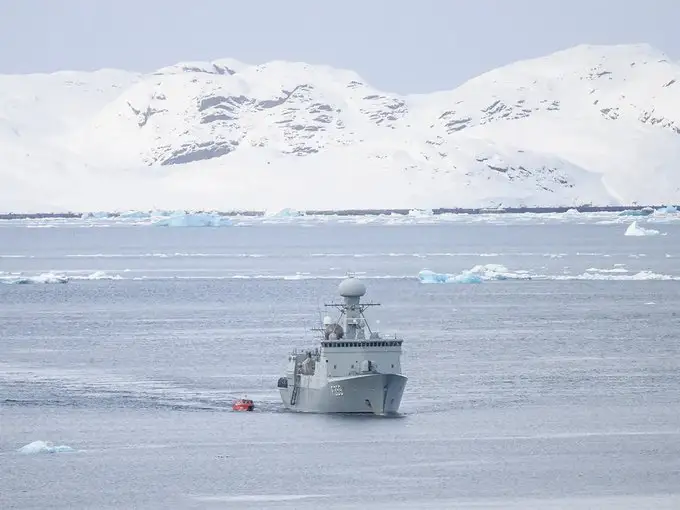
The United States is actively evaluating a transformative security arrangement that could bring Greenland’s defense under total American control, a move that has sparked intense debate across NATO and the European Union. At the core of this geopolitical maneuver is the potential application of a Compact of Free Association (COFA)—a legal framework historically used with small Pacific island nations, but now being explored for the Arctic frontier.
COFA: A Strategic Legal Tool for Expanding U.S. Military Reach
The Compact of Free Association is a potent legal instrument. When applied, it allows the United States to assume full responsibility for the defense and security of an associated nation while leaving its internal governance intact. Currently, this arrangement exists with three Pacific nations—Micronesia, the Marshall Islands, and Palau. Extending this model to Greenland would mark a seismic shift in American strategic posture in the Arctic.
Under such an agreement:
- Greenland would retain self-governance but cede all defense authority to Washington.
- The U.S. could establish and operate military installations without requiring new bilateral negotiations.
- Greenland would be prohibited from allowing foreign military presence or signing defense treaties without U.S. consent.
This would grant the U.S. a de facto veto over foreign military access to the island, thereby locking out adversaries like Russia and China from potential influence in the Arctic—a region growing in strategic importance.
The Trump Doctrine: National Security Over Diplomatic Nuance
The proposal gained renewed momentum following President Donald Trump’s statements in early 2026, asserting that Greenland was essential to U.S. national security. The White House confirmed on January 6 that multiple policy avenues—including military intervention—were under active review. This added an unmistakable layer of urgency and coercion to an already controversial subject.
Trump’s framing of Greenland as a security linchpin followed his administration’s 2019 attempts to outright purchase the island—an idea dismissed as absurd by Danish officials at the time. Now, the discourse has matured into a legal and military strategy focused on operational control rather than territorial ownership.
Geostrategic Goldmine: Why Greenland Matters
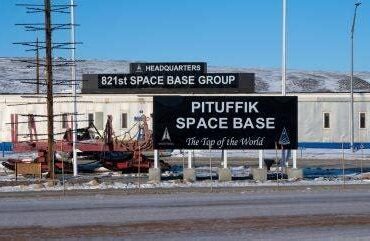
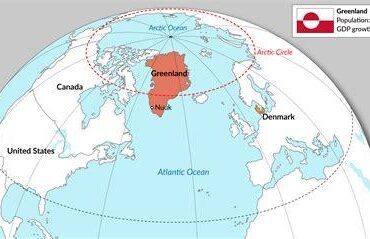
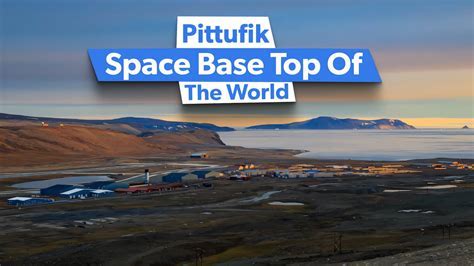
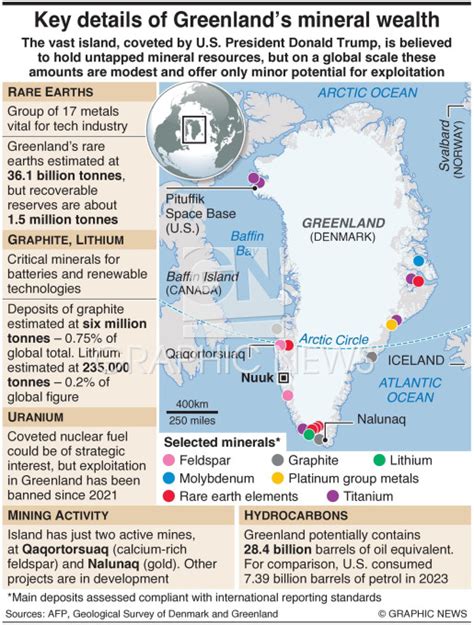
Greenland’s significance is not symbolic—it is geostrategic, economic, and military. It lies at the crossroads of the Arctic and North Atlantic, directly in the path of Russian submarine transit routes and near the critical Greenland-Iceland-UK (GIUK) gap. The U.S. already operates the Pituffik Space Force Base, a key hub for missile warning and space surveillance.
American military planners view permanent access to Greenland as essential for:
- Expanding early warning systems
- Securing sea lines of communication
- Bolstering Arctic deterrence in response to Russian and Chinese maritime activities
Moreover, Greenland is rich in strategic resources, possessing 43 out of 50 U.S.-classified critical minerals, including rare earth elements vital for defense technologies. Although oil and gas exploration was banned in 2021 by Greenland’s government, melting ice due to climate change is expected to open new avenues for resource extraction—raising the stakes for long-term control.
A COFA Would Dismantle Greenland’s Defense Sovereignty
Should a COFA be enacted, Greenland’s military sovereignty would effectively vanish. Historical precedents show that COFA partners:
- Do not maintain independent military forces capable of defending against external threats
- Rely entirely on the U.S. for security guarantees
- Limit their national defense to internal policing, maritime monitoring, and civil protection
Citizens in COFA states are often allowed to serve in the U.S. Armed Forces, and in some cases do so in large numbers. But the loss of defense autonomy is complete and long-term. In essence, Greenland would become a strategic protectorate, self-governing in civil matters but locked into American defense architecture.
Escalation Signals: Military Options and European Alarm
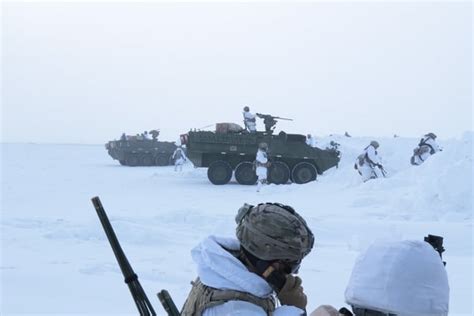
The White House’s inclusion of military force as a policy option has set off alarm bells across Europe. European leaders view this as an alarming signal of a broader U.S. willingness to act unilaterally, even within the alliance framework of NATO. This follows the recent U.S. special operations mission in Venezuela, where President Nicolás Maduro was seized and transferred to New York in a high-profile extraction mission.
The implication is clear: if the U.S. is willing to carry out military actions to achieve strategic objectives, Greenland could be next.
European Resistance and NATO Fractures
Key European leaders have pushed back forcefully. On January 5, Greenland’s Prime Minister Jens-Frederik Nielsen denounced Washington’s pressure tactics, stating: “No more pressure, no more innuendo, no more fantasies about annexation.” Denmark’s Prime Minister Mette Frederiksen echoed the sentiment, demanding that the U.S. abandon any threat-based strategy.
Britain, France, Germany, and the Nordic-Baltic bloc also reaffirmed Greenlandic and Danish sovereignty, demanding that Arctic security remain a collective NATO responsibility, not a matter for unilateral U.S. dominance. The German foreign minister even referenced NATO’s Article 5, noting the irony that members might need to defend against internal coercion rather than external threats.
The Legal Reality: U.S. Already Has Access
Importantly, the U.S. does not require a COFA to maintain or expand its presence in Greenland. Existing bilateral agreements with Denmark already allow the U.S. significant freedom to deploy troops and operate military facilities. While any major escalation in posture would need Danish consent, there are no formal troop limits under current arrangements.
A COFA, therefore, isn’t about access—it’s about control. Washington seeks a framework where it can act unilaterally, without continual consultation or permission from Copenhagen. In doing so, it risks triggering a crisis of legitimacy within NATO, pitting U.S. strategic ambitions against European sovereignty principles.
Strategic Resources: Greenland’s Hidden Value
Beyond its location, Greenland is a resource powerhouse. Its deposits include:
- Rare earth elements crucial for U.S. defense and electronics
- Uranium and other minerals essential for energy and weapon systems
- Untapped oil and gas reserves potentially worth billions
While Denmark and Greenland’s local government have implemented environmental protections and bans on extraction, American officials have signaled that resource access is integral to their long-term plans. In a COFA framework, Washington would gain decisive say over who extracts what, and under what conditions.
A Proxy Battlefield: Russia and China in the Arctic
The U.S. has increasingly cited foreign influence operations by Russia and China to justify deeper involvement in Greenland. Reports of Chinese scientific expeditions and Russian naval traffic near Greenland’s waters are presented as evidence of a rising threat environment.
Within a COFA, Greenland would be off-limits to all other powers, even for peaceful or scientific cooperation, unless expressly permitted by the U.S. This would lock down the Arctic front, making it the newest stage in the New Cold War—not only in name, but in concrete defense policy.
Conclusion: A Turning Point in Arctic Power Politics
The potential application of a Compact of Free Association between the U.S. and Greenland is not a diplomatic formality. It represents a fundamental reconfiguration of Arctic geopolitics. If successful, it would place Greenland’s strategic, military, and resource assets under near-total U.S. oversight, with profound consequences for transatlantic alliances, sovereignty norms, and NATO’s future coherence.
What emerges is a picture of a superpower willing to test the boundaries of international diplomacy and alliance politics in pursuit of strategic permanence. Greenland, once seen as a remote icy outpost, is now positioned at the heart of 21st-century great power competition.
As European leaders brace for what comes next, the world watches whether Greenland will remain part of a shared security order—or become a testing ground for American power projection in the Arctic.