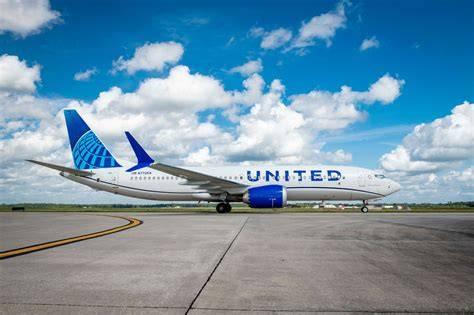
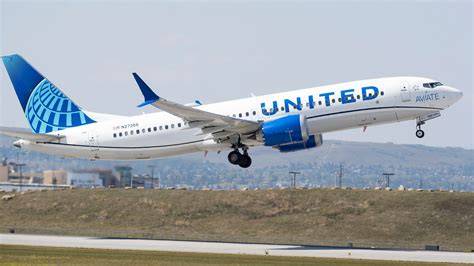
United Airlines is reopening two of San Francisco International Airport’s most conspicuous route gaps, and both are being flown by the fuel-efficient Boeing 737 MAX family. On March 28, 2027, the Chicago-based Star Alliance member will launch a brand-new link from SFO to Charleston International Airport (CHS) and revive service from SFO to Hartford’s Bradley International Airport (BDL), two city pairs that have sat without nonstop flights for years despite carrying substantial connecting traffic through hubs elsewhere. The announcement is the centerpiece of a four-route network expansion that also returns Chicago O’Hare to Bermuda service for the first time since 2007, alongside SFO to Oklahoma City, though the Charleston and Hartford additions carry the most strategic weight because of their geography, their block times, and the markets they open to United’s West Coast feed machine.
Charleston Becomes United’s Newest Transcontinental Frontier From SFO
The San Francisco to Charleston service begins as a fresh market for United, scheduled four times weekly on Mondays, Thursdays, Fridays and Sundays aboard the 166-seat Boeing 737 MAX 8. Flight UA1969 departs SFO at 8:10 AM local time and reaches CHS at 4:35 PM after a block time of 5 hours 25 minutes, while the return flight UA1760 leaves Charleston at 5:40 PM and lands back in California at 8:50 PM the same evening, a scheduled 6 hours 10 minutes. Covering 2,082 nautical miles (3,856 kilometers) in each direction, the route instantly becomes Charleston’s second-longest nonstop service behind Alaska Airlines’ Seattle connection, giving the South Carolina airport a direct line into one of the busiest transpacific gateways in the country.
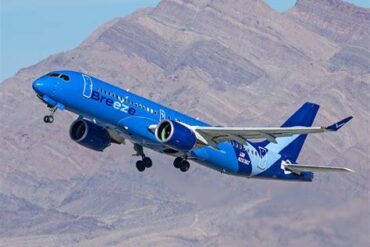
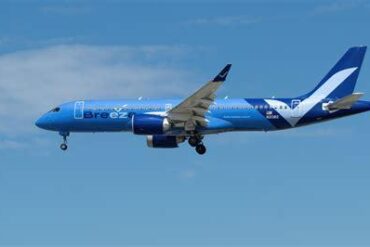
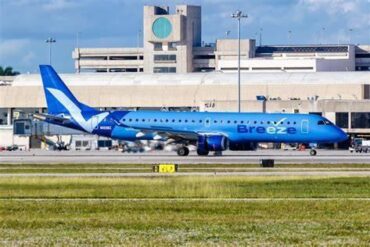
That particular city pair has history. Breeze Airways opened it on May 26, 2022, as only the airline’s second transcontinental operation following Richmond to SFO, which launched the day before, and the first nonstop SFO-CHS flights on record until that point. The experiment ended after less than a year, closing in January 2023. US Department of Transportation data shows Breeze filled 76.1% of seats, with some months surpassing 85%, a respectable showing for a brand-new carrier on a brand-new long-haul route in a short window, suggesting that the fares required to sustain that load factor simply were not high enough to cover the cost of the mission.
Why the Local Demand Supports a Six-Hour Flight
The market never disappeared, only the nonstop did. In the 12 months through July 2026, DOT figures show 59,200 round-trip passengers flew indirectly between SFO and CHS, equivalent to roughly 162 travelers a day in each direction, and San Francisco ranked as Charleston’s third-largest unserved domestic market. United’s departure and arrival times are built for connectivity rather than point-to-point convenience alone: an 8:10 AM launch from SFO sets up connections from United’s deep Asia-Pacific and domestic network, while the 8:50 PM arrival home returns East Coast travelers in time to connect onward across California and beyond. For a 737 MAX 8 carrying 166 seats, a market of that depth paired with hub feed is a materially stronger proposition than a standalone low-cost operation chasing price-sensitive leisure demand.
Hartford Returns Daily on the Larger 737 MAX 9
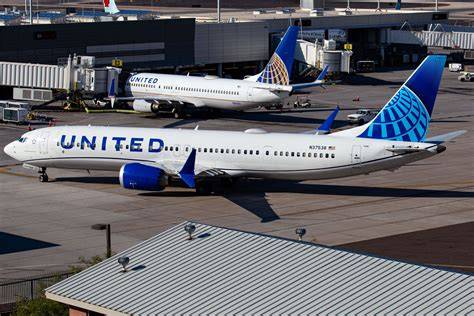
On the same March 28 start date, United reintroduces SFO to Bradley International Airport with a daily rotation on the 179-seat Boeing 737 MAX 9. Flight UA755 departs San Francisco at 12:15 PM and arrives in Connecticut at 8:52 PM for a 5-hour 37-minute block, and UA2400 departs BDL at 6:20 PM for a 9:40 PM arrival, scheduled at 6 hours 20 minutes. At 2,281 nautical miles each way, the route becomes Hartford’s longest domestic nonstop, displacing Las Vegas, and ranks second among all of BDL’s links behind Aer Lingus service to Dublin.
United has flown the corridor before, operating regular SFO-BDL flights from 1997 to 2001 and again between 2017 and 2018, while JetBlue tried the market in December 2020 during the pandemic and withdrew in April 2022. That left SFO-Hartford unserved for four and a half years. Local traffic has held at 82,400 round-trip passengers, or about 226 people daily in each direction, making San Francisco Bradley’s second-largest unserved domestic market after Los Angeles at 118,100. United already carries 31.9% of all traffic to and from SFO, the largest share of any carrier, principally routed through Washington Dulles, Chicago O’Hare and Denver, so converting some of that flow to a nonstop defends yield on a route where rivals offer a wide menu of hub alternatives.
Mapping SFO’s Largest Unserved Markets
DOT data for August 2025 through July 2026 places New York LaGuardia atop the list of San Francisco’s largest unserved domestic markets with 91,200 local passengers, a figure constrained by LaGuardia’s perimeter rule. Hartford follows at 82,400, then San Juan at 72,400, Jacksonville at 60,100, Charleston at 59,200, Buffalo at 54,500, Madison at 54,300, Albany at 49,700, Milwaukee at 46,100 and Norfolk at 43,400. Two of those ten markets are being addressed immediately, and both sit squarely inside the six-hour envelope the 737 MAX was designed to make economically viable, which is why the aircraft choice matters as much as the city selection.
The picture sharpens further when looking at SFO traffic that is served, but not by United. New York JFK draws 1.8 million local passengers across four airlines while United serves Newark, Charlotte carries 233,400 on American, Chicago Midway handles 81,400 on Southwest while United flies O’Hare, Seattle Paine Field moves 74,800 on Alaska while United flies Seattle-Tacoma, and Richmond accounts for 70,000 on Breeze. The pattern is unmistakable: United is deliberately closing the gaps where a nonstop can be operated profitably and where hub connections already prove demand exists, turning aircraft efficiency into share gains rather than chasing the largest but most contested markets outright.
What the Six-Hour 737 MAX Strategy Means for Travelers
For passengers, the practical effect is a pair of journeys that no longer require a connection through Denver, Chicago or Washington, and schedules timed to work in both directions without an overnight. Charleston gains its second-longest nonstop and a gateway into the Pacific basin, Hartford gains its longest domestic link and an easier path to Silicon Valley and Asian connections, and United gains four weekly and seven weekly frequencies that slot neatly into an existing fleet already serving transcontinental missions. With 2,082 and 2,281 nautical miles respectively, both routes sit comfortably inside the MAX family’s range while keeping seat counts aligned to local demand rather than oversized widebodies.
The two launches sit alongside SFO-Oklahoma City and the O’Hare-Bermuda return, but the transcontinental pair stands apart. They revive markets United itself once flew, they restore nonstop access that Breeze briefly proved and then abandoned, and they do so on the smallest aircraft capable of the mission at a moment when six-hour domestic block times are no longer a niche but a core piece of network planning. For San Francisco, five of its ten largest unserved domestic markets remain untouched, yet the two that United has now claimed are the ones where feed, local demand and aircraft economics line up most cleanly.