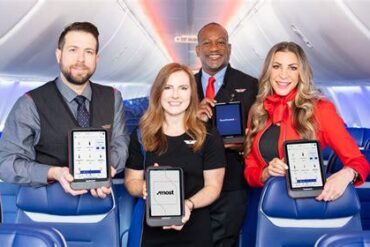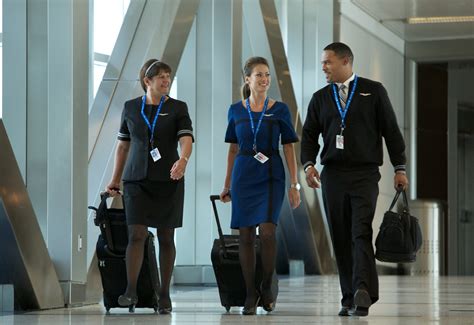
United Airlines has just detonated a $561 million bonus package for its flight attendants—an industry-shaking move that redefines not only pay structures but the very nature of frontline recognition in commercial aviation. The deal, tied to a broader $6 billion labor agreement, is not just a financial gesture—it is a strategic maneuver to anchor loyalty, preempt unrest, and set a new benchmark for airline crew compensation in the post-pandemic recovery era.
Flight attendants will receive an average $21,500 in retroactive ratification bonuses, with seasoned veterans earning as much as $50,000. The offer is part of a tentative agreement with the Association of Flight Attendants-CWA, with voting ongoing until the end of July. Should the deal be ratified, United would immediately leap to the front of the pack in hourly pay, offering $68.17 per hour, just ahead of American Airlines and Delta.
United’s Compensation Revolution Sends Shockwaves Across Aviation
More than a headline figure, United’s move marks a fundamental shift in the labor strategy of legacy carriers. For decades, cabin crew wages have struggled to keep up with inflation, even as airlines recovered from pandemic-era losses and posted record profits. United’s inclusion of boarding pay, long a contested topic in union negotiations, further cements its aggressive bid to raise the standard.
Boarding pay at United—approximately half the hourly rate—means additional compensation for time previously unpaid. This adds an estimated $3 per hour advantage over competitors like American and Delta, giving United both a financial and moral edge in attracting and retaining inflight personnel.
Global Carriers Escalate Compensation Wars
While United leads the charge in North America, international players are far from idle. Airlines across the globe are deploying profit-sharing programs, wage hikes, and incentive packages to retain critical inflight talent amid growing travel demand and union pressures.
Emirates Rewards Loyalty with 22-Week Bonus
In the Middle East, Emirates has rolled out an eye-popping 22-week bonus payout for flight attendants in 2025. Paired with tax-free salaries and expat housing perks, the move underlines the carrier’s exceptional profitability and dedication to staff retention in a competitive market.
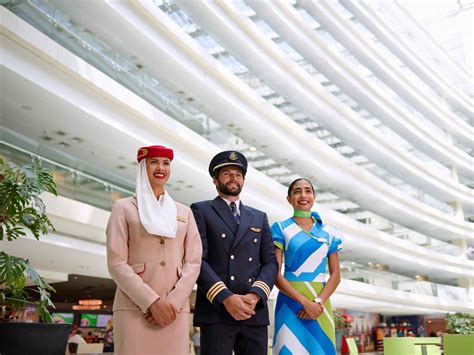
The bonus is a testament to both performance and loyalty. For a non-unionized airline, it acts as a powerful retention lever, offering a clear financial incentive for crew to stay despite the rigorous demands of long-haul international service.
Singapore Airlines Maintains Generosity with 7.45-Month Bonus
Asia’s most iconic carrier, Singapore Airlines (SIA), distributed bonuses equivalent to 7.45 months of salary to employees this year. Though slightly lower than the record-breaking payout in 2024, the figure reinforces SIA’s role as a top-tier employer in global aviation.
The bonus comes despite cost pressures and reflects the airline’s strategy of performance-based remuneration in a region with weaker union representation. It sends a strong signal to other Asian carriers about the need to keep pace.
U.S. Legacy Carriers Respond to United’s Bold Bet
Alaska Airlines: Quiet Strength with Strong Bonuses
Alaska Airlines, while less headline-grabbing, delivered $327 million in bonuses to employees in 2025. For flight attendants, this translated into nearly six weeks of extra pay, reinforcing Alaska’s position as one of the best profit-sharing carriers in the U.S.
What’s notable is Alaska’s consistency. Without relying on flashy announcements, it continues to deliver real value to its workforce—proof that steady, predictable rewards can be just as effective as headline-grabbing payouts.
Delta Walks the Tightrope with Non-Unionized Model
Despite operating without a unionized cabin crew, Delta Air Lines awarded a 4% wage hike in 2025, plus a $1.4 billion profit-sharing payout in 2024. This dual-pronged approach aims to deter unionization while maintaining competitive compensation.
Delta’s strategy is clear: reward performance richly while preserving operational flexibility. However, United’s aggressive move may force Delta to consider deeper changes if it hopes to maintain morale and fend off renewed organizing efforts.
Southwest Airlines Faces Pressure After Boarding Pay Omission
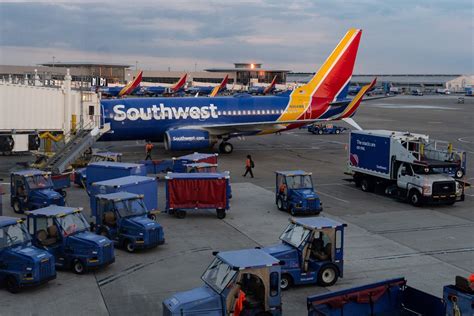
Southwest, long seen as the worker-friendly low-cost behemoth, is feeling the heat. In 2024, it finalized a 33% pay increase over four years and distributed $364 million in ratification bonuses. But it stopped short of implementing boarding pay, a decision that now looks short-sighted.
As competitors move to normalize this practice, Southwest may be forced back to the negotiating table to revisit key elements of its labor agreement.
Qantas Ushers in Equity with ‘Same Job, Same Pay’
In Australia, Qantas has restructured cabin crew compensation through its ambitious “Same Job, Same Pay” policy. More than 2,000 employees have seen significant gains, with some receiving A$20,000 raises. The change aligns outsourced labor rates with core staff—creating uniformity in pay scales and eliminating loopholes.
The overhaul was necessary to support the airline’s upcoming Project Sunrise, which entails ultra-long-haul flights requiring higher compensation and stricter work-life balance agreements. For Qantas, this was about equity, sustainability, and future-proofing its workforce.
Aeroflot Surprises with 30% Pay Bump
In a less predictable move, Russia’s Aeroflot announced a 30% wage increase for its cabin crew earlier in 2025. Despite ongoing geopolitical and economic turmoil, the airline is taking steps to prevent brain drain and maintain operational continuity during an era of internal restructuring.
The raise is notable, not just because of the airline’s state-backed nature, but because it hints at growing labor pressures in emerging aviation markets. With Russian aviation facing isolation, keeping trained flight attendants is vital to survival.
Market Implications: Legacy Models Under Siege
United’s groundbreaking deal has reset the competitive landscape. No longer can legacy carriers operate under old assumptions. The compensation floor has risen, and airlines that delay adaptation risk losing talent in an era where customer satisfaction hinges on frontline service.
What makes United’s approach particularly shrewd is the financial engineering behind it. The $561 million charge in Q2 was partially offset by a $114 million gain from non-core asset sales. This reveals a balanced strategy—invest in labor while maintaining financial health.
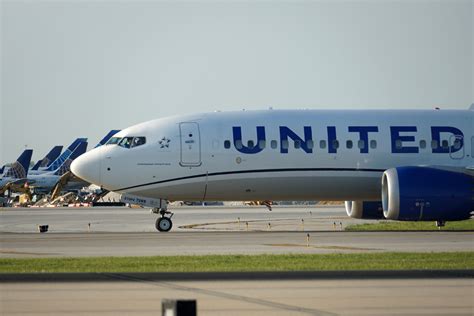
With high season in full swing and airlines battling for capacity, any sign of labor unrest or crew shortages could translate into cascading delays, cancellations, and reputational hits. United’s preemptive investment ensures operational continuity and signals to Wall Street and unions alike that it understands the stakes.
The Road Ahead: Will Other Carriers Rise to the Challenge?
Now that United has set a new standard, the ripple effects are only beginning. Labor unions across the industry are watching closely, benchmarking every clause in the tentative agreement. If the deal is ratified, the pressure on Delta, Southwest, and others will mount exponentially.
For global carriers, the message is also clear: as travel demand rebounds and inflation continues to bite, compensation must evolve. Flight attendants are no longer seen as expendable service workers—they are brand ambassadors, safety experts, and core to the travel experience.
In the emerging post-pandemic aviation economy, pay parity, incentive alignment, and transparent career paths will determine who wins the battle for crew loyalty.
The skies have changed. And so have the rules of the game.