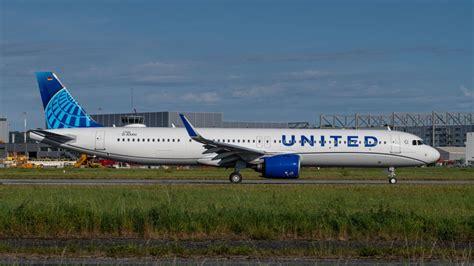
United Airlines is preparing to take another major step in its Airbus A321XLR strategy, with the aircraft scheduled to enter long-haul service from Washington Dulles International Airport to Amsterdam and Dublin on December 1, 2026. The two routes will become United’s first scheduled long-haul operations with the new-generation narrowbody, marking an important shift in how the airline matches aircraft size, premium capacity, and seasonal demand across its transatlantic network.
The move is particularly significant because the A321XLR will not simply add capacity to Europe. Instead, United is using its smaller long-range aircraft to right-size two established markets during the weaker winter season. The Amsterdam service will see the A321XLR replace the substantially larger Boeing 767-300ER, while Dublin will transition from the Boeing 757-200. Both routes are expected to remain daily, but the number of seats available will fall considerably.
The new deployment follows United’s broader European network expansion, which includes 11 new and returning routes announced for the following summer. Five of those markets are expected to receive A321XLR service, including Luxembourg, Ibiza, Marseille, Toulouse, and Valencia. The pattern highlights how United views the aircraft as more than a replacement for aging narrowbodies: it is becoming a tool for opening or maintaining thinner international markets that may not support larger widebody aircraft year-round.
United A321XLR Flights From Washington Dulles to Amsterdam and Dublin
Beginning December 1, United plans to operate the Airbus A321XLR daily from Washington Dulles to Amsterdam Schiphol Airport and Dublin Airport. The aircraft has 150 seats, giving United significantly less overall capacity than the aircraft currently assigned to the two routes.
The Dublin route is the less dramatic equipment change. The A321XLR will replace a 176-seat Boeing 757-200, reducing available seats by approximately 15%. United’s Washington-Dublin operation had a 72.3% load factor between November 2025 and February 2026, according to U.S. Department of Transportation data. That relatively soft winter performance makes a smaller aircraft a logical way to protect passenger loads while maintaining daily connectivity.
The Amsterdam change is considerably larger. United currently uses a 203-seat Boeing 767-300ER on the route, meaning the 150-seat A321XLR represents a capacity reduction of more than one-quarter. DOT data showed a load factor of only 61.6% on the Washington-Amsterdam market during the referenced period. For an airline operating expensive long-haul widebody aircraft, such utilization creates a strong case for deploying a smaller, more efficient aircraft.
The exact long-term seasonal schedule remains uncertain. United’s booking systems had not yet fully reflected the aircraft change at the time of the announcement, and the A321XLR could ultimately be concentrated primarily in the winter period. That would allow United to restore larger aircraft when transatlantic demand strengthens.
A More Premium United Narrowbody Cabin
Although the A321XLR carries fewer passengers, it offers United a substantially more premium-heavy product on both routes. The aircraft features 20 Polaris business-class suites in a 1-1 configuration, with lie-flat seats, privacy doors, and direct aisle access for every passenger.
The cabin also includes 12 Premium Plus seats arranged 2-2, followed by 34 Economy Plus seats and 84 standard economy seats. Economy Plus offers approximately 33 to 34 inches of pitch, while regular economy provides around 30 to 31 inches. Larger overhead bins and a snack bar at the rear add further features intended to make the aircraft suitable for long international missions.
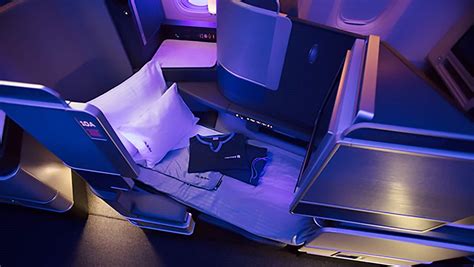
The shift is especially notable on Dublin. On the Boeing 757-200, approximately 9% of seats were in Polaris or Premium Plus, while the A321XLR raises that share to roughly 21%. United therefore sacrifices total capacity while dramatically increasing the proportion of premium seating. That could help the airline generate stronger yields even when winter passenger volumes are relatively low.
Amsterdam presents a slightly different equation. The 767-300ER has 54 seats in Polaris and Premium Plus, compared with 32 on the A321XLR. As a percentage of total capacity, however, premium seating falls from about 27% to 21%. United is therefore making a larger capacity adjustment on Amsterdam while retaining a meaningful premium cabin for passengers willing to pay for enhanced service.
United’s Growing A321XLR Fleet
United’s A321XLR operation is still in its early stages. The airline had one aircraft in its fleet by May 2026, with five additional aircraft scheduled for delivery by the end of 2026 and another 15 expected during 2027. All of United’s aircraft are planned around the same 150-seat configuration, creating a consistent platform for future network planning.
That fleet growth will give United considerably more flexibility in international markets. The A321XLR can offer long-range capability without the cost and capacity commitment associated with a widebody. For routes with strong premium demand but limited overall passenger volume, that combination can be especially attractive.
Could Houston Become the Next A321XLR Base?
United’s A321XLR ambitions may eventually extend beyond the Atlantic. Patrick Quayle, the airline’s senior vice president of global network planning and alliances, has indicated that Houston George Bush Intercontinental Airport could eventually see A321XLR service to South America once more aircraft arrive.
The aircraft’s published range is around 4,700 nautical miles, although real-world range varies according to payload, weather, routing, and operating conditions. A lower-density 150-seat configuration should provide United with useful flexibility, potentially making much of South America accessible from Houston.
The most likely opportunity may involve replacing larger aircraft rather than creating entirely new markets. For example, Guayaquil represents Houston’s largest currently unserved South American city, but demand remains relatively modest. The A321XLR’s economics could nevertheless make smaller international markets more practical without requiring United to fill a widebody.
United’s first A321XLR flights to Amsterdam and Dublin therefore represent more than two aircraft swaps. They demonstrate a broader strategy built around capacity discipline, premium revenue, and long-range narrowbody flexibility. As additional aircraft arrive through 2027, the A321XLR could become one of United’s most important tools for reshaping its international network.