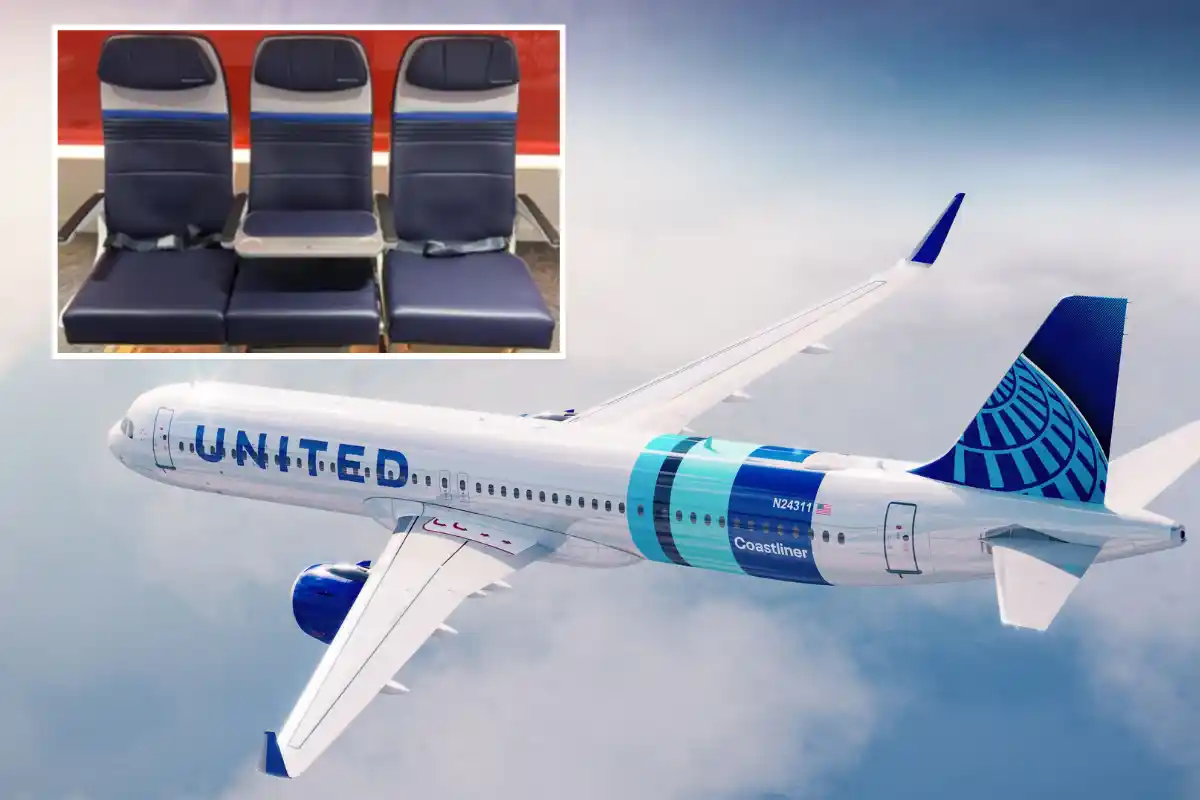
United Airlines is preparing to introduce one of the most unconventional economy-class cabin concepts seen in the United States aviation market. As the airline readies its new Airbus A321XLR fleet for service, emerging details suggest that some economy rows may feature permanently blocked middle seats, allowing the carrier to operate the aircraft with three flight attendants instead of four while simultaneously delivering a more spacious passenger experience.
The strategy represents a notable departure from the traditional airline model, where maximizing passenger capacity is often prioritized above all else. Instead, United appears to be pursuing a carefully balanced approach that combines operational efficiency, premium passenger comfort, and long-haul narrowbody economics.
United’s A321XLR Introduces a Different Cabin Philosophy
The Airbus A321XLR is designed to open new possibilities for long-range narrowbody operations. While many airlines configure the aircraft with more than 200 seats, United has opted for a dramatically lower-capacity layout of approximately 150 seats.
This reduced-density configuration is central to the airline’s broader vision for the aircraft. Rather than treating the A321XLR as a conventional narrowbody, United is positioning the jet as a premium-focused aircraft capable of serving both transcontinental and international routes with enhanced comfort levels.
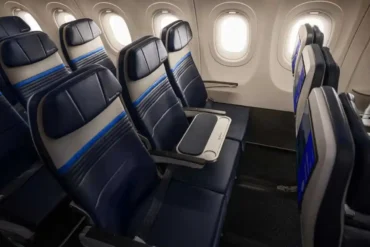
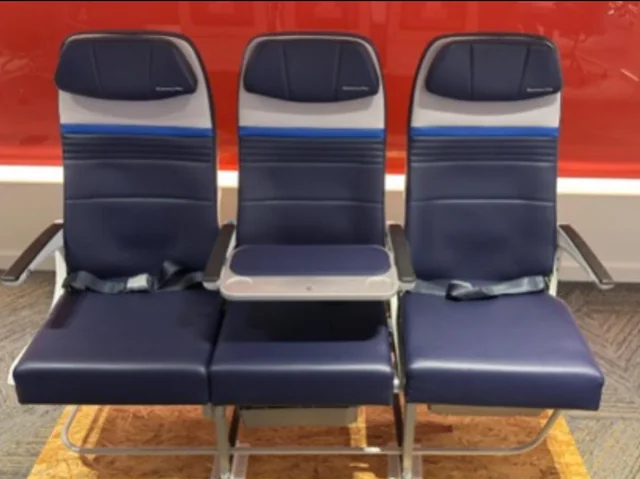
According to reports and cabin details that have surfaced online, certain economy rows may feature blocked center seats fitted with fixed tray tables. The concept closely resembles the European-style regional business-class model, where the middle seat remains unavailable for booking.
The difference is that United may be integrating the concept directly into the aircraft’s permanent cabin design.
The move is not simply about passenger comfort. Federal staffing regulations are heavily influenced by the number of available passenger seats on an aircraft. By limiting seating capacity, United can potentially operate the aircraft with three flight attendants rather than four, creating meaningful labor-cost savings throughout the aircraft’s operational life.
How Blocked Middle Seats Support Lower Operating Costs
For airlines, every seat installed on an aircraft affects both revenue opportunities and operating requirements. While removing seats reduces theoretical maximum ticket sales, it can also lower expenses in several important areas.
By keeping seat counts below specific regulatory thresholds, airlines may reduce required cabin crew staffing levels. In the case of the A321XLR, operating with three flight attendants instead of four can significantly reduce long-term labor costs across thousands of annual flight hours.
The economics become even more compelling when paired with United’s intended route strategy. Many A321XLR missions are expected to focus on premium-heavy markets where yield matters more than absolute passenger volume.
Rather than filling every available seat, United appears willing to sacrifice some capacity in exchange for a differentiated onboard experience that attracts higher-paying travelers.
This strategy mirrors broader industry trends where airlines increasingly seek revenue growth through premium products rather than simply adding more seats.
A More Comfortable Economy Cabin Than Typical Narrowbody Flights
Passengers may ultimately be among the biggest beneficiaries of the unconventional seating arrangement.
Anyone assigned a window or aisle seat adjacent to a blocked center position effectively gains additional personal space throughout the journey. The unused middle section can provide extra shoulder room while also serving as a convenient surface for drinks, snacks, tablets, and personal belongings.
The result is an experience that feels significantly less crowded than traditional domestic economy cabins.
Fewer passengers onboard also contribute to a noticeably calmer atmosphere. Long lines for lavatories become less common, overhead bin competition is reduced, and aisle congestion decreases substantially.
For travelers accustomed to densely packed narrowbody aircraft, these improvements could make a meaningful difference, particularly on flights lasting six to ten hours.
Premium Features Extend Beyond Seat Design
The blocked-seat concept is only one component of United’s broader A321XLR strategy.
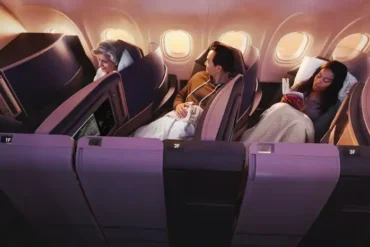
The aircraft will debut several premium-focused features rarely seen on narrowbody operations. Among the most anticipated additions are the airline’s next-generation Polaris Business Class suites and the introduction of Premium Plus seating on a narrowbody aircraft for the first time.
Economy passengers are also expected to benefit from substantial upgrades.
United plans to install some of the largest seatback entertainment screens ever offered in a standard economy cabin. The airline is also introducing a self-service snack and beverage station at the rear of the aircraft, a feature more commonly associated with long-haul premium cabins.
Connectivity will receive a major upgrade as well. The fleet is expected to feature Starlink-powered Wi-Fi, providing passengers with significantly faster and more reliable internet access than many current inflight systems.
Combined with the lower passenger count, the technology infrastructure should experience less congestion and more consistent performance throughout the flight.
Faster Boarding and a Less Stressful Travel Experience
One of the biggest challenges associated with narrowbody aircraft is congestion during boarding and deplaning.
Single-aisle cabins naturally create bottlenecks as passengers store luggage, locate seats, and move through the aircraft. United’s reduced-capacity configuration directly addresses this issue.
With fewer passengers competing for overhead storage, boarding can proceed more efficiently. Travelers are more likely to find space near their assigned seats, reducing delays and frustration.
The benefits continue after landing. Deplaning times can be noticeably shorter, allowing passengers to exit the aircraft more quickly and begin their onward journey with less waiting.
These seemingly small improvements collectively contribute to a smoother overall travel experience.
The Aircraft That Could Transform United’s Long-Haul Narrowbody Network
The arrival of the Airbus A321XLR marks an important transition for United Airlines as it gradually replaces portions of its aging Boeing 757 fleet.
The aircraft’s exceptional range and fuel efficiency create opportunities for routes that would be difficult to operate profitably with larger widebody aircraft. At the same time, the premium-focused cabin design allows United to distinguish itself from competitors in key markets.
The decision to potentially block middle seats illustrates how the airline is rethinking traditional assumptions about narrowbody travel. Instead of maximizing capacity, United appears focused on creating an environment that feels more spacious, quieter, and less stressful.
If successful, the strategy could influence how other carriers approach premium narrowbody operations in the years ahead. The Airbus A321XLR is already reshaping route planning across the industry. United’s innovative cabin design may prove equally influential, demonstrating that fewer seats can sometimes create a more valuable product for both airlines and passengers.