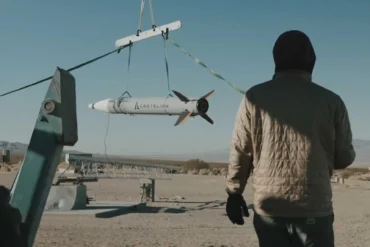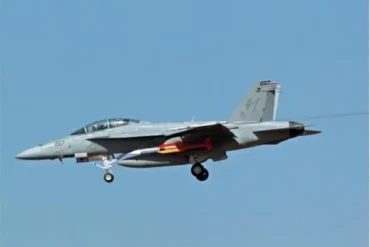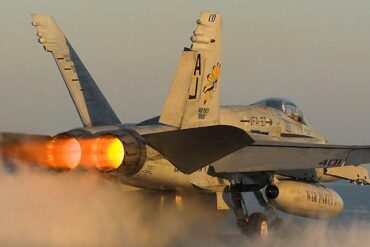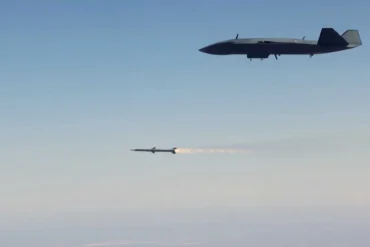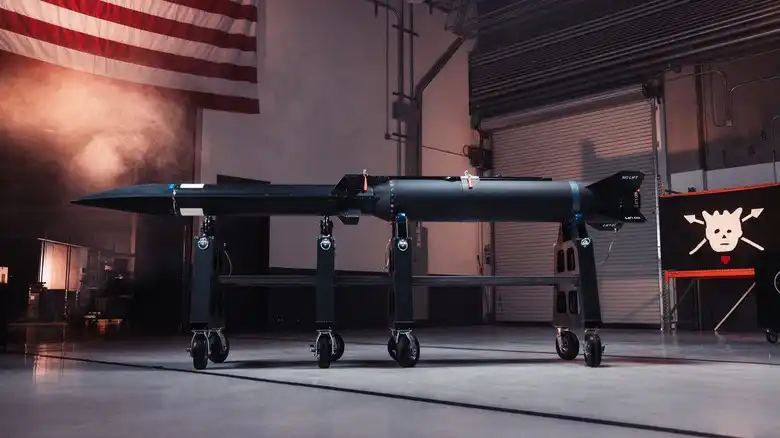
The US Navy is testing the new Blackbeard hypersonic missile from the F/A-18E/F Super Hornet, marking an important step in an effort to field a faster and potentially more affordable long-range strike weapon. The Navy announced in April 2026 that testing would begin after awarding Castelion an $89,997,162 contract for the program.
Blackbeard is being developed by Castelion, a defense startup founded in 2022 that received its first contract in May 2023. The weapon is designed as an aircraft- and ground-launched hypersonic strike missile, with compatibility extending to systems such as the M142 HIMARS. Its broader objective is unusual for a hypersonic weapon: achieving high speed while remaining inexpensive enough for relatively large-scale production.
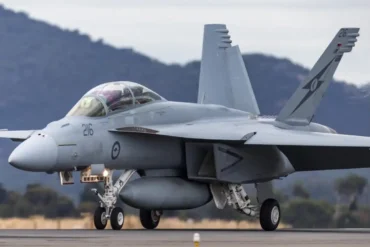
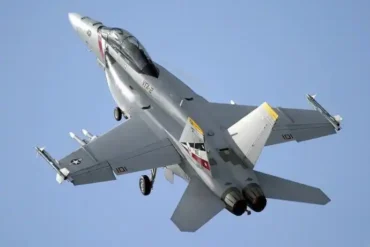
The decision to test Blackbeard aboard the F/A-18 Super Hornet is particularly significant because the aircraft is the Navy’s principal multirole fighter and provides a practical path toward operational deployment. Rather than requiring an entirely new launch platform, an existing carrier-capable fighter could potentially carry the weapon, giving the Navy another option for delivering long-range effects.
Blackbeard Hypersonic Missile Targets Mach 5 and 500-Mile Range
The Blackbeard program is intended to produce a missile capable of sustaining speeds above Mach 5, the commonly used threshold for hypersonic flight. The stated objective also points toward a range of roughly 500 miles, although the weapon’s final performance specifications remain uncertain while testing continues. Achieving both speed and range from an aircraft-launched weapon would give naval aviation a substantially longer reach than many conventional fighter-carried weapons.
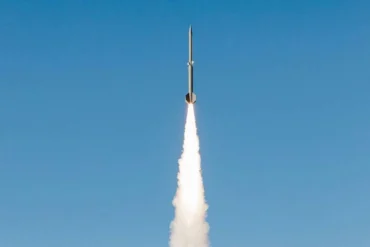
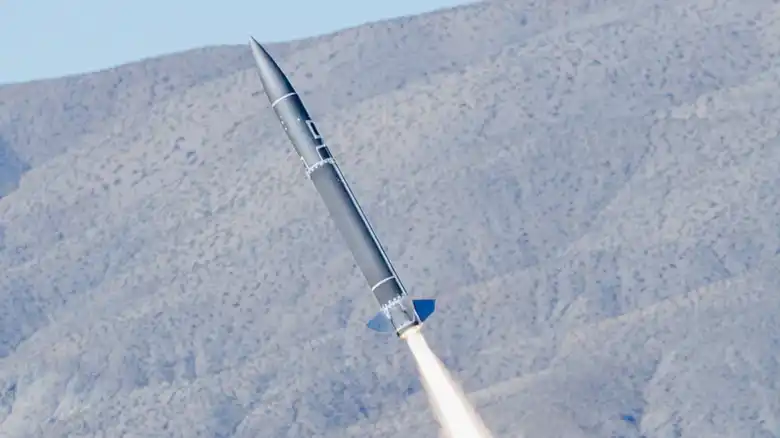
Castelion conducted development flights in late 2025, successfully launching a prototype of its ground-launched system. The company now aims for early operational capability in 2027 on the F/A-18 Super Hornet, followed by broader production. The Navy’s production objective calls for 50 missiles by August 2028, assuming the system meets its required milestones.
A Lower-Cost Approach to US Hypersonic Weapons
Perhaps the most striking feature of Blackbeard is its intended price. Each missile is expected to cost less than $500,000, dramatically below several existing long-range strike weapons. ATACMS missiles fired by HIMARS can cost approximately $1 million to $1.5 million, while the Precision Strike Missile can reach several million dollars per round.
That emphasis on affordability could be as important as raw speed. If Blackbeard can combine Mach 5-plus performance, approximately 500 miles of reach, and mass-production economics, the Navy could potentially acquire meaningful quantities rather than treating every hypersonic missile as an extremely scarce asset.
F/A-18 Testing Could Expand Blackbeard Across the Military
The Navy’s F/A-18 testing could ultimately have implications beyond naval aviation. Because the Army and Marine Corps already operate HIMARS, successful development of the Blackbeard family could provide a common hypersonic capability across multiple services. The combination of air launch and ground launch would also give commanders greater flexibility in positioning and employing the weapon.
For the US Navy, however, the immediate priority is proving that Blackbeard can transition from development flights to a reliable weapon carried by the Super Hornet. If those tests succeed, the program could become one of the clearest paths toward putting an affordable hypersonic strike missile into operational American service.