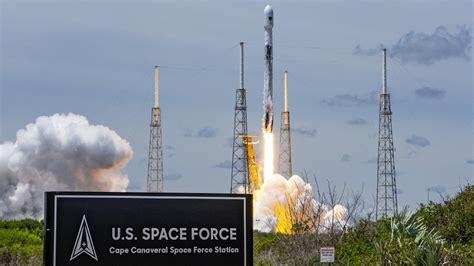
The U.S. Space Force’s GPS Next Generation Operational Control Segment (OCX) is facing a potential cancellation after nearly 16 years of development, billions of dollars in investment, and a series of technical setbacks that have placed one of America’s most important space modernization programs under intense scrutiny. Originally designed to transform how the military operates its global positioning satellite network, OCX has become a symbol of the challenges involved in building highly complex defense software systems.
The program was awarded to Raytheon, now part of RTX, in 2010 with an ambitious promise: deliver a next-generation GPS ground control system within six years at an estimated cost of $3.7 billion. Instead, OCX experienced repeated delays, rising expenses, and engineering problems that pushed the final cost close to $8 billion. The Space Force only took control of the system in July 2025, beginning government-led testing after years of contractor development.
The controversy surrounding OCX comes at a critical moment for American space capabilities. Modern military operations increasingly depend on reliable satellite navigation, especially as adversaries develop advanced electronic warfare tools capable of disrupting or deceiving GPS signals. A failure to deliver the intended upgrade could affect how quickly the United States fully exploits its newest generation of GPS satellites.
A Decade-Long GPS Modernization Program Hits Major Obstacles
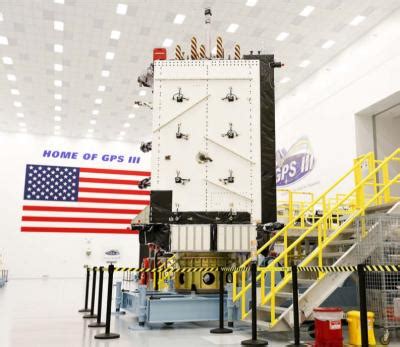
The purpose of OCX was straightforward in concept but extremely complicated in execution. The system was designed to replace aging GPS ground infrastructure and provide the command, control, and monitoring capabilities needed for the latest GPS III satellites. These satellites, first launched in 2018, provide improved accuracy, stronger anti-jamming protection, and enhanced security compared with previous generations.
OCX was expected to introduce a more powerful digital architecture, including upgraded master control stations, improved ground equipment, and software capable of managing a larger and more advanced satellite constellation. The system was also designed to support approximately twice as many satellites as previous control networks.
However, the project quickly encountered difficulties. By 2016, the original delivery schedule had already collapsed, and the program triggered a Nunn-McCurdy review, a congressional process used when major defense programs experience significant cost increases. Defense officials determined that OCX remained essential for national security because no affordable replacement existed at the time.
Despite continued support, the program was forced to adapt around its own delays. The Pentagon continued operating GPS III satellites using an upgraded legacy system known as the Architecture Evolution Plan (AEP). While this approach allowed the military to maintain GPS operations, it reduced the immediate benefits expected from OCX.
Software Problems Threaten the Future of GPS OCX
The latest crisis emerged during testing of OCX’s advanced command and control capabilities. Space Force evaluations reportedly identified a serious software defect that could require substantially more time to correct than originally planned.
Officials have also pointed to broader issues beyond a single technical failure. Testing revealed problems across multiple subsystems, involving software performance, engineering integration, and program management. Government leaders have acknowledged that responsibility does not rest entirely with the contractor, noting that both government oversight and industry execution contributed to the program’s difficulties.

Thomas Ainsworth, the Air Force assistant secretary for space acquisition and integration, told lawmakers that extensive system issues remained unresolved during testing. His comments highlighted the complexity of developing a system that must coordinate spacecraft operations, secure communications, cybersecurity protections, and real-time military requirements.
The Space Force has since conducted a detailed analysis of OCX’s condition and submitted its findings to Pentagon acquisition leadership. Michael Duffey, the official responsible for major acquisition decisions, will determine whether the program should continue or be canceled.
What Happens If the Pentagon Cancels OCX?
If OCX is terminated, the United States will not immediately lose GPS capability. The current AEP system continues to operate the military’s GPS constellation, including the growing fleet of GPS III satellites. Space Force officials have stated that cancellation would not disrupt current users.
However, abandoning OCX would create new challenges. The Pentagon would likely need to invest heavily in further upgrades to the existing AEP architecture. Lockheed Martin has already modified AEP to support the encrypted M-Code signal, which improves resistance against jamming and spoofing attacks.
Additional improvements would still be required to fully utilize other GPS III capabilities, including the advanced L5 civilian signal. Without OCX, the military could face a longer path toward achieving the complete operational advantages originally planned for the new satellite generation.
GPS Modernization Becomes More Important in Future Warfare
The debate over OCX comes as satellite navigation becomes increasingly important in modern warfare. Precision-guided weapons, autonomous systems, drones, and military communications all depend on secure positioning data.
Future GPS IIIF satellites are expected to bring additional improvements, with Lockheed Martin scheduled to deliver dozens of these next-generation spacecraft. These satellites will provide stronger protection against electronic attacks, but they require an equally advanced ground control system to maximize their capabilities.

The potential cancellation of OCX represents a difficult decision for the Pentagon. Continuing the program could require additional time and funding, while canceling it could mean accepting years of delayed modernization and additional costs to upgrade existing systems.
After spending more than $8 billion, the OCX program has reached a defining moment. Whether the Space Force chooses to continue, restructure, or replace the system will influence America’s ability to maintain technological leadership in satellite navigation for decades to come.