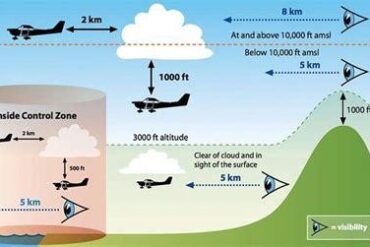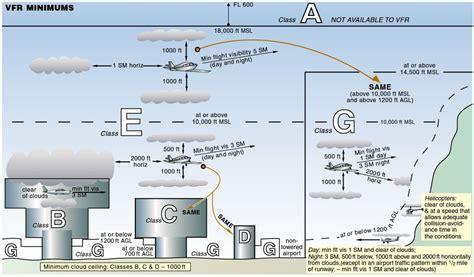
VFR on Top refers to the authorization given by Air Traffic Control (ATC) for an Instrument Flight Rules (IFR) aircraft to operate in Visual Flight Rules (VFR) conditions at any suitable VFR altitude. When a pilot receives this clearance, they must adhere to VFR visibility requirements, maintain a safe distance from clouds, and observe minimum IFR altitudes. It’s important to note that this term does not relieve controllers from their duty to ensure the separation of aircraft within Class B and Class C airspace or terminal radar service areas.
In the United States, this procedure is used, though it is not recognized as an ICAO standard. Essentially, a VFR on Top clearance allows pilots to fly at VFR altitudes, choosing a level instead of sticking to their assigned one. This option can be particularly useful when flying slightly above or between cloud layers, helping pilots avoid the discomfort and fatigue often associated with flying through Instrument Meteorological Conditions (IMC), where turbulence can frequently occur.
Being able to see distant objects also aids in preventing air sickness. The VFR on Top procedure is designed to give pilots flexibility, allowing them to operate above, below, or even between layers, as well as in areas without meteorological obstructions. However, it’s crucial for pilots to understand that receiving clearance for VFR-on-top does not cancel their IFR flight plan.
When cleared to maintain VFR-on-top, pilots must fly at a proper VFR altitude and comply with VFR visibility and cloud distance requirements while being vigilant to see and avoid other aircraft. They also need to follow instrument flight rules relevant to their flight, including adhering to ATC clearances. While IFR separation isn’t applied in these cases, controllers are still responsible for providing traffic advisories and safety alerts, as well as applying merging target procedures for aircraft operating under VFR-on-top.
Before making any altitude changes, pilots should inform ATC to ensure accurate traffic information exchange. The correct altitude for VFR-on-top is determined by adding 500 feet to the corresponding IFR level. For magnetic courses ranging from 0 to 179 degrees, pilots should use odd levels plus 500 feet, like 3500 or 5500. For courses between 180 and 359 degrees, even levels plus 500 feet are appropriate, such as 4500 or 8500. It’s worth mentioning that VFR-on-top clearances are not available in Class A airspace.