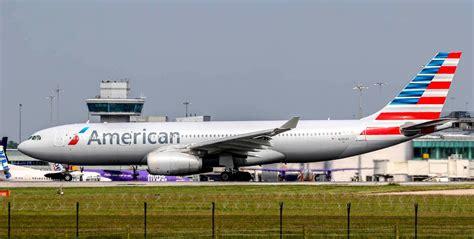
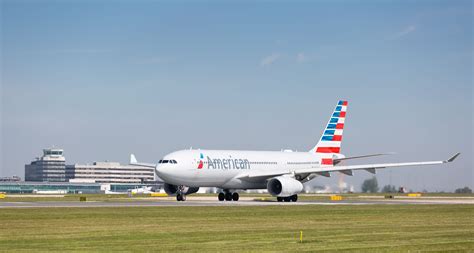
In 2019, American Airlines operated one of the most diverse fleets among major U.S. carriers, including the Airbus A330, a widebody workhorse inherited from its merger with US Airways. By 2025, however, American’s long-haul fleet had been dramatically simplified, reduced to just the Boeing 777 and 787 Dreamliner families. While streamlining brought operational cost savings, questions now loom over whether the airline sacrificed too much network potential and flexibility—especially in an era of booming long-haul international travel.
The A330s—24 aircraft in total—offered a unique blend of range, capacity, and economics. Yet, all were retired during the pandemic-induced industry downturn. This decision, seen as prudent cost-cutting at the time, may have inadvertently left American at a competitive disadvantage as demand rebounded sharply.
A Fleet Streamlined, But at What Cost?
In theory, the retirement of the A330s made strategic sense. Operating just 24 units—split between 15 A330-200s powered by Rolls-Royce Trent 700s and nine A330-300s with Pratt & Whitney PW4000 engines—created a logistical and financial headache. With limited commonality across the broader fleet, American faced high unit maintenance costs, crew retraining expenses, and complex parts logistics. Additionally, the A330-300s were true orphans, being the only aircraft in the fleet to use the PW4000 engines, while even the A330-200s only modestly aligned with American’s existing 777s powered by the Trent 800.
By retiring these aircraft, American reduced fleet complexity and leaned into its widebody backbone—67 Boeing 777s and 63 Boeing 787s. These aircraft offer modern interiors, standardized operations, and global reach. Furthermore, consolidating around these types has long-term benefits in terms of pilot training, maintenance economies, and inventory management.
Yet, despite this logic, critics argue that the retirement was premature, particularly for jets that were relatively young by industry standards. The A330-200s, delivered between 2009 and 2014, were barely a decade old when grounded. Even the A330-300s, delivered in 2006, had significant service life remaining.
The Lost International Opportunity
In the post-pandemic recovery, international travel—especially premium long-haul—has emerged as one of the most profitable segments in aviation. Competitors like United Airlines and Delta Air Lines capitalized aggressively on this resurgence. United expanded its global footprint, becoming the largest international U.S. airline, while Delta maintained its brand prestige and premium cabin push.
American, on the other hand, found itself shackled. With fewer widebodies and deferred deliveries—10 Boeing 787-9s postponed to 2028 or later—it lacked the muscle to scale up international operations quickly. The absence of the A330s exacerbated this shortfall. These aircraft could have offered critical lift during a time when Boeing 787 deliveries were delayed, and global aircraft availability was tight.
More strikingly, American did not purchase or lease second-hand aircraft to offset this capacity crunch, a move both Delta and United embraced. Delta, for instance, acquired nine used Airbus A350s, while United invested heavily in both new and used widebodies to strengthen its long-haul capabilities.
Cabin Quality and the Retrofit Dilemma
Critics of the A330s often cite their outdated cabins as a key weakness. While American did install 21 Premium Economy seats in the A330-200s, much of the rest of the cabin retained its original US Airways-era configuration. Business class featured early-generation reverse herringbone seats, functional but increasingly dated by global standards. Economy class lacked adjustable headrests, and inflight entertainment systems featured small, pixelated screens.
Still, these cabins were superior to American’s then-active Boeing 767s, which lacked seatback screens entirely and suffered from dated interiors. Compared to the 767s, the A330s offered a more modern passenger experience. Yet, a full cabin retrofit for just 24 aircraft—already complicated by engine diversity and aging components—would have been a substantial investment. This financial barrier likely influenced the retirement decision, even if it meant walking away from the potential upside of a refreshed widebody subfleet.
The Pandemic and Defensive Strategy
In fairness to American’s leadership, their decision must be viewed through the lens of 2020. With demand decimated and liquidity under pressure, the company moved swiftly to stem losses. Aging aircraft types like the Boeing 757, 767, and A330-300 were the first to go. The A330-200s were initially stored for possible future use, but these too were eventually written off as long-term assets. Maintaining parked aircraft is expensive, and with few examples in the fleet, the math simply didn’t work.
Yet, history may judge this conservatism harshly. Travel recovered faster than most forecasts predicted, and American found itself behind the curve. Rather than rebuilding capacity quickly, it held fast to a downsized long-haul model. This choice, whether rooted in strategic caution or fleet inflexibility, limited its global expansion.
Network Design: The Bigger Picture
American’s route network is heavily dependent on domestic and short-haul traffic. Its Charlotte, Dallas-Fort Worth, and Phoenix hubs excel at feeding regional traffic, but only Miami serves as a major long-haul gateway—primarily for Latin America. In contrast, United’s hubs in San Francisco, Chicago, and Newark offer stronger gateways to Europe and Asia.
American’s European strategy relies heavily on its joint venture with British Airways, leveraging London Heathrow as a key connection point. While convenient for North American-European flows, this approach cedes much of continental Europe to competitors. United’s partnership with Lufthansa, and Delta’s with Air France-KLM, grant them broader coverage and greater autonomy.
In the Asia-Pacific region, American is even more constrained. With only Los Angeles as a meaningful transpacific hub, and fierce competition from Asian carriers, its footprint is limited. The loss of A330s, which could have operated thinner or medium-demand routes efficiently, further restricted network flexibility.

American’s Current Position: Lean but Lagging
In 2023, American signaled its intent to stay lean. By deferring 787 deliveries and not acquiring used aircraft, it made clear that capacity growth isn’t the priority. Whether this is a reflection of limited hub strength, conservative financial posture, or lack of strategic vision, the result is clear: American remains a step behind its peers in global reach.
This isn’t to say American’s strategy is doomed. A tight focus on domestic strength, Latin American leadership via Miami, and joint ventures for Europe may keep the airline profitable. But it does raise the question: Could a more diverse, flexible widebody fleet—anchored by the A330s—have allowed for a bolder, more globally competitive American Airlines?
Conclusion: A Missed Opportunity in Hindsight
Retiring the Airbus A330s may have been rational from a cost and complexity standpoint, but in hindsight, it looks like a missed opportunity. As the aviation industry emerged from the pandemic, carriers that retained or reacquired widebody flexibility were better positioned to capture resurgent international demand. American, by contrast, shrank its footprint and hesitated to reinvest.
Today, the airline’s cautious approach leaves it with the smallest international network of the U.S. Big Three, a position that is unlikely to change quickly. While the 777s and 787s are excellent aircraft, the absence of the A330 has created gaps in both network agility and fleet balance. And in a world where long-haul leisure and premium demand continue to surge, that may well turn out to be one of American Airlines’ most consequential strategic missteps.