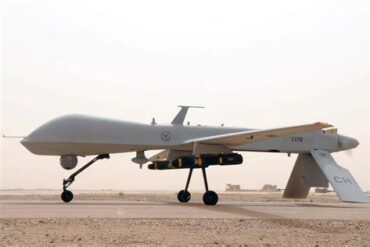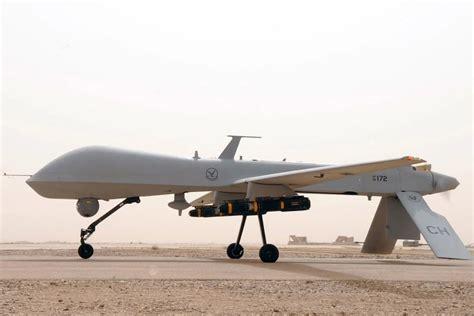
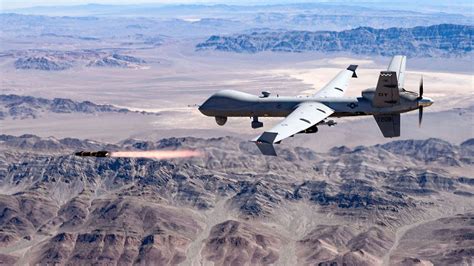
The cost of a military Predator drone—a formidable tool of modern warfare—is far from straightforward. These unmanned aerial vehicles (UAVs) represent the pinnacle of aerial surveillance, intelligence gathering, and surgical strike capabilities. Yet, with such power comes a significant financial investment. From the General Atomics MQ-1 Predator to its more powerful successor, the MQ-9 Reaper, these machines carry price tags that reflect not only their cutting-edge technology but also the broader geopolitical and ethical complexities of their deployment.
To understand how much a military Predator drone costs, one must explore a mix of unit production expenses, operational logistics, international regulations, embedded technology, and defense policy implications.
Understanding the Price Range: From Predator to Reaper
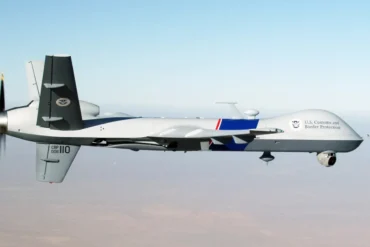
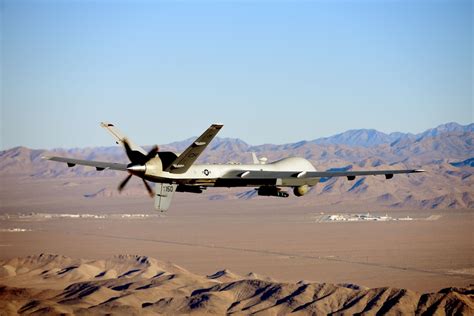
The MQ-1 Predator, now largely retired, came at a per-unit cost of approximately $4 million during its production life cycle. However, its upgraded counterpart, the MQ-9 Reaper, currently dominates American drone warfare. The MQ-9’s per-unit procurement cost hovers between $28 million and $32 million, depending on configuration, payload, and embedded systems. But this figure alone doesn’t capture the full economic scope.
Factoring in lifespan maintenance, ground control stations, satellite link infrastructure, pilot and analyst training, and post-deployment servicing, the total lifecycle cost of a fully functional Reaper drone system may rise to over $60 million. Each drone sortie involves a comprehensive support ecosystem, often stretching across continents and intelligence networks.
Technological Complexity as a Cost Driver
One of the central reasons for these elevated costs is the technological sophistication baked into every military drone. Predator-class drones are equipped with:
- Synthetic Aperture Radar (SAR) for real-time terrain mapping.
- Electro-optical/Infrared (EO/IR) sensors for day-night surveillance.
- Laser designators for guiding precision munitions.
- Satellite communication (SATCOM) arrays for beyond-line-of-sight control.
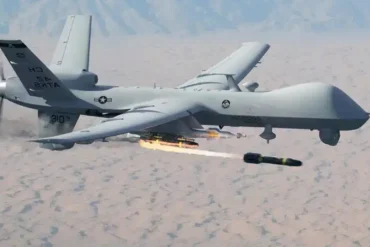
- Weapons systems, including AGM-114 Hellfire missiles, GBU-12 Paveway II laser-guided bombs, and sometimes GBU-38 JDAMs.
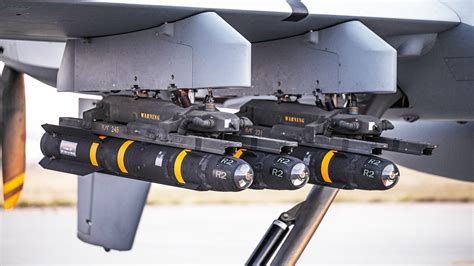
Each technological subsystem adds millions of dollars to the development and procurement cost. The continuous innovation cycle—driven by defense contracts and battlefield demand—means these systems are rarely static, often integrating upgrades in stealth, data fusion, and autonomy.
International Laws and Regulatory Burdens
Export laws, particularly under the Missile Technology Control Regime (MTCR) and International Traffic in Arms Regulations (ITAR), tightly govern the sale of military drones like the Predator or Reaper. This legal overhead inflates production costs due to the rigorous compliance infrastructure required.
Only a few countries—such as the United Kingdom, France, and Italy—have been approved to purchase the MQ-9 Reaper. Each export deal is custom-negotiated, often bundled with logistics support, training, mission-specific payloads, and operational maintenance contracts, pushing overall costs well beyond the sticker price.
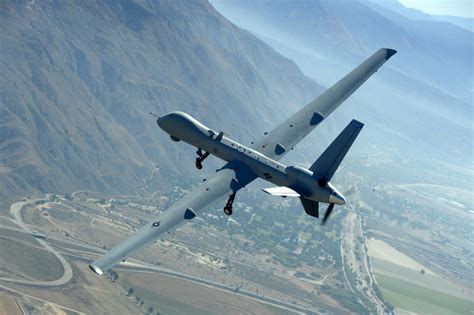
The Strategic Economics of Predator-Class Drones
The cost of deploying a drone like the Reaper is often weighed against the value of force projection without risking human life. When compared to fourth- and fifth-generation fighter jets, which can cost $80–$150 million per aircraft, drones are often touted as economical.
Yet, their low unit cost belies a broader cost of ownership, including:
- Personnel requirements: Each MQ-9 mission requires a remote pilot, sensor operator, intelligence analysts, and maintenance crew.
- Infrastructure: Ground control stations and SATCOM bandwidths must be maintained around the clock.
- Data analysis pipelines: Petabytes of ISR (Intelligence, Surveillance, Reconnaissance) data require real-time analysis by intelligence teams.
Comparing Predator-Class to Other Military Drones
While the Reaper is among the most famous and expensive UAVs in the U.S. arsenal, it’s not the priciest. Several other UAVs surpass it in terms of cost due to their specialized roles.
- Northrop Grumman RQ-4 Global Hawk: At $131 million per unit, it offers high-altitude, long-endurance surveillance with a 32+ hour flight time.
- Northrop Grumman X-47B: At $405 million, it is an autonomous combat-capable drone built for the U.S. Navy’s carrier operations.
- BAE Systems Taranis: Still under development, this British stealth UCAV is projected to exceed $200 million.
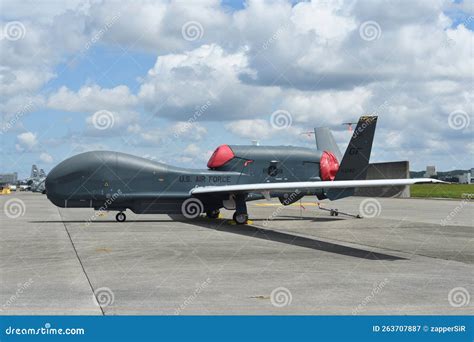
Even more affordable tactical drones, like the Insitu ScanEagle (about $800,000) or the Chengdu Wing Loong (approx. $1 million), offer limited capabilities in comparison to the Predator-class and do not factor in the same strategic calculations.
Maintenance and Operational Costs
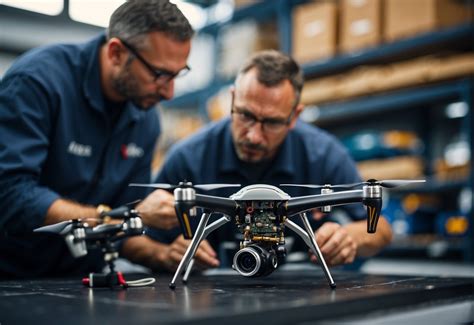
Every drone sortie demands rigorous pre-flight checks, mid-mission coordination, and post-mission processing. The U.S. Air Force budgets around $12,000 per flight hour for the MQ-9 Reaper. Over a typical 24-hour mission, that adds up to $288,000.
Additional costs include:
- Airframe overhauls every few hundred flight hours.
- Sensor recalibration and software updates.
- Fuel logistics (drones are often launched from forward bases).
- Drone pilot and analyst salaries.
Hidden Costs: Ethics, Policy, and Public Perception
Military drones like the Predator carry not just financial costs, but political and ethical burdens. Civilian casualties, targeted killings, and drone strikes in sovereign territories often bring negative international attention. This has led to:
- Increased operational scrutiny from human rights groups.
- Legal challenges in international courts.
- Domestic political debates over transparency and rules of engagement.
Such factors indirectly inflate the drone program’s cost through additional oversight infrastructure, legal contingencies, and public affairs management.
Conclusion: A Cost Worth Bearing?
The true cost of a military Predator drone extends well beyond its purchase price. From development and payload integration to operational deployment and ethical oversight, these unmanned systems represent a significant financial and strategic commitment.
While the MQ-9 Reaper may cost $28–32 million on paper, the real cost of ownership—when measured across lifecycle maintenance, infrastructure, and mission execution—places the total price closer to $60–70 million per unit.
Yet, in return, nations receive unmatched persistent surveillance, precise kinetic capability, and the ability to project military power without endangering pilots. It is this combination of cost and capability that has made the Predator-class drone a cornerstone of 21st-century warfare.
In the broader calculus of modern defense economics, the cost of a military Predator drone may be high—but for many governments, it is a price they are more than willing to pay.