Emirates has spent decades building one of the most successful hub-and-spoke airline models in aviation history. From its base at Dubai International Airport, the carrier transformed a desert city into one of the world’s most important global transit points. Yet despite the strength of its Dubai operation, Emirates is increasingly investing in partnerships, codeshare agreements, fifth freedom routes, and future infrastructure projects that extend far beyond the borders of the United Arab Emirates.
This evolution is not a departure from the airline’s traditional strategy. Instead, it represents the next stage of growth for a carrier that has already connected much of the world through Dubai. As international competition intensifies and passenger expectations evolve, Emirates is finding new ways to reach markets that cannot be efficiently served solely through its own aircraft and hub network.
The airline’s expansion beyond Dubai reflects a combination of practical necessity, commercial opportunity, and long-term strategic planning. From Europe and North America to island destinations in the Indian Ocean and emerging markets across Asia, Emirates is creating a network that stretches far beyond what its fleet alone could achieve.
Dubai remains the heart of Emirates’ operations, but the airline’s future increasingly depends on what happens beyond the gates of its home hub.
Dubai Remains the Foundation of Emirates’ Global Empire
Few airlines are as closely associated with a single city as Emirates is with Dubai. Since its launch in 1985, the carrier has grown alongside the emirate itself, helping transform Dubai into a major center for tourism, trade, finance, and international travel.
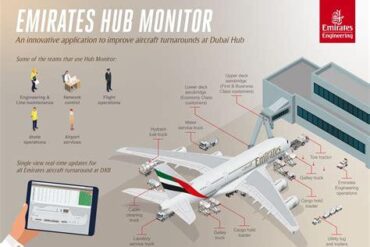
Operating from Terminal 3 at Dubai International Airport (DXB), Emirates manages more than 3,600 weekly flights connecting destinations across six continents. The airport functions as one of the world’s busiest international gateways, allowing passengers to travel between Europe, Asia, Africa, Oceania, and the Americas through a single transfer point.
The effectiveness of this model stems from geography. Dubai sits within approximately eight hours of flight time from much of the world’s population. This strategic location enables Emirates to connect city pairs that would otherwise lack sufficient demand for nonstop service.
Even today, the airline continues to strengthen its Dubai network. New routes to destinations such as Shenzhen, Da Nang, and Siem Reap demonstrate that Emirates still sees significant growth opportunities through its traditional hub system.
However, there are natural limits to how much a single airport can support future expansion.
As Emirates grows, it must find additional methods to increase its reach without relying exclusively on new aircraft and new Dubai-based routes.
Why Partnerships Have Become Essential to Emirates’ Growth
One of the biggest challenges facing Emirates is fleet composition. Unlike many global carriers, Emirates operates almost exclusively widebody aircraft.
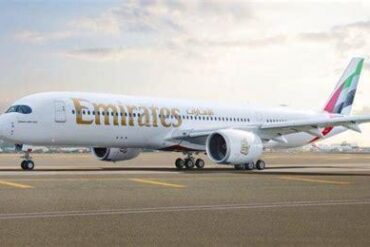
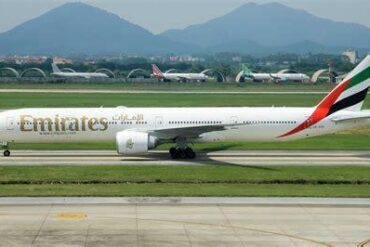
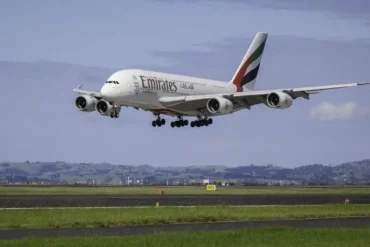
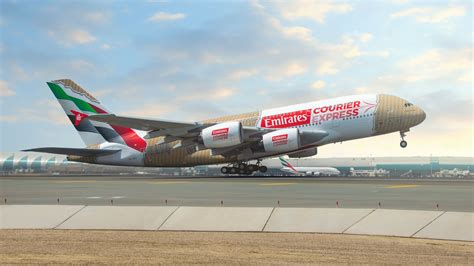
Its fleet consists primarily of Airbus A380s and Boeing 777s, with Airbus A350s gradually entering service. While these aircraft are exceptionally efficient on long-haul routes, they are not ideal for serving smaller regional destinations with lower passenger demand.
This limitation creates gaps in Emirates’ network.
Rather than purchasing large numbers of narrowbody aircraft, Emirates has increasingly chosen to bridge those gaps through partnerships.
Codeshare and interline agreements allow the airline to offer customers access to destinations that would otherwise be commercially impractical. Through these relationships, passengers can book a single itinerary, check baggage through to their final destination, and enjoy smoother travel experiences.
The result is a dramatically larger virtual network.
Today, Emirates’ partnerships extend its reach to nearly 1,800 cities worldwide. This network expansion gives the airline access to markets that would require enormous investment to serve independently.
Major partners such as Qantas, United Airlines, Air Canada, Japan Airlines, and numerous regional carriers help Emirates strengthen its presence across multiple continents while maintaining operational efficiency.
Instead of flying everywhere itself, Emirates increasingly acts as the centerpiece of a much larger global transportation ecosystem.
The Strategic Importance of the Condor Partnership
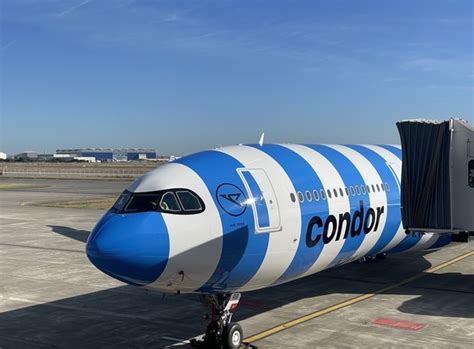
One of Emirates’ most notable recent agreements involves German leisure airline Condor.
The partnership illustrates how modern airline alliances can create value for both carriers without requiring formal membership in a global alliance structure.
Through the reciprocal codeshare agreement, Emirates customers gain access to numerous leisure destinations across Europe, North America, and the Caribbean. Travelers departing from Emirates-served German cities such as Frankfurt, Hamburg, and Düsseldorf can seamlessly continue their journeys to vacation hotspots including Ibiza, Palma de Mallorca, Tenerife, Gran Canaria, Cancun, and Montego Bay.
For Emirates, these destinations represent valuable additions that would be difficult to serve directly from Dubai using large widebody aircraft.
At the same time, Condor passengers gain easier access to Emirates’ extensive long-haul network through Dubai.
Popular destinations such as Bali, Phuket, Bangkok, Colombo, Cape Town, and the Maldives become more accessible to European travelers using a single booking platform.
The agreement also extends loyalty benefits through Emirates Skywards, allowing customers to earn and redeem miles across both networks.
This partnership demonstrates how Emirates is leveraging collaboration to achieve network expansion without significantly increasing operational complexity.
Air Seychelles Strengthens Access to Premium Tourism Markets
Another example of Emirates’ expansion strategy can be found in its partnership with Air Seychelles.
While the Seychelles already receives Emirates flights to Mahé, many visitors continue onward to smaller islands within the archipelago. Reaching these destinations traditionally required separate bookings and additional travel arrangements.
The codeshare agreement with Air Seychelles simplifies that process.
Passengers can now travel from virtually anywhere on Emirates’ global network to Praslin Island using a single itinerary, unified baggage handling, and coordinated scheduling.
Although this may appear to be a relatively small agreement compared with major international partnerships, it highlights an important aspect of Emirates’ strategy.
The airline is focusing not only on large metropolitan markets but also on premium leisure destinations where customer convenience can significantly influence purchasing decisions.
Tourism-dependent destinations increasingly value seamless connectivity, and Emirates is positioning itself as a provider of end-to-end travel solutions rather than merely long-haul transportation.
For destinations like Seychelles, the partnership expands international accessibility. For Emirates, it strengthens its position in one of the world’s most lucrative luxury travel segments.
Fifth Freedom Flights Allow Emirates to Operate Beyond Dubai
Perhaps the most fascinating element of Emirates’ international expansion involves its fifth freedom operations.
Fifth freedom rights allow airlines to transport passengers between two foreign countries as part of a service originating from their home nation.
These routes have become an important tool for Emirates, enabling the carrier to establish a presence in markets far removed from the Middle East.
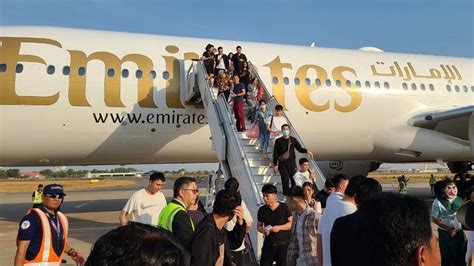
The airline’s famous Milan-New York route serves as a prime example. Travelers can fly directly between Italy and the United States aboard Emirates aircraft without ever visiting Dubai.
The service has transported millions of passengers while generating significant cargo revenue.
Other notable routes include:
- Athens to Newark
- Bangkok to Hong Kong
- Sydney to Christchurch
- Melbourne to Singapore
- Singapore to Phnom Penh
- Barcelona to Mexico City
- Rio de Janeiro to Buenos Aires
These services create unique opportunities for Emirates.
Passengers gain access to premium cabins, renowned onboard service, and modern widebody aircraft on routes typically dominated by local carriers. Meanwhile, Emirates benefits from additional revenue streams and stronger brand recognition in important international markets.
Several routes are particularly noteworthy because they connect major tourism destinations. Flights such as Malé-Colombo and Larnaca-Malta effectively function as regional links while still integrating into Emirates’ broader long-haul network.
Rather than viewing Dubai as the beginning and end of every journey, Emirates increasingly uses its aircraft to capture demand wherever opportunities exist.
Capacity Constraints Are Pushing Emirates Toward New Solutions
Despite the success of Dubai International Airport, its future growth potential is limited.
The airport sits within a densely developed urban environment, making large-scale expansion increasingly difficult. Runway additions, terminal construction, and operational growth face significant physical constraints.
For an airline as ambitious as Emirates, those limitations present a strategic challenge.
Passenger numbers continue to rise, aircraft deliveries continue to arrive, and Dubai’s role in global aviation continues to expand.
Eventually, the current infrastructure will be unable to support long-term growth ambitions.
As a result, Emirates and Dubai Airports are pursuing one of the most ambitious airport development projects ever attempted.
The centerpiece of this vision is Al Maktoum International Airport at Dubai World Central.
The project represents far more than a replacement airport. It is designed to become the largest aviation hub on the planet.
With projected capacity reaching approximately 260 million passengers annually, the airport would dwarf today’s largest international gateways.
Estimated development costs exceed $35 billion, reflecting the extraordinary scale of the undertaking.
The project is intended to support both passenger traffic and cargo operations, reinforcing Dubai’s position as a global transportation center.
The Future Mega-Hub Strategy Behind Emirates’ Expansion
Contrary to some interpretations, Emirates is not abandoning its hub model.
The airline remains firmly committed to centralized operations.
What is changing is the location and scale of the hub itself.
Over the coming years, Emirates plans to transition from Dubai International Airport to the vastly larger Al Maktoum International Airport. Once the migration is complete, the airline will continue operating through a single mega-hub rather than splitting operations between multiple airports.
This approach preserves the advantages that made Emirates successful in the first place.
Passengers will continue benefiting from extensive connectivity, synchronized schedules, and efficient transfer opportunities.
The difference is that the new airport will provide significantly greater room for growth.
Road networks, rail systems, cargo facilities, maintenance infrastructure, and passenger terminals are all being designed around future demand projections rather than current limitations.
Industry forecasts suggest that passenger traffic through Dubai could exceed 150 million travelers annually by the mid-2030s, with additional growth expected thereafter.
The move therefore represents expansion rather than transformation.
Dubai remains central to the Emirates business model, but the physical infrastructure supporting that model is evolving dramatically.

Digital Innovation Is Supporting Network Expansion
Physical growth is only one part of Emirates’ strategy.
The airline is also investing heavily in digital innovation designed to attract new customer segments and increase transaction flexibility.
One notable development involves Emirates’ agreement with Crypto.com to explore cryptocurrency-based payment options.
The initiative aligns with broader efforts by the United Arab Emirates to position itself as a global center for digital finance and blockchain innovation.
For Emirates, the benefits extend beyond technology.
Younger travelers increasingly expect diverse payment methods and digital-first experiences. By embracing emerging financial technologies, the airline hopes to attract tech-savvy consumers while enhancing customer convenience.
Combined with its expanding network partnerships, fifth freedom operations, and infrastructure investments, digital innovation forms another pillar of Emirates’ long-term growth strategy.
Why Emirates Continues to Outperform Global Competitors
The remarkable aspect of Emirates’ expansion is that it occurs from a position of strength rather than necessity.
Many airlines pursue partnerships and restructuring because they face financial pressure. Emirates, by contrast, remains among the most profitable carriers in the world.
Strong revenues, healthy margins, and consistent demand provide the airline with resources that many competitors can only envy.
This financial success gives Emirates unusual flexibility.
It can invest simultaneously in fleet modernization, airport infrastructure, partnership development, digital transformation, and network growth without sacrificing operational stability.
The airline’s strategy reflects confidence in continued global travel demand and confidence in Dubai’s role as a future aviation superpower.
Conclusion
Emirates’ expansion beyond Dubai is not a sign that its traditional hub model is weakening. Instead, it reflects the natural evolution of a carrier that has already maximized many of the opportunities available through a single airport.
Through strategic partnerships with airlines such as Condor and Air Seychelles, Emirates can reach destinations that lie beyond the practical limits of its widebody fleet. Through fifth freedom routes, it can participate directly in high-demand international markets far from the Gulf region. Through the development of Al Maktoum International Airport, it is preparing for decades of future growth. Through digital initiatives, it is adapting to changing consumer expectations.
Taken together, these moves reveal a clear objective: build a network that extends far beyond Dubai while ensuring Dubai remains at its center.
Few airlines have mastered global connectivity as effectively as Emirates. By combining partnerships, innovative route structures, infrastructure investment, and technological adaptation, the carrier is creating a broader, more resilient network capable of sustaining its leadership position in international aviation for decades to come.
Frequently Asked Questions
Why is Emirates expanding beyond Dubai?
Emirates is expanding beyond Dubai to increase its global reach, access new markets, improve connectivity, and overcome operational limitations associated with relying solely on its hub and widebody fleet.
What are Emirates’ most important airline partnerships?
Key partnerships include Qantas, United Airlines, Air Canada, Condor, Air Seychelles, and several regional carriers that help extend Emirates’ network to nearly 1,800 cities worldwide.
What is a fifth freedom flight?
A fifth freedom flight allows an airline to carry passengers between two foreign countries as part of a route that originates in its home country. Examples include Emirates’ Milan-New York and Athens-Newark services.
Is Emirates leaving Dubai International Airport?
No. Emirates remains committed to Dubai as its primary hub. However, it plans to eventually move operations from Dubai International Airport to the much larger Al Maktoum International Airport.
Why is Al Maktoum International Airport important to Emirates?
The new airport is expected to handle up to 260 million passengers annually, providing the capacity needed for Emirates’ long-term growth while maintaining its hub-and-spoke business model.