The body of modern commercial aviation is built on narrowbody aircraft. From short domestic hops to increasingly ambitious transcontinental and long-haul routes, single-aisle jets carry billions of passengers every year. Yet while travelers often focus on aircraft such as the Airbus A320neo or Boeing 737 MAX, the real revolution has been taking place beneath their wings. The latest generation of aircraft engines is transforming what airlines can expect from efficiency, reliability, environmental performance, and operational economics.
More than a century after the Wright brothers achieved powered flight at Kitty Hawk in 1903 with an engine producing just 12.5 horsepower, aircraft propulsion has entered an era defined by sophisticated materials, digital intelligence, advanced aerodynamics, and radically different engineering philosophies. Today’s narrowbody engines are no longer merely powerplants. They are technological ecosystems designed to maximize performance while minimizing fuel burn, emissions, noise, and maintenance costs.
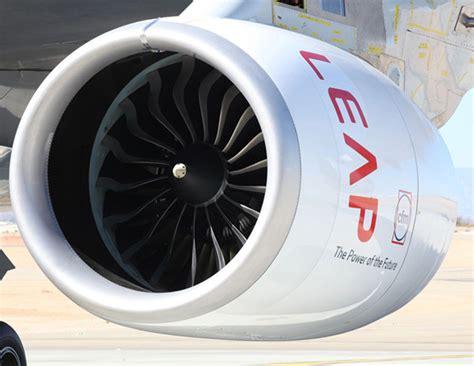
The competition driving this transformation is largely concentrated between two industry giants: Pratt & Whitney and CFM International. Their latest engine families—the Geared Turbofan (GTF) and LEAP—have rewritten expectations for narrowbody aircraft performance and established the technological foundation for the next generation of aviation.
Commercial airlines have always pursued one goal above all others: efficiency. Every kilogram of fuel saved translates directly into lower operating costs. Every reduction in maintenance downtime improves aircraft utilization. Every improvement in noise and emissions performance strengthens compliance with increasingly stringent environmental regulations.
Modern engine manufacturers are delivering these gains through innovations that would have seemed impossible only a few decades ago. Advanced computational modeling now allows engineers to optimize airflow with extraordinary precision. Composite materials withstand temperatures and stresses that traditional metals could never tolerate. Digital engine controls continuously monitor thousands of parameters in real time, ensuring optimal performance throughout every phase of flight.
These advancements have created engines capable of producing dramatically more thrust while consuming significantly less fuel than previous generations.
After decades of evolutionary improvements, the narrowbody engine market reached a turning point during the early 2010s. Rather than simply refining existing architectures, manufacturers began pursuing fundamentally different solutions to longstanding engineering challenges.
The Battle For Narrowbody Supremacy
The narrowbody market represents one of the most valuable sectors in global aerospace. Thousands of Airbus A320-family aircraft and Boeing 737 variants operate around the world, generating immense demand for reliable and efficient propulsion systems.
Pratt & Whitney, a subsidiary of RTX Corporation, traces its roots back to 1925. The company evolved from producing piston engines into becoming one of the world’s leading manufacturers of military and commercial jet engines. Throughout its history, Pratt & Whitney developed a reputation for pursuing bold engineering concepts, culminating in its groundbreaking Geared Turbofan program.
CFM International emerged through an equally ambitious partnership. Founded in 1973 as a joint venture between GE Aerospace and Safran Aircraft Engines, the company combined American and French engineering expertise at a time when such collaborations were relatively uncommon. The partnership ultimately produced one of aviation’s greatest success stories.
Its CFM56 engine became the benchmark for narrowbody reliability, powering generations of Boeing 737 and Airbus A320 aircraft. The engine earned a reputation for durability and efficiency that made it one of the most successful commercial jet engines ever produced.
As fuel prices rose and environmental concerns intensified, both manufacturers recognized that incremental improvements would no longer be sufficient. The industry demanded transformative gains, and each company pursued a dramatically different path toward achieving them.
How Pratt & Whitney Reinvented The Turbofan
For decades, turbofan engines followed a relatively straightforward principle. A large fan at the front and a low-pressure turbine at the rear were mechanically linked by a common shaft. This arrangement forced both components to rotate at identical speeds.
While effective, this architecture imposed a significant compromise. The fan and turbine each have different optimal operating speeds. Because they were connected, neither component could consistently operate at maximum efficiency.
Pratt & Whitney challenged this convention by introducing a reduction gearbox between the fan and turbine. The concept appears deceptively simple, yet its impact is profound.
The gearbox allows the fan to rotate more slowly while enabling the low-pressure turbine to spin substantially faster. Instead of forcing both components to compromise, each can operate at its ideal speed.
The fan typically rotates at approximately 3,000 revolutions per minute, improving aerodynamic efficiency and reducing noise generation. Meanwhile, the turbine can approach 10,000 revolutions per minute, extracting significantly more energy from exhaust gases.
This architecture fundamentally changed the economics of commercial aviation propulsion.
The resulting Geared Turbofan family delivers fuel burn reductions of approximately 16% to 20% compared with earlier engine generations. Noise footprints can be reduced by as much as 75%, while nitrogen oxide emissions decline dramatically.
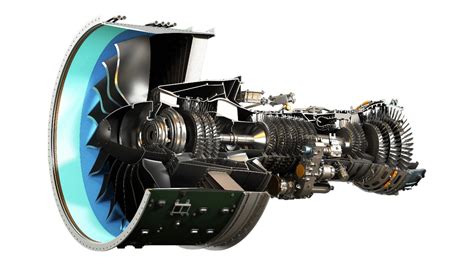
Beyond the headline statistics, the GTF architecture enables a substantially higher bypass ratio. More air flows around the engine core rather than through it, producing thrust more efficiently and contributing to lower fuel consumption.
The technology quickly gained traction across multiple aircraft platforms. Airbus selected GTF variants for portions of its A320neo family. The Airbus A220 relies exclusively on Pratt & Whitney’s geared architecture. Embraer also adopted the engine family for its E-Jet E2 series.
These aircraft demonstrate how propulsion innovation directly influences airline strategy. Improved efficiency allows carriers to operate longer routes profitably, serve smaller markets, and reduce operating costs across entire fleets.
The Challenges Behind Revolutionary Technology
Groundbreaking technologies rarely arrive without obstacles.
Although the Geared Turbofan has delivered significant efficiency benefits, Pratt & Whitney encountered serious durability challenges related to certain engine components. Contaminated powdered metal used in manufacturing created concerns regarding long-term reliability and component integrity.
The issue triggered extensive inspections, accelerated maintenance programs, and temporary groundings affecting hundreds of aircraft worldwide.
For airlines already facing supply-chain disruptions and fleet shortages, these inspections created operational complications and scheduling challenges. Pratt & Whitney subsequently launched a remediation effort valued at billions of dollars to address affected engines and restore customer confidence.
Despite these setbacks, industry analysts generally view the underlying geared architecture as a major technological breakthrough. The challenges are widely considered manufacturing and durability issues rather than fundamental flaws in the engine concept itself.
The experience also highlights a recurring reality in aerospace engineering: pushing boundaries often reveals unforeseen complexities that must be resolved through operational experience and continuous refinement.
CFM LEAP: Evolution Perfected Through Advanced Materials
While Pratt & Whitney pursued architectural transformation, CFM International chose a different strategy. Rather than introducing a gearbox, the company focused on extracting greater performance through advanced materials, manufacturing techniques, and core engine optimization.
The result was the LEAP engine family.
Designed as the successor to the legendary CFM56, LEAP incorporated technologies that had matured sufficiently to become commercially viable on a large scale.
One of its most notable innovations involved additive manufacturing. The engine became the first commercial powerplant to use 3D-printed fuel nozzles extensively.
Traditional fuel nozzles required numerous individual components assembled together. Through additive manufacturing, engineers created a single integrated structure that was lighter, stronger, and more durable.
The benefits extended beyond weight reduction. Fewer parts meant fewer potential failure points and greater manufacturing consistency.
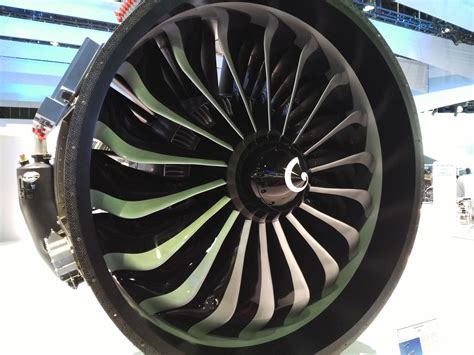
LEAP also introduced ceramic matrix composites within high-temperature turbine sections. These materials withstand extreme thermal conditions while requiring significantly less cooling air than conventional metallic alloys.
Reducing cooling requirements allows more energy to be converted into useful thrust rather than being diverted for thermal management.
The engine further incorporates 3D-woven carbon fiber composite fan blades and lightweight composite fan cases, reducing overall mass while maintaining structural strength.
Combined with a high-pressure compressor operating at an impressive 22:1 compression ratio, these technologies allow LEAP engines to extract more work from every kilogram of fuel consumed.
The outcome is approximately 15% lower fuel consumption and carbon emissions compared with the CFM56, alongside substantial reductions in noise.
Why Engine Efficiency Matters More Than Ever
Fuel remains one of the largest expenses for airlines worldwide. Even modest improvements in engine efficiency can generate enormous savings across large fleets.
For a major airline operating hundreds of aircraft, a double-digit reduction in fuel consumption can translate into hundreds of millions of dollars in annual savings.
Environmental pressures add another dimension to the equation. Governments and regulators continue introducing stricter emissions requirements, while airlines pursue ambitious sustainability goals.
Modern engines play a critical role in achieving these objectives. Reduced fuel burn directly lowers carbon dioxide emissions. Improved combustion systems decrease nitrogen oxide production. Lower noise footprints help airports meet community noise restrictions and expand operational flexibility.
The economic and environmental incentives align perfectly, making propulsion innovation one of the industry’s highest priorities.
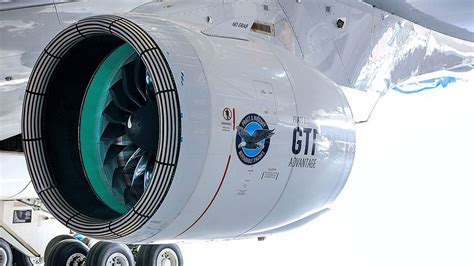
The Arrival Of The GTF Advantage
Pratt & Whitney continues refining its geared architecture through the introduction of the GTF Advantage.
Certified by regulators in 2025, the new variant builds upon lessons learned from earlier models while incorporating durability enhancements and increased performance capability.
The upgraded engine delivers additional thrust, supporting larger and heavier aircraft variants such as long-range Airbus A321neo configurations and the Airbus A321XLR.
These aircraft increasingly blur the line between traditional narrowbody and widebody operations. Routes that once required larger twin-aisle aircraft can now be operated efficiently by advanced single-aisle jets equipped with modern engines.
This shift is reshaping airline network planning around the world.

The combination of improved range and lower operating costs enables carriers to connect secondary cities directly, bypassing traditional hub-and-spoke models and opening new market opportunities.
CFM’s Vision For The Post-Turbofan Era
While LEAP remains one of the world’s most advanced operational engines, CFM International is already looking beyond conventional turbofan designs.
Its Revolutionary Innovation for Sustainable Engines, known as the RISE program, represents one of the most ambitious propulsion initiatives currently under development.
At the heart of the program is open-fan architecture.
Unlike traditional turbofans, which enclose fan blades within a nacelle, open-fan engines leave the blades exposed. This allows significantly larger airflow volumes to pass through the propulsion system at lower velocities.
The concept dramatically increases bypass ratio potential. Whereas today’s leading narrowbody engines operate near bypass ratios of approximately 11:1 or 12:1, RISE aims to exceed 50:1.
Such a leap could deliver fuel-efficiency improvements exceeding 20% compared with current-generation engines.
Open-fan concepts have existed for decades. Earlier attempts struggled with excessive noise, aerodynamic limitations, and material constraints.
Today’s engineering environment is fundamentally different.
Advanced computational fluid dynamics enables highly optimized blade geometries. Modern composite materials provide exceptional strength-to-weight characteristics. Sophisticated digital controls improve performance management across diverse operating conditions.
These advancements may finally allow open-fan technology to achieve commercial viability.
Rolls-Royce Returns To The Narrowbody Arena
Another major development is the potential return of Rolls-Royce to the narrowbody market.
The company’s proposed UltraFan 30 program builds upon technology demonstrated through its successful UltraFan development platform.
Like Pratt & Whitney’s GTF, UltraFan utilizes a geared architecture that allows the fan and turbine to operate at independent optimal speeds. However, Rolls-Royce combines this approach with an advanced power gearbox and other efficiency-enhancing technologies developed through years of research.
The company believes UltraFan 30 could reduce specific fuel consumption by approximately 25% compared with current narrowbody engines.
If achieved, such gains would represent one of the most significant propulsion advances in commercial aviation history.
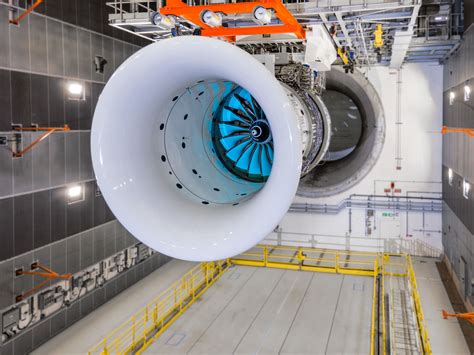
The timing is particularly significant. Both Airbus and Boeing are evaluating future aircraft concepts intended to succeed the A320neo and 737 MAX families during the late 2030s.
A new engine entering service within that timeframe could play a decisive role in shaping the next generation of commercial aviation.
The Future Of Narrowbody Propulsion
The next chapter of engine development will likely combine multiple technological pathways rather than relying on a single breakthrough.
Geared architectures continue to evolve. Open-fan concepts are advancing toward practical implementation. Sustainable aviation fuel compatibility is becoming a standard requirement rather than an optional feature. Hybrid-electric integration remains an area of active exploration.
What unites these approaches is a relentless pursuit of efficiency.
The modern narrowbody engine has evolved far beyond its historical role as a simple thrust-producing device. It now serves as a sophisticated platform where materials science, digital engineering, aerodynamics, manufacturing innovation, and environmental strategy converge.
More than 120 years after the Wright Flyer first rose into the air, engine manufacturers continue pushing the boundaries of what is possible. The competition between Pratt & Whitney, CFM International, and potentially Rolls-Royce is accelerating innovation at a remarkable pace.
Whether the future belongs to geared turbofans, open-fan propulsion, UltraFan technology, or an entirely new concept, one reality is already clear: the rules governing narrowbody engine performance are being rewritten once again, and the aircraft that emerge from this technological race will redefine commercial aviation for decades to come.