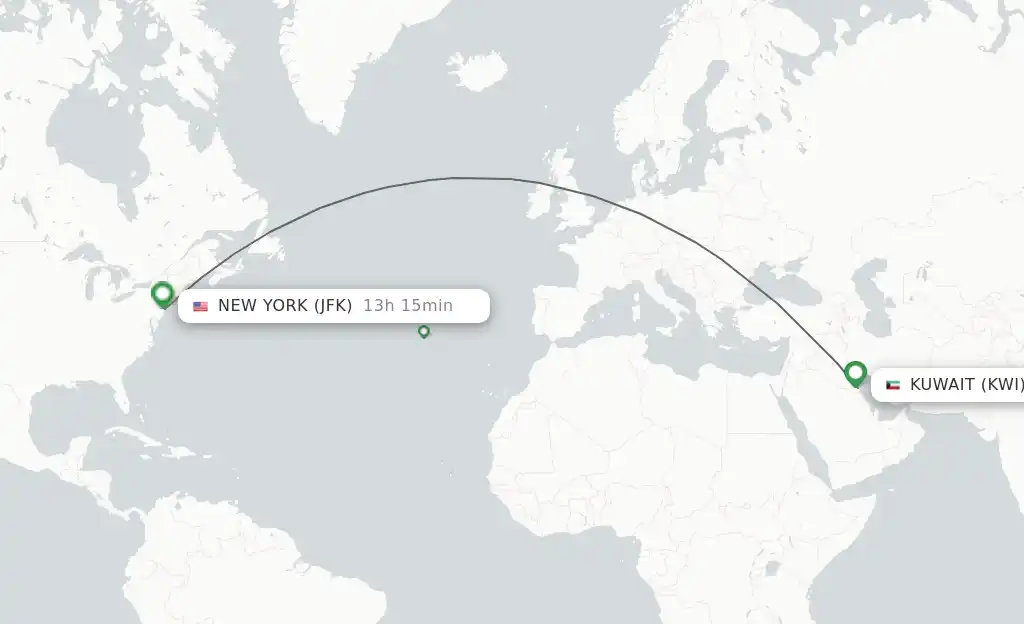
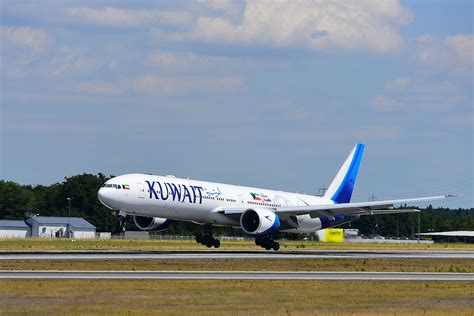
The idea of a long-haul international flight limping along half-empty feels almost heretical in an era of packed cabins and premium-heavy strategies. Yet one route stubbornly refuses to conform. Between November 2024 and October 2025, Kuwait Airways filled just 41% of its seats on flights to and from New York JFK, a figure so low it forces uncomfortable questions about demand, pricing, and network logic in modern aviation.
For Kuwait Airways, this is not a new experiment or a recently launched gamble. The airline has linked Kuwait City with New York for more than forty years, patiently maintaining a presence in North America while reshaping the route’s structure again and again. What makes today’s numbers striking is not simply that they are weak, but that they remain weak despite decades of operational refinement.
The data, drawn from the US Department of Transportation, paints a picture of persistent underperformance rather than a temporary slump. Over the twelve-month period, the airline carried 91,089 passengers, a sharp fall from 125,351 the year before. Even before digging into yields or competitive pressure, that drop alone signals structural fragility rather than cyclical softness.
A Legacy Route Struggling in a Changed Market
Kuwait Airways’ New York service has evolved alongside the industry. For many years, the flight relied on European stopovers, most notably London Heathrow and later Shannon, to boost demand and manage aircraft range. By 2019, the airline transitioned to nonstop operations, aligning itself with passenger expectations for speed and simplicity.
That strategic shift removed friction from the journey but also stripped away sixth-freedom traffic opportunities that once padded loads. Nonstop convenience, paradoxically, narrowed the funnel. The result is a route now almost entirely dependent on Kuwait-originating passengers and onward connections beyond the Gulf, with little room for local New York demand to compensate.
Frequency reductions compounded the problem. During the winter season from November 2024 to April 2025, flights dropped to four weekly services, down from daily operations the year prior. Capacity fell, but demand fell faster. Load factor erosion accelerated rather than stabilised, suggesting that frequency alone was never the core issue.
Directional Imbalance and the Mathematics of Emptiness
Load factors rarely behave symmetrically, and Kuwait–JFK is a textbook case. Over the full year, flights from Kuwait to New York averaged 42%, while the return leg managed 40%. On paper, that gap seems modest. Month by month, however, the swings were extreme.
March 2025 stands out like a warning flare. Just 19% of seats were filled on the westbound return to Kuwait, compared with 45% heading to New York. No single month in either direction exceeded 61%, a ceiling that would be concerning even on a short-haul leisure route, let alone a transcontinental sector exceeding 6,000 miles.
Such volatility complicates everything from crew planning to revenue management. Aircraft leave New York carrying more empty seats than passengers in some cabins, turning each flight into an exercise in cost containment rather than profit generation.
Connectivity Without Premium Strength
Nearly 80% of Kuwait Airways’ New York passengers were connecting beyond Kuwait, revealing the route’s true role as a transit corridor rather than a point-to-point market. India and Bangladesh dominate this flow, followed at a distance by the UAE, Saudi Arabia, Nepal, Pakistan, and Thailand.
The concentration is stark. Almost 40% of all transit traffic was bound for Dhaka, making JFK–Dhaka the single most important city pair on the route. Delhi ranked second, but with barely a third of Dhaka’s volume. Ahmedabad, Mumbai, Dubai, Jeddah, Hyderabad, Kochi, Kathmandu, and Bangkok rounded out the top ten.
This traffic mix explains much of the route’s financial challenge. These markets are highly price-sensitive, fiercely competitive, and structurally weak in premium demand. Long distances amplify operating costs, while fares remain stubbornly low. Even with strong volumes, yields struggle to clear profitability thresholds.
Competition, Yields, and the Gulf Reality
In the broader JFK–Dhaka market, approximately 170,000 passengers traveled during the same period across all airlines. Kuwait Airways ranked second behind Emirates, an achievement that looks impressive until yields enter the conversation. Emirates’ scale, brand strength, and premium cabin pull allow it to absorb lower economy fares while monetizing the front of the aircraft. Kuwait Airways does not enjoy that luxury.
This imbalance is why even airlines with national backing tread carefully. Biman Bangladesh, despite long-standing ambitions to return to New York, has so far limited its North American presence to Toronto. The economics of ultra-long-haul South Asia services remain unforgiving, even before competition from Gulf mega-carriers enters the frame.
More Flights, Same Problem in 2026
Against this backdrop, Kuwait Airways’ decision to restore daily service throughout 2026 feels counterintuitive. The airline plans to deploy its 334-seat Boeing 777-300ER exclusively on the route, significantly increasing available capacity.
Without a corresponding shift in demand or pricing power, the arithmetic is brutal. More seats chasing the same pool of passengers almost guarantees weaker load factors and downward pressure on yields. Frequency may improve schedule appeal, but it cannot manufacture premium demand where none exists.
The route’s persistence suggests motivations beyond pure profit. Strategic presence, bilateral considerations, and long-term brand positioning in the US market all play a role. Yet the numbers remain stubbornly clear. At 41% full, this is not a marginal underperformer but a structural outlier in long-haul aviation.
In an industry obsessed with optimization, Kuwait Airways’ New York route stands as a reminder that history, ambition, and economics do not always align. Some flights keep flying not because they thrive, but because airlines believe the story is not finished yet.