A Legacy of Choice: The Unusual Case of the A320neo’s Dual Engines
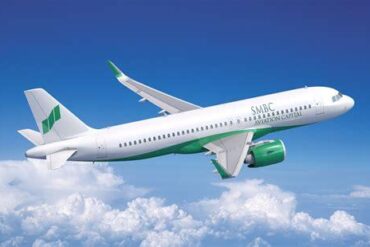
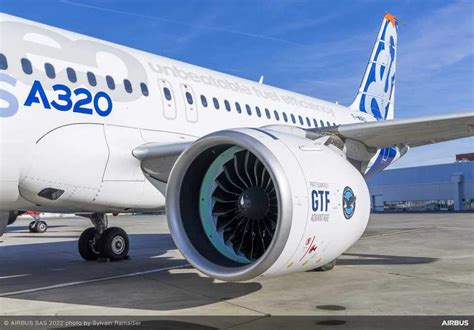
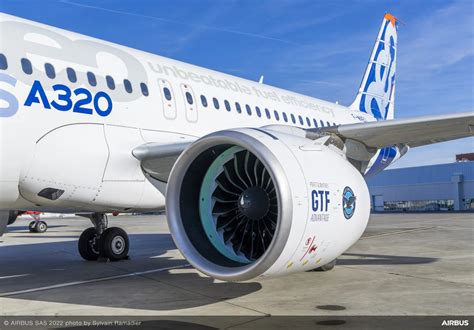
In the modern aviation landscape, the Airbus A320neo family is an anomaly. Unlike nearly all other next-generation narrowbody aircraft, the A320neo line offers two distinct engine options: the Pratt & Whitney PW1100G-JM and the CFM International LEAP-1A. This duality stands in contrast to every other aircraft in its category—from the Boeing 737 MAX and Airbus A220, to the Embraer E-Jet E2 and COMAC C919—all of which are bound to a single powerplant.
This unusual flexibility is not just a quirk of industrial strategy but the result of a complex interplay of engineering foresight, market power, design legacy, and strategic risk mitigation. To understand why Airbus chose to break from the norm, one must examine the unique advantages of the A320neo platform and the wider economic and technological context in which it was developed.
Market Clout: The Confidence to Offer a Choice
At the heart of the A320neo’s dual-engine approach is Airbus’ market dominance. As of 2025, the A320 family overtook Boeing’s 737 in cumulative deliveries, cementing its place as the most-produced commercial aircraft family in history. This colossal market presence gave Airbus unmatched leverage over engine manufacturers.
Unlike Bombardier, COMAC, or even Embraer, Airbus had both the financial stability and technical infrastructure to entertain the luxury of offering multiple engines. Engine OEMs were eager to bid for a piece of what was expected to be a long-lived and high-volume program. The prospect of securing thousands of unit sales provided sufficient ROI incentives, even without the exclusivity typically demanded in such high-stakes endeavors.
But Airbus’ clout alone didn’t guarantee multiple bids. It took a rare convergence of design foresight and risk acceptance—especially when compared to Boeing’s more constrained 737 MAX redesign path.
Standing Tall: Design Freedom and Engine Fitment
One of the defining design advantages of the A320 series, and later the A320neo, lies in its taller landing gear and wider fuselage clearance. These elements gave Airbus room to accommodate larger-diameter, high-bypass turbofan engines with greater fuel efficiency.
The Boeing 737 MAX, by contrast, inherited a 1960s design blueprint with short landing gear. To accommodate new engines like the LEAP-1B, Boeing was forced to mount the engines higher and further forward, compromising aerodynamics and ultimately contributing to the need for the controversial MCAS software.
Airbus didn’t face these constraints. Its A320neo could seamlessly integrate both the PW1100G and the LEAP-1A, offering customers true configurational choice without requiring structural compromises or redesigns that would delay market entry.
Rolls-Royce’s Absence: A Battle Between Two
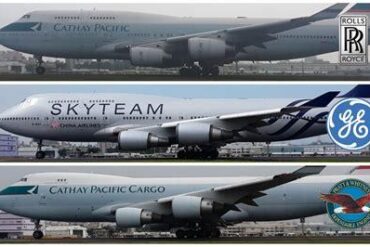
Three OEMs initially showed interest in powering the A320neo: Pratt & Whitney, CFM International, and Rolls-Royce. Ultimately, only the first two materialized with operational offerings.
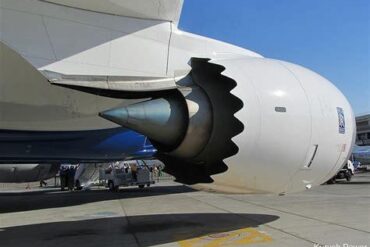
Rolls-Royce, after initial consideration, withdrew from the narrowbody market, choosing instead to focus on widebody platforms and high-end business jet engines. This retreat left the battlefield to Pratt & Whitney’s Geared Turbofan (GTF) and CFM’s LEAP series—two cutting-edge propulsion systems with distinct architectures and competitive advantages.
In this high-stakes commercial duel, Airbus assumed the role of referee, leveraging both OEMs’ eagerness to undercut the other on pricing, maintenance contracts, and aftermarket support. The result was not just choice for airlines, but a more favorable negotiating position for Airbus itself.
Airlines Win Big: Maintenance, Flexibility & Leverage
Airlines operate on razor-thin margins, and engine choice can significantly influence total cost of ownership. For operators already flying aircraft powered by CFM or P&W engines, staying within a familiar maintenance and training ecosystem lowers costs and minimizes operational friction.
Additionally, the dual-engine strategy offers:
- Built-in redundancy: If one engine develops reliability issues, airlines can switch allegiance.
- Competitive pricing: With two OEMs fighting for market share, Airbus can press for better pricing and support terms.
- Global flexibility: Different regions and maintenance infrastructures may favor one engine over the other, making a single-engine strategy a limitation for global carriers.
This strategy paid off during the GTF reliability issues that emerged in the mid-2020s. As many P&W-powered A320neos were grounded due to premature wear and durability concerns, airlines that chose the LEAP-1A were relatively insulated. The existence of a reliable alternative engine option protected the A320neo program from systemic collapse.
Why Boeing Couldn’t Follow Suit
If Airbus could offer two engines, why didn’t Boeing do the same with the 737 MAX? The answer lies in Boeing’s decision to upgrade rather than replace the aging 737 platform.
The 737’s short ground clearance rendered it incompatible with engines like the PW1100G, which uses a larger fan diameter and geared architecture. Fitting the engine would have required extensive redesign, including new landing gear, pylon structures, and aerodynamic recalibration—essentially a clean-sheet aircraft.
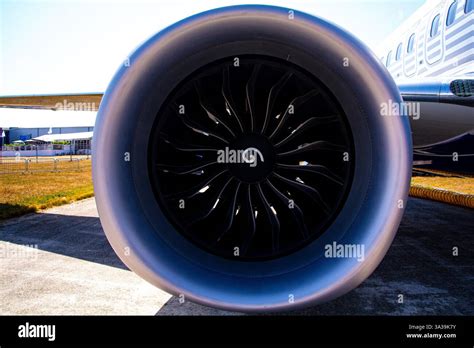
Instead, Boeing remained loyal to CFM, using a custom version of the LEAP engine (the LEAP-1B) with a smaller fan (69 inches) and a “flat-bottomed” nacelle to meet clearance requirements. This tighter integration simplified engineering but narrowed flexibility and exposed Boeing to higher program risk. When issues arose with the LEAP-1B or its integration, Boeing had no fallback.
Airbus’ decision to design the A320 with future adaptability in mind has, in hindsight, proven far more strategic.
The Economics of Exclusivity in Smaller Aircraft
The A320neo’s dual-engine architecture is unique not only because of Airbus’ size and engineering decisions but also due to economic realities that constrain other programs.
In smaller or state-backed programs, exclusivity is often not a choice but a financial necessity. The COMAC C919, Yakovlev MC-21, and Embraer E2 family were all developed under tight capital controls. Each chose a single engine supplier to simplify integration, reduce development costs, and secure OEM commitment.
Bombardier’s original CSeries (now the Airbus A220) used only the PW1500G, and even that stretch pushed the company to financial collapse. Eventually, it was forced to offload the program to Airbus to save it from bankruptcy.
OEMs also demand exclusivity in these limited-volume programs to ensure they can recoup R&D investments, especially when geopolitical risks are high. U.S. sanctions, for instance, have now forbidden Pratt & Whitney from supporting Russian programs like the MC-21.
In contrast, the A320neo’s 11,366 orders made the platform large enough to warrant shared investment and long-term ROI for both Pratt & Whitney and CFM.
Strategic Insurance: Avoiding a Single Point of Failure
The inherent benefit of engine diversity is risk distribution. When an airframe is tied to a single engine, any problem with that engine becomes an existential threat to the aircraft program.
This risk has materialized across multiple programs:
- Boeing 787: When Rolls-Royce’s Trent 1000 faced durability issues, airlines migrated to GE’s GEnx, which helped stabilize the program.
- A320neo: Pratt & Whitney’s early GTF issues were mitigated by the availability of the LEAP-1A.
- 737 MAX: Grounded for nearly two years, the program had no escape hatch due to its exclusive LEAP-1B reliance.
Airbus’ strategy has proven more resilient, safeguarding its order book and airline relationships even during engine-specific crises.
A Strategic Masterstroke in Aircraft Program Design
The A320neo’s dual-engine policy was not an accident of industrial logistics. It was a deliberate strategy that created value for Airbus, airlines, and engine manufacturers alike. By fostering healthy competition between two world-class OEMs, Airbus enhanced its bargaining power, improved resilience, and ensured flexibility for operators.
The A320neo is not just an aircraft. It is a platform, a marketplace, and a strategic hedge. With over 4,211 aircraft delivered and 7,145 more on order, its dominance is reinforced by the very choices that made it more adaptable, efficient, and globally relevant.
By contrast, competitors like the 737 MAX remain shackled to engineering legacies and decisions that, while cost-saving in the short term, reduced long-term adaptability. The lesson for future narrowbody programs is clear: design freedom, risk mitigation, and supplier competition are not optional—they are essential.
Final Thoughts: The Power of Optionality
In an era defined by supply chain shocks, regulatory scrutiny, and intense airline cost sensitivity, the ability to offer options rather than impose limitations is a critical differentiator. The Airbus A320neo’s twin-engine strategy may appear as a footnote in technical brochures, but it is arguably one of the most significant factors in its market dominance.
In aviation, as in business, choice is power. Airbus gave airlines the power to choose—and, in doing so, gained the upper hand in the most competitive segment of commercial aerospace.