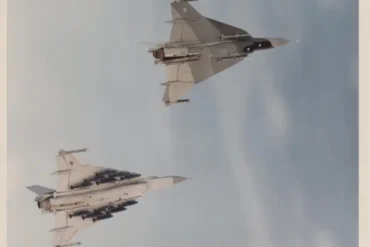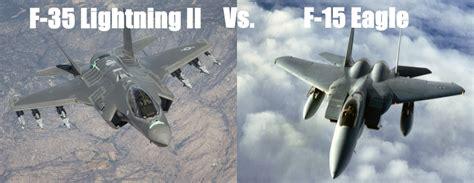
The F-15 Eagle became one of the most dominant air superiority fighters ever built. Designed during the Cold War to guarantee American control of the skies, the aircraft earned a legendary reputation through unmatched speed, powerful radar systems, and an extraordinary combat record. For decades, the jet remained central to the mission of the United States Air Force, surviving multiple generations of newer aircraft and continuing to evolve long after many expected it to retire.
Yet despite its enormous success, one branch of the American military never embraced the Eagle. The U.S. Navy, a service deeply dependent on carrier-based fighter aviation, ultimately chose the F-14 Tomcat instead. At first glance, the decision seems puzzling. The F-15 was faster in some flight profiles, cheaper to purchase, and already proving itself as a superior air combat platform. A navalized version even existed on paper under the name F-15N Sea Eagle.
The reality, however, was far more complicated than simply selecting the better fighter. Carrier aviation imposes brutal operational demands that reshape aircraft design from the ground up. What worked perfectly from long Air Force runways often struggled when launched from crowded carrier decks in rough seas. The Navy was not merely searching for a dogfighter; it needed a heavily armed fleet defender capable of stopping Soviet bombers before they could threaten an aircraft carrier battle group.
The F-15 could dominate the skies over land. But the Navy needed something built specifically for war at sea.
The Origins of the F-15 Eagle and the Navy’s Interest
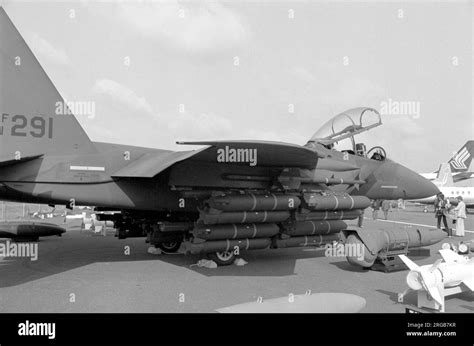
The F-15 Eagle emerged during one of the most intense periods of military aviation development in American history. Following disappointing air combat experiences in Vietnam and growing concerns about advanced Soviet fighters, the Air Force demanded a machine dedicated entirely to air superiority. The result was the McDonnell Douglas F-15, an aircraft engineered around raw performance, acceleration, radar capability, and missile lethality.
From the moment it first flew in 1972, the Eagle demonstrated extraordinary potential. Twin engines delivered massive thrust, allowing the fighter to climb rapidly and maintain energy during combat maneuvers. Its large wing area improved agility, while advanced avionics gave pilots unprecedented situational awareness for the era.
The Navy noticed immediately.
At the time, naval aviation faced uncertainty surrounding the aging F-4 Phantom II fleet. Carrier groups required a next-generation interceptor capable of defending American ships against waves of Soviet bombers carrying long-range anti-ship missiles. McDonnell Douglas recognized an opportunity and proposed a navalized version of the Eagle called the F-15N Sea Eagle.
On paper, the concept looked promising. The aircraft potentially offered excellent speed, high maneuverability, and lower procurement costs than the competing Grumman F-14 Tomcat. Estimates suggested the Eagle could save the Navy millions per aircraft compared to the Tomcat program, which was already becoming notoriously expensive.
But paper specifications rarely survive contact with naval reality.
Why Carrier Operations Change Everything
Operating from an aircraft carrier is fundamentally different from flying from land bases. Naval aircraft endure violent catapult launches, punishing arrested landings, constant exposure to corrosive saltwater, and confined deck handling conditions. Even highly durable land-based fighters often require enormous redesign efforts before they can safely operate at sea.
The F-15 was never originally designed with those stresses in mind.
Transforming the Eagle into a carrier-capable fighter required far more than attaching a tailhook beneath the fuselage. Engineers quickly discovered the aircraft needed substantial structural reinforcement throughout the airframe. Landing gear had to absorb brutal deck impacts. Internal sections required strengthening to survive repeated catapult launches. Wings needed folding mechanisms to conserve precious carrier deck space.
Every modification added weight.
The Navy estimated that navalizing the F-15 would increase the aircraft’s weight by roughly 3,000 pounds before additional mission equipment was even considered. That increase threatened the Eagle’s carefully balanced performance characteristics. The fighter’s famous agility and thrust-to-weight ratio were among its greatest advantages, and additional structural mass risked eroding both.
Carrier aircraft also demand exceptional low-speed handling during landing approaches. The F-15 excelled at high-speed air combat, but naval aviators needed predictable behavior at slower speeds while descending onto moving flight decks under difficult weather conditions.
As engineers studied the issue further, the Sea Eagle began looking less like a revolutionary bargain and more like a compromised redesign.
The Mission Problem That Doomed the Sea Eagle
The biggest obstacle was not engineering alone. It was mission doctrine.
The Air Force and Navy viewed aerial warfare through completely different strategic lenses during the Cold War. The Air Force prioritized fighter-versus-fighter combat and offensive air superiority missions over land. The Navy focused on fleet defense against long-range Soviet maritime strike aircraft armed with anti-ship missiles.
That distinction changed everything.
The Navy required a fighter capable of intercepting enemy bombers hundreds of miles away from carrier groups before they could launch missile attacks. To accomplish this, naval aviation depended heavily on the enormous AIM-54 Phoenix missile system paired with powerful radar technology.
The F-14 Tomcat was designed around that mission from the beginning.
The F-15, by contrast, was optimized for lighter air superiority weapons and high-performance maneuvering combat. Integrating the Phoenix missile into the Sea Eagle concept created major complications. The missile itself was extremely large and heavy, and supporting radar hardware added even more weight to the aircraft.
Combined, the required modifications reportedly increased aircraft weight by nearly 10,000 pounds compared to a standard F-15A configuration. At that point, the Sea Eagle no longer resembled the sleek fighter that impressed Air Force planners. The aircraft risked becoming slower, heavier, and less efficient while still failing to match the Tomcat’s specialized fleet-defense capabilities.
The Navy ultimately concluded that adapting the Eagle for maritime operations would compromise too many aspects of the aircraft while delivering too few strategic advantages.
How the F-14 Tomcat Won the Navy’s Future
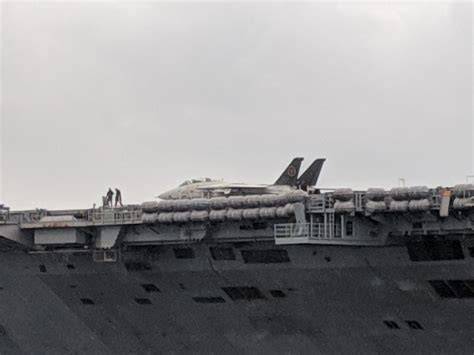
The Grumman F-14 Tomcat was expensive, mechanically complex, and demanding to maintain, but it fulfilled the Navy’s operational requirements more effectively than the proposed Sea Eagle. Its variable-sweep wing design allowed both high-speed interception and stable carrier landings. Most importantly, it integrated seamlessly with the Phoenix missile system that formed the backbone of American naval air defense during the Cold War.
The Tomcat became an icon of naval aviation for more than three decades.
Ironically, the debate surrounding the F-15N Sea Eagle still influenced the future of American carrier aviation. Discussions about aircraft weight, mission flexibility, and naval fighter doctrine contributed to studies that eventually shaped the development of the F/A-18 Hornet and later the F/A-18 Super Hornet. Those aircraft balanced multirole versatility with the harsh realities of carrier operations far better than the Sea Eagle proposal ever could.
In the end, the Navy did not reject the F-15 because it was a bad aircraft. Quite the opposite. The Eagle was almost too specialized for its intended Air Force mission to become an ideal naval fighter. Carrier aviation demanded compromises the F-15 design could not absorb without losing the qualities that made it exceptional in the first place.
The Eagle went on to become one of the most successful land-based fighters in aviation history. The Tomcat became a legend at sea. Both aircraft achieved exactly what their respective services needed — just on very different battlefields.