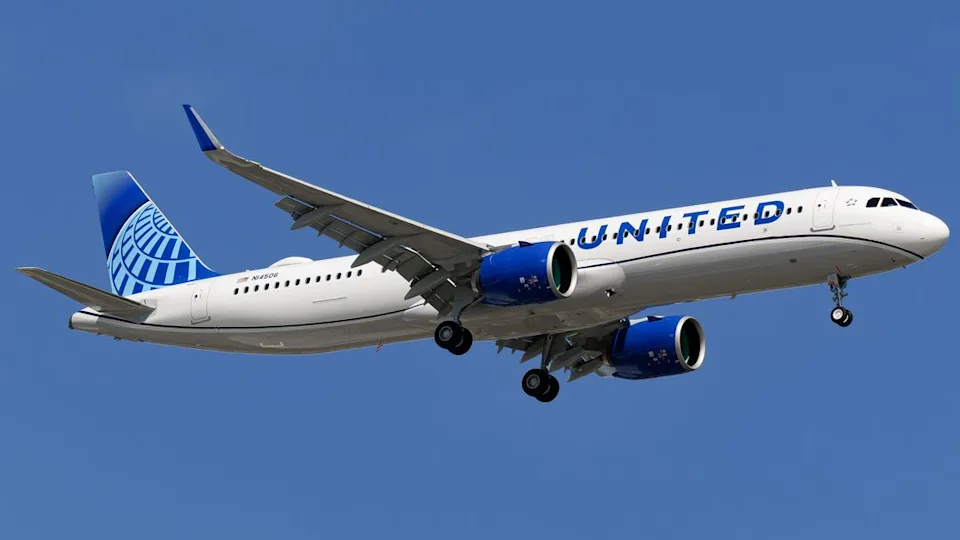
United Airlines’ relationship with Boeing has been one of the defining partnerships in commercial aviation for decades. From the Boeing 737 family powering its domestic network to widebody aircraft serving international routes, Boeing aircraft have formed the backbone of United’s fleet strategy. However, the airline’s future narrowbody plans are now taking a different direction, with Airbus A321neo aircraft becoming a central part of its growth strategy.
The decision was not made overnight. Instead, it developed through years of delays, uncertainty, and changing market conditions. United originally placed enormous confidence in the Boeing 737 MAX 10, expecting the aircraft to become the next-generation replacement for many of its larger narrowbody jets. The airline eventually ordered hundreds of examples, believing Boeing’s largest MAX variant would provide the capacity and efficiency needed for future domestic growth.
However, the aircraft’s prolonged certification delays forced United to rethink its assumptions. With no MAX 10 deliveries arriving and increasing concerns about relying too heavily on a single manufacturer, United began expanding its Airbus commitment. The result is a dramatic shift: the airline now has 260 Airbus A321neo family aircraft planned, creating one of the largest Airbus narrowbody fleets in its history.
United Airlines’ Boeing 737 MAX 10 Problem Changed Its Fleet Plans
The narrowbody aircraft market is one of the most competitive areas in commercial aviation. Unlike widebody aircraft, where manufacturers often design planes with different capabilities and market roles, narrowbody aircraft compete directly against each other.
For airlines, the Airbus A320neo family and Boeing 737 MAX family are extremely similar in many operational areas. Both offer improved fuel efficiency, lower emissions, and reduced operating costs compared with previous-generation aircraft. The decision between the two often comes down to delivery availability, pricing, fleet commonality, and long-term strategic goals.
United historically leaned heavily toward Boeing because of its existing fleet structure. The airline inherited a large Boeing 737 fleet following its 2010 merger with Continental Airlines, creating strong operational familiarity with Boeing aircraft. Over the years, United became one of Boeing’s largest customers, ordering substantial numbers of 737 MAX 8, MAX 9, and MAX 10 aircraft.
The Boeing 737 MAX 10 was particularly important. When launched, the aircraft was designed to compete directly against the Airbus A321neo by offering higher capacity than previous 737 variants. United became one of the aircraft’s earliest supporters, ordering 100 examples in 2017.
Later, the airline increased its commitment significantly. At one point, United had nearly 300 Boeing 737 MAX 10 aircraft in its orderbook, expecting the jet to become its primary high-capacity domestic aircraft.
The problem was timing.
The MAX 10 was originally expected to enter service around 2020. However, the global 737 MAX grounding, pandemic-related production disruptions, and additional regulatory scrutiny significantly delayed the aircraft program. Years later, the MAX 10 still had not entered commercial service, creating a major challenge for airlines planning future growth.
For United, the delay created a fleet planning problem. The airline wanted to increase capacity at major hubs, replace older aircraft, and expand its domestic network. Waiting indefinitely for Boeing’s largest MAX variant became increasingly difficult.
Why the Airbus A321neo Became United Airlines’ Boeing MAX 10 Alternative
United’s Airbus journey began before the MAX 10 delays became the main issue. In December 2019, the airline ordered 50 Airbus A321XLR aircraft, a long-range version of the A321neo designed for routes previously operated by Boeing 757 aircraft.
The A321XLR offered something Boeing could not provide. Boeing had previously studied a potential middle-of-the-market aircraft, sometimes referred to as the New Midsize Airplane, but that program never moved forward. Without a direct Boeing competitor, Airbus gained a major advantage in the long-range narrowbody segment.
United planned to use the A321XLR for thinner transatlantic routes and premium-focused missions. However, the airline’s Airbus ambitions expanded beyond the XLR variant.
In 2021, United ordered 70 standard A321neos as part of a massive 270-aircraft narrowbody order. That deal also included 50 Boeing 737 MAX 8 aircraft and 150 Boeing 737 MAX 10 aircraft, showing that United was still committed to Boeing at the time.
By 2023, United added another 60 A321neos, bringing its total A321neo family commitment to 180 aircraft when including the A321XLR.
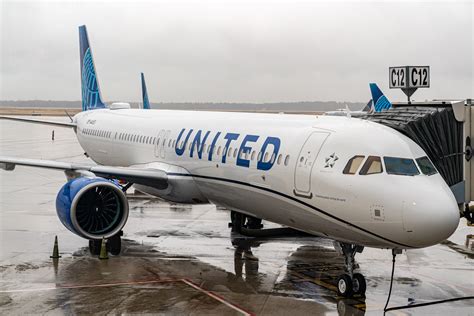
The A321neo became increasingly attractive because of its size. United’s configuration allows the aircraft to carry 200 passengers, including 20 first-class seats and 180 economy seats. This gives it more capacity than the planned 737 MAX 10 configuration, which would carry 189 passengers.
For an airline operating at congested hubs such as Newark, Chicago, Denver, and San Francisco, additional seats per flight create significant advantages. More passengers can be transported without adding more departure slots, which are often limited at major airports.
The Alaska Airlines 737 MAX 9 Incident Increased Boeing Concerns
The final turning point came after additional challenges surrounding the 737 MAX family.
In January 2024, an Alaska Airlines Boeing 737 MAX 9 experienced a door plug failure shortly after takeoff. The incident led to temporary groundings and renewed scrutiny of Boeing’s manufacturing processes.
United was particularly affected because it operates the world’s largest 737 MAX 9 fleet. The airline had already been dealing with uncertainty surrounding the MAX 10 program, and the MAX 9 incident further increased concerns about depending too heavily on Boeing.
United CEO Scott Kirby described the situation as a major breaking point. Soon afterward, Kirby traveled to Toulouse, France, to meet with Airbus executives and discuss additional A321neo opportunities.
The message was clear: United needed more flexibility.
The airline did not immediately cancel its Boeing MAX 10 orders, but it changed how it viewed them internally. Instead of building future schedules around expected MAX 10 deliveries, United began planning its network assuming those aircraft might not arrive on time.
This strategic adjustment opened the door for Airbus.
United also converted some Boeing 737 MAX 10 orders into MAX 9 aircraft because the smaller aircraft could be delivered sooner. Eventually, around 110 MAX 10 orders were converted, reducing United’s dependence on Boeing’s delayed aircraft.
United Airlines’ 260 Airbus A321neo Fleet Strategy Explained
As United moved away from relying exclusively on the MAX 10, the Airbus A321neo took on a much larger role.
The airline now expects to operate approximately 260 Airbus A321neo family aircraft, including standard A321neos, leased aircraft, and A321XLR models. This represents a major transformation compared with United’s original strategy, where Airbus aircraft were expected to fill only specialized roles.
The fleet will serve several different purposes.
The standard A321neo will become a high-capacity domestic aircraft. These jets are expected to replace some missions previously planned for the 737 MAX 10, especially on routes where passenger demand is high but additional frequency is difficult.
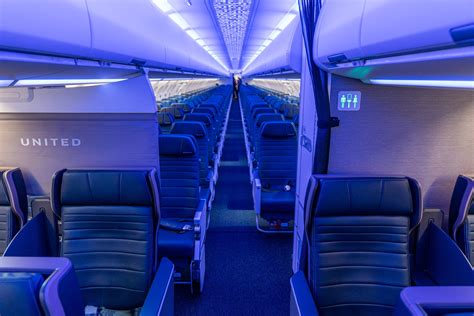
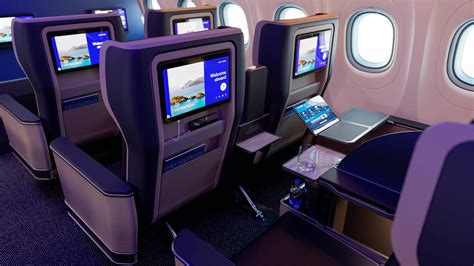
United has also introduced a premium-focused A321neo configuration known as the Coastliner. These aircraft are designed for transcontinental routes and feature a three-class layout with lie-flat business seats.
The Coastliner configuration includes:
- 20 Polaris lie-flat business class seats
- 12 Premium Plus seats
- 129 economy seats
This layout allows United to offer a premium long-haul experience on narrowbody aircraft, similar to what passengers expect on larger international jets.
The airline plans to operate approximately 50 Coastliner aircraft, replacing its previous plan to create a similar premium domestic fleet using Boeing 737 MAX 10 aircraft.
Airbus A321neo vs Boeing 737 MAX 10: Why United Chose Flexibility
The decision between the A321neo and 737 MAX 10 is not simply about which aircraft is better. Both aircraft offer strong economics and modern technology.
The Boeing 737 MAX 10 has advantages, including strong range capabilities and commonality with United’s existing MAX fleet. It also allows pilots and maintenance teams to continue working within the Boeing ecosystem.
However, the Airbus A321neo provides greater passenger capacity and has already proven itself in airline operations worldwide. More importantly for United, Airbus could provide aircraft according to a more predictable timeline.
In commercial aviation, aircraft availability is often just as important as aircraft performance.
An aircraft that arrives several years late can disrupt route planning, increase leasing costs, and limit growth opportunities. United’s decision reflects a broader industry reality: airlines cannot build their future networks around uncertain delivery schedules.
The A321neo also gives United more flexibility. The aircraft can operate efficiently on dense domestic routes, premium transcontinental services, and selected longer missions when equipped appropriately.
United Airlines’ Future Narrowbody Fleet Will Be More Balanced
United is not abandoning Boeing. The airline continues to operate a large fleet of Boeing 737 MAX 8 and MAX 9 aircraft, and Boeing narrowbodies will remain a major part of its operations for decades.
However, the era of Boeing dominating United’s narrowbody strategy is changing.
The airline’s future fleet will likely be built around two major aircraft types: the Boeing 737 MAX 9 and Airbus A321neo. Instead of waiting for the delayed MAX 10 to define its future, United has created a more balanced approach.
The shift also reflects a larger trend across the airline industry. Carriers increasingly prioritize delivery certainty, capacity, and operational flexibility over maintaining a single-manufacturer fleet.
United’s 260-aircraft Airbus commitment represents more than a simple aircraft order. It is a strategic decision shaped by delays, market demand, and the need for reliability. The A321neo is no longer just a backup plan for United — it has become a core part of the airline’s next generation of growth.