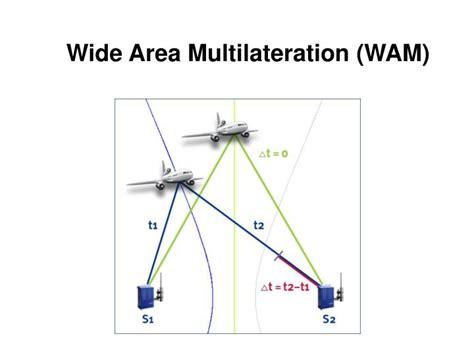
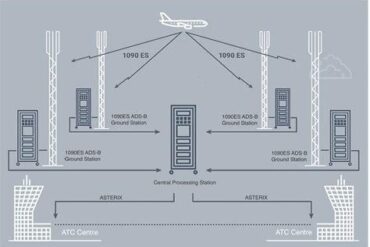
Wide-area multilateration (WAM) is a surveillance technique that uses the 1090 MHz signals sent by aircraft. These signals allow the system to track various parameters such as aircraft identification, position, and altitude. Additionally, WAM can actively request transmissions from aircraft, enhancing its data collection capabilities. While WAM operates differently from Automatic Dependent Surveillance Broadcast (ADS-B), both systems complement each other well. Their combined strengths offer high performance at lower costs, leading to significant operational advantages. As a result, many industries are now providing composite WAM/ADS-B systems, which air navigation service providers (ANSPs) are implementing across Europe and beyond. The choice of surveillance techniques, including Transponder Mode S, ADS-B, and WAM, will depend on local circumstances, operational requirements, and overall business considerations in the air traffic management (ATM) network. Both ADS-B and WAM are crucial for the future of the European ATM Network, helping to meet the goals of the Single European Sky (SES) initiative, which aims for improvements in safety, capacity, efficiency, and environmental sustainability.