At the 2025 Paris Air Show, a powerful alliance was unveiled between Windracers, a UK-based unmanned cargo drone company, and Aviation Sans Frontières (ASF), the humanitarian aviation NGO. Their goal is audacious yet grounded in urgent necessity: to revolutionize humanitarian logistics across remote African regions using autonomous cargo drones. The announcement was received with visible enthusiasm by stakeholders in humanitarian relief, aviation technology, and international health services, marking a strategic turning point in aerial aid delivery.
Pioneering a Scalable Drone-Based Humanitarian Framework
The joint initiative emerges not as a mere technological showcase, but as a deliberate, scalable response to a persistent crisis: lack of medical access in remote African communities. Aviation Sans Frontières has decades of expertise in delivering aid by air, often operating in austere environments. Windracers, on the other hand, brings to the table a rugged platform with precise autonomous capabilities designed for cargo logistics.
“By combining our operational experience with cutting-edge drone technology, we are developing a solution that is both innovative and grounded in the realities of the field,” noted Stéphane Blandino, ASF’s Project Manager. “It’s about making healthcare accessible — regardless of distance.”
This is not just a proof of concept. It is a fully funded, ready-to-scale operation targeting vaccine deliveries, emergency medical supply drops, and essential health logistics, starting in the Sub-Saharan region.
ULTRA MK2: The Technological Backbone of the Mission
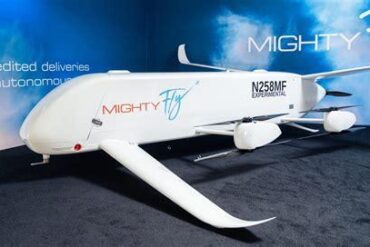
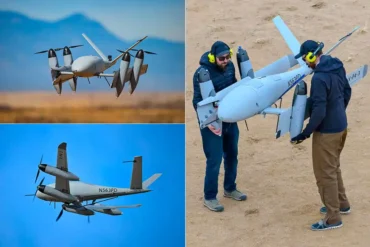
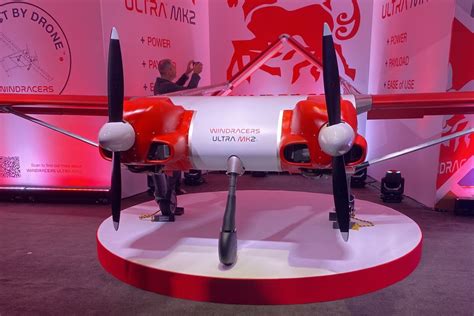
At the heart of this initiative lies the Windracers ULTRA MK2, a cargo drone purpose-built for long-range, high-volume transport. With a payload capacity of 150 kilograms and a flight range exceeding 1,000 kilometers, the ULTRA MK2 is designed for real-world relief operations.
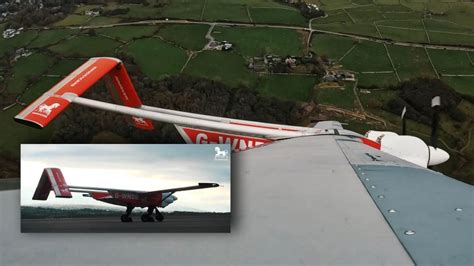
The ULTRA MK2 features a dual-engine fixed-wing design, embedded with proprietary autopilot software developed by Windracers’ sister company, Distributed Avionics. It supports autonomous takeoff, flight, and landing, and includes optional parachute delivery mechanisms for safe drops in inaccessible zones.
“We developed ULTRA with this exact idea in mind — to provide low-cost, high-efficiency delivery of humanitarian aid to the hardest-to-reach populations,” said Stephen Wright, Founder and Executive Chairman of Windracers. “In humanitarian logistics, cost-efficiency can determine the reach and sustainability of any aid initiative.”
The drone’s cost-effective performance comes at a critical time when aid organizations face rising operational costs, yet are under pressure to reach deeper into unconnected regions.
Deployment Begins in Malawi: A Strategic Pilot Zone
The first operational deployment of this drone partnership is already underway in Malawi, a country marked by logistical challenges and chronic infrastructure deficits. Here, Windracers is establishing a dedicated drone operations base, with ASF providing training, regulatory liaison, and mission coordination.
The selection of Malawi is intentional. The country offers a diverse terrain profile, from mountainous highlands to wide plains — ideal for testing and refining the drone’s performance under real humanitarian conditions. Early trials include delivery of medical kits, diagnostic samples, and routine healthcare supplies to clinics separated by hundreds of kilometers of rough geography.
Building Cold Chain Capability: Next-Phase Innovations
While the current mission focuses on durable supplies, the next phase is geared toward cold chain logistics, vital for transporting vaccines, blood products, and insulin. Maintaining consistent temperature control across vast, off-grid areas presents a monumental challenge for humanitarian missions.
To this end, Windracers and ASF are integrating temperature-regulated payload modules into the ULTRA platform. These modules are under active testing, with trials scheduled for Q3 2025.
Their solution seeks to ensure that perishable medical supplies remain within WHO-approved temperature ranges throughout the journey — an advance that could bridge longstanding gaps in childhood immunization and disease control programs across the continent.
Training and Regulatory Alignment: Building Local Capacity
Beyond technology, the partnership is equally committed to local workforce development. ASF is designing a series of community-centered training modules aimed at transferring knowledge in drone operation, maintenance, logistics management, and emergency response.
By aligning with African Civil Aviation Authorities (CAAs) and regional health agencies, the team is working to embed the program within national drone regulations, thereby fostering not just deployment — but local ownership.
“Drone delivery shouldn’t be seen as foreign aid,” Blandino emphasized. “It should be infrastructure — operated by the people it serves.”
This holistic model lays the groundwork for future humanitarian drone corridors that are locally managed, internationally certified, and sustainable well beyond the pilot phase.
Aviation Sans Frontières’ Evolving Role in Humanitarian Aviation
Founded in 1980, Aviation Sans Frontières has always been on the vanguard of humanitarian aviation. With missions spanning medical evacuations, supply drops, and transport for NGOs in over 30 countries, ASF is uniquely positioned to bring aerial logistics expertise into the unmanned era.
By adopting drone technology, ASF reinforces its position as a pioneer of innovation in non-profit aviation. The organization’s presence at the Paris Air Show this year underscores a growing shift: technology partnerships are now central to humanitarian impact.
The Paris Air Show Announcement: A Global Launchpad
The formal unveiling at the Paris Air Show on June 18, 2025, was more than a press moment — it was a declaration of intent. The joint press conference featured not only Windracers and ASF, but also Airspace Drone and Aerial Metric, whose lightweight drone innovations contribute to parallel humanitarian missions.
This public demonstration attracted attention from government delegations, logistics firms, health ministries, and multilateral agencies. It is likely to spur new funding commitments and policy adjustments favorable to humanitarian UAV corridors across the African Union and WHO-affiliated programs.
Looking Forward: Toward a Drone-Enabled Humanitarian Network
As this partnership takes flight, it promises to do more than drop aid supplies. It represents a strategic rethinking of humanitarian logistics. The fusion of robust unmanned systems with grassroots operational experience could define a new standard for international relief.
If successful, the Windracers–ASF initiative will function not just as a solution to Africa’s medical supply chain crisis, but as a blueprint for global adoption. In the near future, drone-based logistics could become as common to humanitarian response as mobile health clinics and field hospitals.
In a landscape where minutes often mean lives, and where terrain divides the helped from the helpless, this drone partnership offers something rare in the humanitarian sector: speed, access, and repeatability — at scale.