Most people only think about meteors when a dramatic fireball flashes across the night sky or a Hollywood disaster movie turns Earth into a cosmic target range. That disconnect between science and spectacle has helped fuel decades of misunderstandings about what meteors actually are, how dangerous they can be, and what happens when they reach Earth.
The confusion intensified again in March 2026 when residents across northeast Ohio were jolted awake by a thunderous sonic boom caused by a meteor racing through the atmosphere at roughly 45,000 mph. Witnesses described glowing streaks across the sky, shaking homes, and an explosion-like sound that sparked panic and fascination in equal measure. NASA later confirmed the event was caused by a meteor, reminding the public that these encounters are far more common than many realize.
Despite the frequency of meteor activity, myths surrounding these space rocks continue to dominate public perception. Many people still believe meteorites are scorching hot when they land, that impacts almost always create giant craters, or that meteor strikes pose a constant deadly threat. In reality, the science behind meteors is both more fascinating and less apocalyptic than popular culture suggests.
Understanding how meteors behave not only clears up misinformation but also reveals just how remarkable Earth’s atmosphere truly is. The next time a fireball streaks overhead, knowing the facts may make the experience far more awe-inspiring than frightening.
Meteorites Are Not Usually Burning Hot When They Reach the Ground
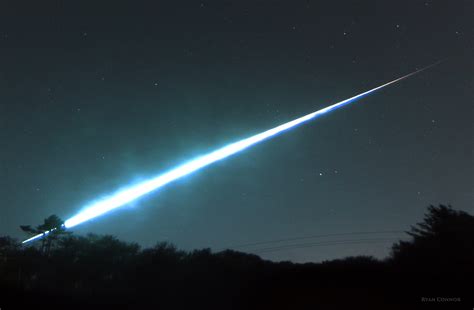
One of the most widespread meteor myths comes directly from what people see in the sky. A meteor appears as a blazing fireball tearing through the atmosphere, so naturally many assume any surviving fragments must be dangerously hot when they land. The truth is surprisingly different.
A meteor glows because of the intense friction and compression created as it slams into Earth’s atmosphere at incredible speeds. The outer surface heats rapidly during descent, often vaporizing layers of rock and metal in the process. However, this heating mainly affects the exterior shell for only a brief period of time. Most meteorites are relatively small, and the journey through the atmosphere is short enough that heat does not fully penetrate the interior.
By the time surviving fragments slow down and fall to the surface, many are actually cool or only mildly warm. NASA experts have repeatedly clarified that freshly fallen meteorites are not typically molten chunks of rock glowing like lava. Some can even feel cold to the touch because the frigid temperatures of space remain trapped inside portions of the object.
That does not mean people should casually grab suspected meteorites with bare hands. Scientists strongly encourage careful handling because contamination from skin oils, moisture, and microbes can damage valuable scientific evidence. Meteorites preserve information about the early solar system, including minerals older than Earth itself. Improper handling can compromise future analysis.
Collectors and researchers recommend using gloves, aluminum foil, or clean tools such as tongs when recovering a suspected meteorite. The specimen should then be sealed in a dry container or plastic bag to prevent environmental exposure. A seemingly ordinary rock from a backyard could potentially contain clues dating back billions of years.
Meteor Strikes Happen Constantly Across Earth
Many people believe meteorite impacts are extraordinarily rare because they have never personally witnessed one. In reality, Earth is bombarded by cosmic debris every single day.
Scientists estimate that thousands of meteorites reach Earth’s surface annually, while countless additional meteors burn up completely before impact. Most are tiny fragments no larger than pebbles or grains of dust. The atmosphere acts as a protective shield, destroying the overwhelming majority before they can pose any danger.
The reason meteor events feel rare is largely because Earth is enormous and sparsely populated in many regions. A meteorite landing in a desert, forest, mountain range, or ocean often goes completely unnoticed. Even larger fireballs may only be visible within a limited geographic area for a few fleeting seconds.
Meteor showers further demonstrate just how active the skies really are. Events like the Perseids, Geminids, and Leonids occur every year as Earth passes through streams of debris left behind by comets. During peak periods, observers can sometimes witness dozens or even hundreds of meteors per hour under dark conditions.
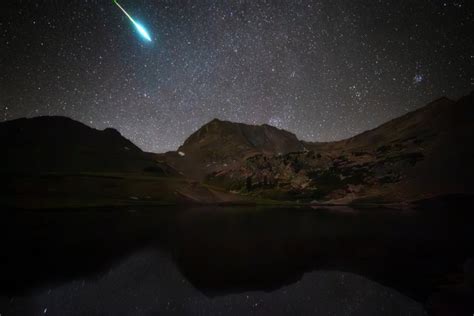
Ironically, the best way to watch meteors is not with advanced equipment but with the naked eye. Telescopes and binoculars dramatically narrow the field of view, making it harder to spot fast-moving streaks across wide sections of sky. Experienced skywatchers often recommend lying flat in an open area away from city lights and simply scanning overhead patiently.
The simplicity of meteor watching is part of its appeal. No expensive technology is necessary to witness particles from ancient comets burning brightly above Earth. For a few moments, the solar system puts on a free light show.
Most Meteor Impacts Never Create Massive Craters
The image of a meteor impact often involves a catastrophic explosion that leaves behind a gigantic crater visible from space. While dramatic craters certainly exist on Earth, they represent only a tiny fraction of meteor impacts overall.
Most meteorites that survive atmospheric entry are simply too small to produce major geological scars. By the time they reach the ground, much of their original mass has already burned away. Many land with surprisingly little force compared to what people imagine from movies.
Earth’s atmosphere is the key reason giant impact craters are relatively uncommon. As incoming meteors encounter atmospheric resistance, they rapidly slow down, fragment, and lose energy. Without this natural defense layer, Earth would resemble the moon far more closely.
The moon’s crater-covered appearance tells a very different story. Because the moon lacks a substantial atmosphere, incoming space rocks strike the lunar surface directly and at extreme speeds. Every collision leaves visible marks that can remain preserved for millions or even billions of years.
Earth constantly reshapes itself through erosion, tectonic activity, volcanic processes, vegetation growth, and weather. Even when impact craters do form, many gradually disappear over time or become buried beneath sediment. Some ancient impact sites remained undiscovered for centuries because geological changes concealed their outlines.
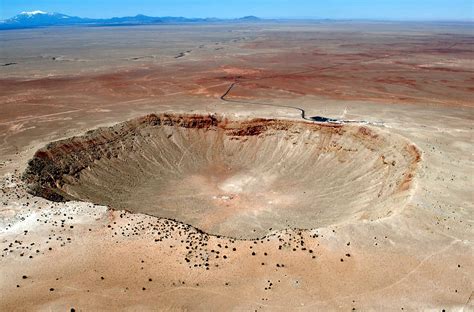
One of the most famous preserved examples is Meteor Crater in Arizona, also known as Barringer Crater. Measuring roughly 4,000 feet wide, it serves as a reminder that large impacts do happen — just not nearly as frequently as fiction suggests.
The contrast between Earth and the moon highlights how fortunate humanity truly is. Our atmosphere does far more than provide breathable air; it acts as a planetary defense system that absorbs constant cosmic punishment.
Meteor Injuries Are Astonishingly Rare
Disaster films often portray meteors as civilization-ending threats capable of wiping out entire cities within minutes. Although massive asteroid impacts have occurred during Earth’s history, everyday meteor activity is nowhere near as dangerous as entertainment media implies.
The odds of being injured by a meteorite are extraordinarily low. In fact, documented cases remain remarkably rare despite thousands of meteorites reaching Earth every year.
One of the most famous incidents occurred in 1954 when an eight-pound meteorite crashed through the roof of a home in Alabama and struck Ann Hodges while she rested on her couch. She suffered severe bruising but survived, instantly becoming part of one of the strangest news stories in modern history.
Cases like this stand out precisely because they are so unusual.
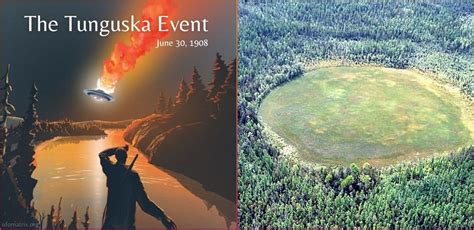
That does not mean larger impacts are impossible. Scientists continue monitoring near-Earth asteroids because history proves catastrophic events can occur. The Tunguska event of 1908 flattened an estimated 830 square miles of Siberian forest after an object exploded in the atmosphere above the remote wilderness. Had the explosion occurred over a densely populated city, casualties could have been devastating.
However, events on that scale are exceptionally uncommon. The vast majority of meteors either burn up harmlessly or fall into uninhabited regions. Earth’s oceans alone cover more than 70% of the planet, dramatically reducing the likelihood of populated impacts.
Modern detection systems have also improved humanity’s ability to track larger near-Earth objects. Space agencies around the world now monitor thousands of asteroids and meteors, identifying potential threats long before they approach Earth closely.
The reality is far less terrifying than the cinematic version. Meteors are primarily scientific wonders rather than existential dangers. They connect humanity to the broader solar system, carrying fragments of ancient cosmic history across millions of miles before briefly illuminating our skies.
When the next fireball flashes overhead or another sonic boom rattles windows somewhere across the world, the event will still feel extraordinary. But understanding the science behind meteors transforms fear into fascination — and reveals that space is not just dangerous chaos above our heads, but an active and endlessly intriguing universe constantly interacting with our planet.