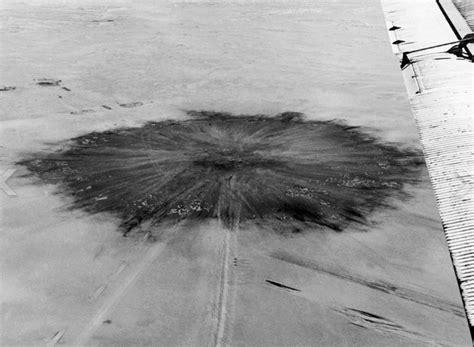
In the cold dawn of February 13, 1960, a blinding flash erupted over the Sahara Desert and altered the strategic geometry of Europe forever. The explosion—codenamed Gerboise Bleue—was not merely France’s first nuclear test. It was a political statement cast in fire, a detonation born from humiliation, distrust, and an uncompromising belief in national sovereignty. At an estimated 60 to 70 kilotons, the blast was more than four times as powerful as Little Boy, the atomic bomb dropped on Hiroshima. France had arrived as the world’s fourth nuclear power, and it had done so on its own terms.
The road to that moment did not begin in the desert sands of Algeria. It began in defeat—first in 1940 when Nazi Germany crushed France in weeks, then in 1954 at Dien Bien Phu in Indochina, and finally in 1956 at Suez, where American pressure forced Paris into an abrupt retreat. If World War II scarred France’s psyche, the Suez Crisis seared it. Gerboise Bleue was the answer.
France’s nuclear decision was never solely about military capability. It was about prestige, strategic independence, and control over its own destiny in a world divided between Washington and Moscow.
The Trauma of 1940 and the Obsession with Sovereignty
France’s defeat in 1940 was not simply a battlefield loss; it was an existential collapse. The once-dominant European power fell in six weeks. The German occupation, the Vichy regime, and reliance on Allied liberation etched a harsh lesson into the French political consciousness: dependence breeds vulnerability.
After the war, nuclear weapons emerged as the ultimate guarantor of survival. Hiroshima and Nagasaki demonstrated a new hierarchy in global power. Nations possessing atomic weapons were untouchable in a way conventional armies could never guarantee.
In the early 1950s, under the Fourth Republic, France quietly began exploring atomic development. The French Atomic Energy Commission (CEA) laid technical foundations. Yet progress was cautious, constrained by political instability and financial strain. The will existed, but urgency had not yet crystallized.
That urgency arrived at Suez.
The Suez Crisis: American Pressure and French Humiliation
In July 1956, Egyptian President Gamal Abdel Nasser nationalized the Suez Canal Company, a strategic artery long controlled by British and French interests. For Paris and London, this was not merely a commercial loss; it symbolized the erosion of European influence in the Middle East.
Britain and France conspired with Israel. On October 29, Israeli forces advanced into Sinai. Britain and France followed, invoking the pretext of separating combatants and protecting the canal. Militarily, the operation was effective. Politically, it was catastrophic.
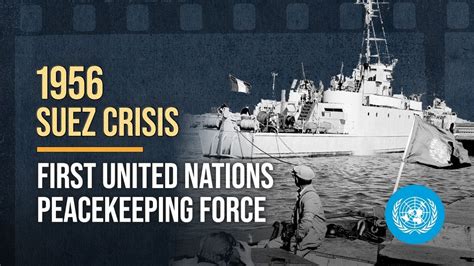
U.S. President Dwight Eisenhower opposed the intervention. Washington feared Soviet escalation and sought distance from old-world colonial entanglements. The United States applied immense financial and diplomatic pressure, including threats against the British pound. Within weeks, Britain and France accepted a ceasefire.
For France, the message was brutal and unmistakable: it could not act independently in a critical geopolitical theater without American consent. The illusion of allied equality shattered. If U.S. interests diverged from French priorities, Washington would prevail.
From that moment, reliance on the American nuclear umbrella appeared dangerously naïve.
De Gaulle and the Doctrine of Strategic Autonomy
When Charles de Gaulle returned to power in 1958 and established the Fifth Republic, the nuclear program shifted from aspiration to imperative. De Gaulle’s worldview was shaped by wartime exile and postwar marginalization. He believed that greatness required autonomy.
“A great state that does not have nuclear weapons, while others do, does not control its own destiny,” he declared. This was not rhetoric. It was doctrine.
A protocol signed on November 30, 1956, had already formalized cooperation between the CEA and the Ministry of Defense. Scientists such as Yves Rocard, military leaders like Gen. Charles Ailleret, and officials including Pierre Guillaumat accelerated efforts to design, build, and test a viable device. Plutonium production scaled up. A test site was selected in the remote Tanezrouft region near Reggane in French Algeria.
The Algerian War of Independence was raging at the time. Yet Paris pressed forward. Nuclear capability would not wait for colonial stability.
Gerboise Bleue: The 4X Hiroshima Blast
On February 13, 1960, the device detonated at the Hammoudia site. The explosion yielded between 60 and 70 kilotons—unprecedented for a nation’s first test. For comparison, Little Boy measured roughly 15 kilotons. France’s debut was not tentative; it was emphatic.
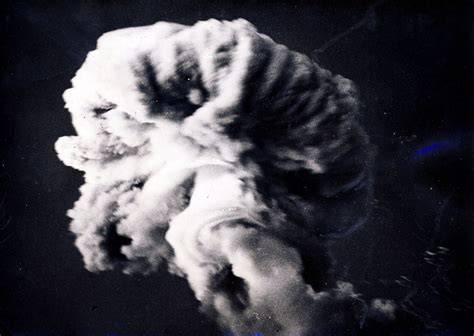
The test used a levitated plutonium core, an advanced design reflecting significant technical sophistication. The towering mushroom cloud signaled more than scientific success. It proclaimed independence from both Washington and Moscow.
France had entered the exclusive nuclear club, joining the United States, the Soviet Union, and the United Kingdom. The balance within NATO subtly shifted.
Between 1960 and 1962, France conducted four above-ground tests in the Sahara, followed by thirteen underground tests through 1967. Each detonation reinforced Paris’s strategic claim: France would never again be strategically subordinate.
Building the Force de Frappe
France’s nuclear arsenal evolved into what became known as the Force de Frappe—the strike force designed to deter any aggressor through the threat of unacceptable damage.
The doctrine guiding it was called “strict sufficiency.” Unlike superpower arsenals built for overwhelming superiority, France sought enough capability to ensure deterrence without engaging in unlimited arms racing. It was a minimalist philosophy with maximal political impact.
The Mirage IV bomber entered service in 1964, carrying nuclear gravity bombs. By the late 1960s, dozens stood on alert. In 1971, France deployed the S-2 silo-based ballistic missile and commissioned its first nuclear-powered ballistic missile submarine later that year. By the early 1970s, France had achieved a full nuclear triad—air, land, and sea-based deterrent forces—becoming only the third country to do so.
In 1966, de Gaulle withdrew France from NATO’s integrated military command, underscoring that French nuclear forces would remain under exclusive national control.
Today, France maintains roughly 290 nuclear warheads and continues to champion strategic autonomy, particularly as transatlantic relations face periodic strain.
Algeria: The Hidden Cost of Nuclear Grandeur
For France, February 13 marked empowerment. For Algeria, it marked contamination.
The French government initially described test zones as barren and uninhabited. Subsequent investigations revealed that thousands lived within or near affected areas. Estimates vary: the French Ministry of Defence acknowledged around 27,000 Algerians were impacted, while independent experts suggest up to 60,000 may have been exposed.
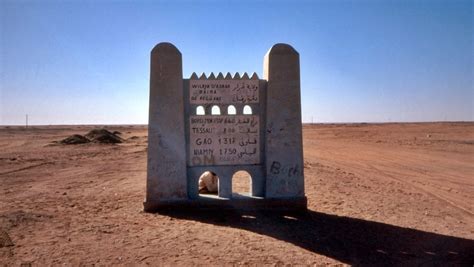
Radiation did not respect colonial narratives. Saharan winds dispersed radioactive material. Plutonium-laced debris remained partially buried. Military vehicles placed near the blast zone as measurement instruments were abandoned. Aircraft parts that flew through the mushroom cloud were discarded. Over time, shifting sands exposed contaminated scrap metal, which local populations unknowingly repurposed.
Reports in the 1990s documented elevated cases of skin cancer and other radiation-linked illnesses among residents and nomadic communities. The human toll extended decades beyond the flash.
France denied responsibility for years. In 2010, legislation finally acknowledged harm and established a compensation program. Later reforms simplified the burden of proof, presuming exposure for those present in designated zones who developed recognized illnesses. It was a belated recognition of suffering intertwined with geopolitical ambition.
Nuclear Weapons as Political Currency
Gerboise Bleue was not only a weapon test; it was geopolitical currency. Nuclear capability granted France leverage within NATO and credibility in global diplomacy. It allowed Paris to pursue policies sometimes distinct from Washington’s, including outreach to Moscow and Beijing during the Cold War.
The Suez Crisis had demonstrated that conventional power could be overridden by economic and diplomatic coercion. Nuclear status changed that calculus. A nuclear-armed France could not be casually sidelined.
The irony is sharp. The United States, seeking to prevent escalation and distance itself from colonial intervention in 1956, inadvertently strengthened European nuclear proliferation by undermining allied confidence. Strategic pressure meant to contain risk helped produce a new nuclear power.
History often moves this way—through unintended consequences layered upon pride and fear.
The Legacy of Strategic Autonomy
France’s nuclear doctrine remains rooted in independence. Even today, French leaders emphasize that their deterrent is not subordinate to NATO command structures. President Emmanuel Macron has suggested extending aspects of France’s nuclear umbrella to European partners, signaling a renewed debate about autonomy amid shifting global power balances.
Gerboise Bleue still echoes in these discussions. It represents the moment France concluded that alliance was insufficient without sovereignty.
The detonation over the Sahara did not merely quadruple Hiroshima’s destructive yield. It quadrupled France’s political leverage. Yet the blast also cast a long radioactive shadow across Algerian soil, reminding the world that national grandeur often leaves collateral scars.
Power and vulnerability coexist in uneasy proximity. The Suez humiliation exposed France’s dependence. Gerboise Bleue erased that dependence in strategic terms—but at a moral and environmental cost still debated today.
The mushroom cloud over Reggane was a symbol of restored pride, technological mastery, and geopolitical recalibration. It was also a warning about the lengths nations will go to reclaim status in a fractured world. Nuclear weapons, once built to guarantee survival, become permanent fixtures in national identity.
France’s entry into the nuclear age was neither inevitable nor purely defensive. It was forged in humiliation, accelerated by distrust, and detonated in the desert with a force four times that of Hiroshima. The blast reshaped Europe’s strategic architecture and redefined France’s place within it.
In the end, Gerboise Bleue stands as a stark lesson in how geopolitical slights can ignite atomic ambition—and how the pursuit of autonomy can reverberate far beyond the moment of explosion.