The price of geopolitics is now measured in jet fuel, crew hours, and widened flight paths. For Gulf airlines navigating the increasingly tense skies of the Middle East, avoiding Iranian airspace can add as much as $7,500 per flight hour to operating costs. In an industry where margins are often razor-thin and schedules are orchestrated with surgical precision, that figure represents more than an inconvenience. It signals a structural disruption to one of the world’s most strategically vital aviation corridors.
As tensions between the United States and Iran intensify, aviation authorities have issued advisories tied to military exercises and regional security assessments. While no blanket closure of Iranian airspace has occurred, precautionary route planning is already underway. Airlines are not waiting for a crisis to escalate. They are calculating risk in real time and adjusting accordingly, even if the financial consequences are steep.
The Strategic Importance of Iranian Airspace to Global Aviation
Iran occupies a geographic position that makes it a central artery in global air travel. Routes linking Europe and Asia, as well as services between Gulf hubs and North America, frequently traverse southern Iranian airspace. These corridors offer efficient, fuel-optimized trajectories for long-haul widebody aircraft such as the Boeing 777, Airbus A350, and A380.
When airlines choose to avoid this region, the alternatives are rarely straightforward. Detours may push aircraft south over Saudi Arabia and the Arabian Sea or north toward Central Asia, adding up to two or three additional flight hours. For ultra-long-haul sectors, even a modest extension can translate into tens of thousands of dollars in extra expense per flight.
Fuel burn increases significantly as aircraft remain airborne longer. Widebody jets consume several tons of fuel per hour, and longer routes may require additional contingency reserves. Crew duty times expand, potentially triggering augmented staffing requirements or overnight layovers. Aircraft rotations tighten, reducing flexibility in global schedules that are carefully timed to maximize asset utilization.
The $7,500 Per Hour Equation
The headline figure of $7,500 per hour reflects cumulative operational pressures. Fuel costs account for a substantial share, but they are only part of the equation. Airlines must factor in crew wages, maintenance reserves, navigation fees, and opportunity costs associated with delayed aircraft turnaround.
Extended flight times can also compress connection windows at major hubs such as Dubai, Doha, and Abu Dhabi, where Gulf carriers rely on synchronized “arrival banks” to funnel passengers between continents. A disruption in one arrival wave can cascade through an entire network, affecting dozens of onward flights.
For airlines operating on competitive long-haul routes, the financial impact compounds quickly. A daily service that incurs two additional hours of flying could add more than $15,000 per flight, potentially translating into millions in annualized cost increases if tensions persist. In a volatile fuel pricing environment, the margin pressure intensifies further.
Cancellations and Reroutes Begin to Ripple
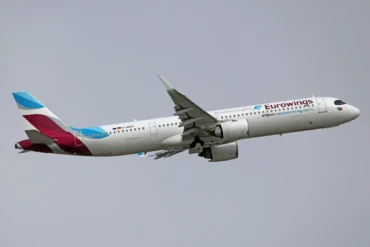
Some international carriers have already acted decisively. Air France and KLM have paused select Middle Eastern services. British Airways has temporarily halted flights to Bahrain. The Lufthansa Group has implemented reroutes around Iranian and Iraqi airspace. These adjustments reflect not only safety assessments but also insurance considerations and government advisories.

When multiple airlines divert simultaneously, congestion builds in adjacent airspace. Alternative corridors become saturated, leading to sequencing delays and revised cruising altitudes that may be less fuel-efficient. What begins as a precautionary reroute can evolve into systemic inefficiency across the region.
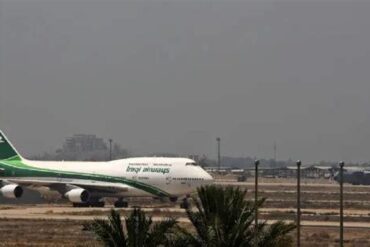
The Gulf’s airspace is among the busiest on the planet. Aircraft flow continuously between Europe, Asia, Africa, and the Americas. Any contraction in routing options increases complexity for air traffic controllers and flight dispatch teams. Even minor airspace advisories can force sweeping recalibrations across global networks.
Hub-and-Spoke Vulnerabilities in the Gulf
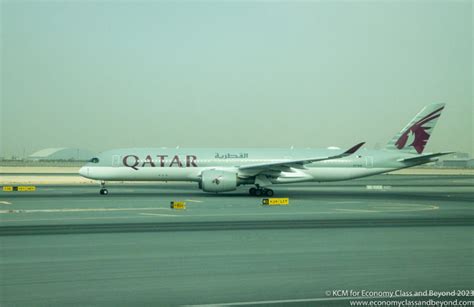
Gulf carriers have built dominant global brands around their geographic advantage. Positioned between East and West, hubs such as Dubai International and Hamad International Airport enable seamless intercontinental transfers. This model depends on predictable flight durations and tightly choreographed scheduling.
Reroutes threaten that precision. A two-hour delay inbound from Europe may disrupt onward departures to Asia or Australia. Aircraft that arrive late may depart outside optimal connection windows, reducing load factors and passenger satisfaction. For airlines competing fiercely for premium long-haul traffic, reliability is not optional.
The economic stakes extend beyond direct operating costs. Lower passenger demand can emerge if travelers perceive heightened regional risk. Insurance premiums may rise. Cargo operations—often a major revenue source on long-haul flights—can be affected by altered routing efficiencies and weight restrictions tied to extended sectors.
Operational Calculus in a Volatile Region
Airlines rely on layered intelligence systems when evaluating airspace risk. Government advisories, military activity reports, insurer guidance, and internal security assessments all feed into decision-making frameworks. In many cases, voluntary avoidance occurs even in the absence of formal airspace closures.
Recent history has conditioned the industry to act conservatively. Previous conflicts and isolated security incidents in the broader Middle East have demonstrated how quickly operational environments can shift. Airlines now maintain contingency plans that can be activated within hours, rerouting fleets across continents with remarkable agility.
Yet agility carries cost. Each adjustment reverberates through maintenance schedules, crew rostering systems, and airport slot allocations. Aviation is a precision machine; geopolitical instability introduces friction into every gear.
A Broader Impact on Global Connectivity
If tensions escalate further, ripple effects could extend well beyond the Gulf. Europe-Asia traffic flows, transatlantic connections via Gulf hubs, and cargo supply chains linking manufacturing centers could all face prolonged inefficiencies. Even airlines not directly operating in Iranian airspace may feel downstream impacts as traffic redistributes.
In the meantime, carriers remain in a cautious holding pattern. Flights continue, but dispatch teams monitor developments minute by minute. Operational control centers function as nerve hubs, recalculating routes and fuel loads with each advisory update.
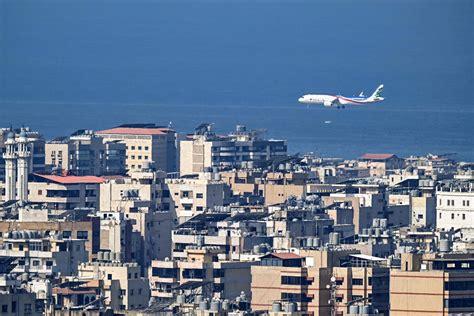
The cost of avoiding Iranian airspace is not merely financial. It underscores how tightly commercial aviation is woven into the fabric of global politics. Aircraft that appear serene against the skyline are navigating invisible currents of diplomacy, deterrence, and uncertainty.
At $7,500 per hour, the premium for caution is substantial. Yet in aviation, risk tolerance is measured not in dollars saved but in lives protected and reputations preserved. For Gulf airlines operating at the crossroads of continents, the calculus is clear: stability may be priceless, but preparedness carries a very real and rising price tag.