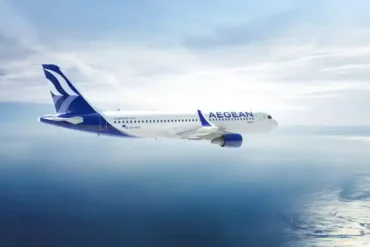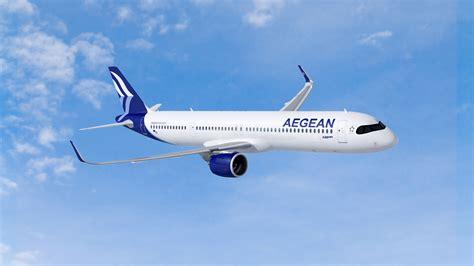
Aegean Airlines had planned a bold step beyond its traditional European network. Instead, the Greek carrier has abruptly stepped back from one of aviation’s most talked-about aircraft programs. The airline’s decision to cancel its planned Airbus A321XLR deliveries highlights how fragile expansion strategies can be when aircraft timelines slip, especially for airlines relying on a small number of highly specialized jets.
The move does not signal a retreat from growth. Rather, it reflects a calculated shift in strategy shaped by timing, operational efficiency, and fleet simplicity. By abandoning the XLR portion of its order and replacing those aircraft with standard Airbus A321neo jets, Aegean is effectively pausing its most ambitious long-haul ambitions while preserving flexibility within its broader fleet plan.
At the center of the story is a pair of aircraft that were meant to unlock new markets for Greece’s largest airline. Those two long-range narrowbodies were expected to become the spearhead of Aegean’s first real push into long-distance routes, particularly flights linking Athens with major cities in India.
The Timing Problem That Changed Everything
Aegean’s withdrawal from the A321XLR program was driven less by doubt about the aircraft and more by an unforgiving calendar. Airline schedules operate on seasonal economics, and for Mediterranean carriers the summer travel season is the financial engine that powers much of the year.
The airline originally expected the two A321XLR aircraft to arrive in late 2025 and early 2026. This schedule would have allowed the aircraft to launch long-haul services ahead of the lucrative summer 2026 travel surge.
However, the aircraft encountered certification complications involving seat approval processes. Even though the jets themselves were nearly ready, delays in certifying the cabin seats pushed deliveries back by approximately seven to eight months. That shift would have moved delivery to late summer or even early autumn.
For Aegean, that timing was strategically disastrous. Long-thin routes—industry jargon for routes that are long distance but have moderate passenger demand—depend heavily on strong seasonal performance. Missing the first profitable summer window would have left the airline operating those routes during weaker winter months, dramatically increasing financial risk.
Instead of introducing an expensive new subfleet at the wrong moment, Aegean chose a cleaner solution: cancel the XLR portion of the order entirely.
The Aircraft That Was Supposed To Transform Aegean
The Airbus A321XLR is often described as a narrowbody aircraft with long-haul ambitions. Built as an evolution of the A321neo family, it offers dramatically extended range—up to roughly 4,700 nautical miles—allowing airlines to connect city pairs previously unreachable with single-aisle aircraft.
For airlines like Aegean, this capability is revolutionary. Traditional long-haul aircraft such as the Airbus A330 or Boeing 787 require high passenger volumes to remain profitable. In contrast, the A321XLR allows carriers to operate long routes with fewer seats and lower operating costs.
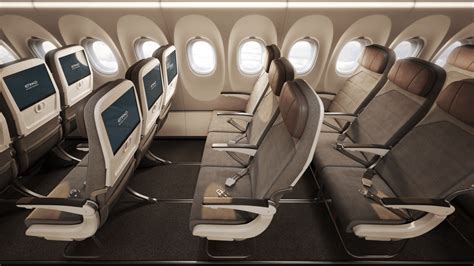
Aegean intended to use this capability in a very targeted way. The two XLRs were configured with only 138 seats, emphasizing premium travel rather than high density. The layout included 24 lie-flat business class suites, upgraded in-flight entertainment systems, and onboard Wi-Fi designed for flights lasting more than eight hours.
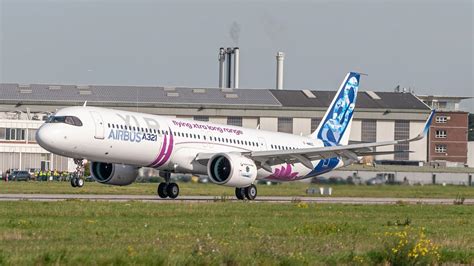
These aircraft were specifically intended for routes linking Athens International Airport with major Indian cities. Plans called for the airline to begin Athens–New Delhi flights in March 2026, followed shortly by Athens–Mumbai service in May 2026.
If the plan had succeeded, Aegean would have entered one of the fastest-growing aviation markets in the world while bypassing the need for larger widebody aircraft.
Why India Was Central To The Strategy
India represented a logical next frontier for Aegean Airlines. The country’s booming economy and expanding middle class have created strong demand for international travel, while tourism between Greece and India has grown steadily.
Athens also holds geographic advantages. Positioned at the crossroads between Europe, the Middle East, and Asia, the city offers efficient routing for flights to the Indian subcontinent.
For Aegean, entering the market with long-range narrowbody aircraft would have allowed the airline to test demand without committing massive resources. Two XLR aircraft could have served as a focused experimental fleet, opening the door to further expansion if the routes proved profitable.
The delay in aircraft delivery shattered that timeline. Rather than launching these routes in 2026, Aegean has now postponed the India expansion until 2027.
A Shift Toward Fleet Simplicity
Another factor quietly influencing the decision was operational simplicity. Running a fleet of just two A321XLR aircraft creates logistical headaches for airlines. Training pilots, stocking spare parts, and planning maintenance become disproportionately complex when only a handful of aircraft require specialized support.
Instead, Aegean is doubling down on the A321LR, a slightly shorter-range variant already integrated into its fleet plans. The airline intends to operate a six-aircraft long-range narrowbody fleet, but structured entirely around the LR model rather than a mix of LR and XLR variants.
From a shareholder perspective, the logic is straightforward. A homogeneous subfleet reduces training costs, simplifies maintenance planning, and minimizes operational risk. The trade-off is reduced maximum range, which slightly limits the airline’s potential route map.
Yet for Aegean, the benefits of simplicity outweighed the advantages of the longer-range aircraft.
What The Decision Means For Airbus
From Airbus’s perspective, the cancellation is awkward but far from catastrophic. The A321XLR remains one of the aerospace manufacturer’s most important products, with hundreds of orders from airlines worldwide.
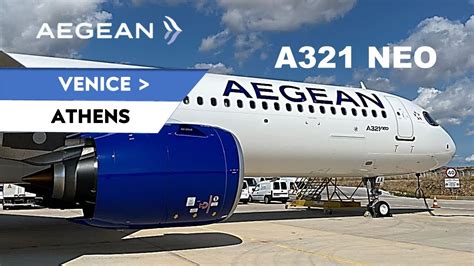
Aegean’s decision does not represent a rejection of the aircraft itself. The airline remains a committed Airbus customer and continues to expand its A320neo family fleet, keeping its total order commitment at 60 aircraft after substituting the XLRs with additional A321neos.
In other words, Airbus did not lose the relationship—only the specific aircraft variant.
Still, the situation highlights a reality often overlooked outside the aviation industry. Aircraft programs are not judged only by performance or range; timing is everything. When delivery schedules slip, even the most advanced aircraft can suddenly become misaligned with an airline’s strategic calendar.
For Aegean Airlines, the decision to abandon the A321XLR was less about the aircraft’s capability and more about the brutal arithmetic of airline economics. Expansion opportunities appear and disappear on tight seasonal cycles. Missing the right window can turn a promising route into a costly gamble.
The airline will still reach farther destinations eventually. It will simply arrive there on a different timeline—and possibly with a different aircraft leading the way.