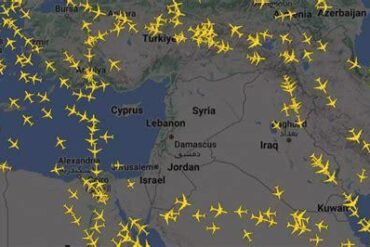
Air India and several other Indian airlines are currently navigating significant travel disruptions as the ongoing Iran-Israel conflict, compounded by regional tensions, has led to the closure of key airspaces over Iran, Iraq, Jordan, and Pakistan. These closures have severely impacted westbound international routes, forcing airlines to reroute flights to Europe and North America via longer and less direct paths. As a result, passengers are experiencing extended flight durations, higher fares, and unexpected delays, while airlines grapple with increased fuel costs, scheduling challenges, and operational strain—all during India’s peak summer travel season.
In a stark reminder of how intertwined global politics and commercial aviation have become, Indian airlines are currently grappling with severe disruptions due to airspace restrictions across multiple countries. With Pakistan continuing to restrict its airspace for Indian carriers and new conflicts in the Middle East prompting closures over Iran, Iraq, and Jordan, the western skies are growing increasingly narrow. These changes are not just strategic airspace issues—they are dramatically altering commercial flight patterns. Flights that once followed direct, time-efficient westward routes now must arc southward across the Arabian Sea and navigate alternate corridors via Saudi Arabia, Egypt, or even deeper into Central Asia. This shift has proven costly in more ways than one, creating logistical challenges that extend far beyond the cockpit.
Extended Flight Times and Mid-Air Diversions Become Routine
Flights departing from India’s major aviation hubs—Delhi and Mumbai—toward the United States and Europe are experiencing flight extensions ranging from 90 minutes to as much as three hours. What once were nonstop or one-stop routes have now turned into endurance journeys involving mid-air refueling stops or unscheduled landings at international hubs like Jeddah, Vienna, or Frankfurt. The ripple effect of these delays is felt not only in-flight but also across entire airline schedules. Pilots and crew members are frequently maxing out their allowable duty hours due to longer airborne times, resulting in regulatory challenges concerning rest requirements and flight safety.
Airlines Face Escalating Operational Costs
The rerouting of flights inevitably comes at a significant cost. More flying time means greater fuel consumption—a primary expense for any airline. On top of this, Indian carriers must now pay overflight fees to additional countries that are part of these new longer paths. Adding to the financial strain are potential crew overtime payments, increased maintenance needs, and the cost of additional takeoffs and landings at diversion airports. Collectively, these factors are pushing operating budgets upward at a time when many airlines are only just recovering from pandemic-induced losses. For carriers such as Air India, which is rapidly expanding its long-haul fleet and transcontinental services, these disruptions present a major logistical setback. Other private airlines like Vistara—already ramping up international operations—now face a complicated dance of route rescheduling and crew realignment. Freight operators are also caught in the turbulence, as cargo shipments face delays, leading to commercial losses and supply chain backlogs.
Passengers Bear the Brunt: Longer Flights, Higher Costs, and More Hassle
Passengers are far from immune to these ongoing disruptions. Those flying to North America or Europe from India are finding themselves on longer flights with higher fares. In many cases, journey times have ballooned due to rerouting, unexpected layovers, or even cancellations. This is particularly problematic for travelers with tight itineraries, visa-bound connections, or onward flights. Missed connections are becoming increasingly common, as are unplanned overnight stays, visa complications, and difficulties in retrieving checked baggage during diversions. While airlines are trying to cushion the impact with hotel accommodations and rebookings, the strain on resources is starting to show. Adding insult to injury, the cost of transcontinental tickets has risen. With increased fuel burn, new airspace fees, and reduced scheduling flexibility, airlines are left with little choice but to pass some of the burden on to consumers. Business and leisure travelers alike are facing price hikes during what is already a peak travel period.
Airspace Closures Leave Indian Carriers With Narrow Options
Since early 2025, Indian air carriers have been flying with limited western access. The restriction of Pakistani airspace for Indian airlines, in place since the beginning of the year, was already creating logistical bottlenecks. The recent shut-downs of Iranian, Iraqi, and Jordanian airspace have compounded the issue, essentially sealing off the most direct western corridor entirely. This “airspace squeeze” is unprecedented in its scope, leaving Indian carriers with few alternatives and forcing significant detours that cross less congested but longer routes. The lack of options is straining scheduling, ground support, and air traffic coordination.
Air India Leads Adjustments Amid Operational Headaches
Air India, the country’s flagship carrier, has been especially impacted by the airspace closures. The airline has confirmed it has rerouted or returned 16 international flights over the past several weeks. With an ambitious international expansion plan and a growing fleet of wide-body aircraft, Air India finds itself needing to readjust schedules and possibly revisit its growth strategy in the short term. Meanwhile, Vistara and other international-bound private carriers are reevaluating their new long-haul services in light of the longer air routes and added expenses. Even freight operators are facing challenges in adhering to delivery timelines, especially with sensitive cargo that requires timely clearance.
Timing Compounds the Trouble: Summer Travel Season and Recent Tragedies
What makes the current disruption even more impactful is its unfortunate timing. The summer season, spanning June through August, traditionally marks the highest volume of outbound international travel from India. Families, students, and vacationers typically fill flights bound for Europe and North America during school breaks and holidays. In addition to the seasonal rush, the aviation industry is still reeling from recent safety concerns following a tragic crash in Ahmedabad. The combination of increased scrutiny, safety fatigue among crew, and longer operational hours is making recovery even more complicated for airlines already stretched thin.
Looking Ahead: Navigating the Uncertain Skies
For now, Indian carriers are left navigating a maze of shifting political winds and closed skies. The longer these airspace restrictions persist, the more severe the long-term consequences may become. Airlines may be forced to reduce frequency on affected routes, delay new launches, or reallocate aircraft elsewhere. Travelers planning international trips in the coming weeks should brace for potential delays, route changes, and higher fares. Flexibility, travel insurance, and real-time updates from airlines will be essential for managing these unpredictable conditions. Air India and other Indian airlines are facing major travel disruptions as the Iran-Israel conflict and regional airspace closures force them to reroute flights. This has led to longer journeys, higher costs, and widespread delays on key international routes. As global air travel once again becomes a casualty of political conflict, India’s aviation sector is demonstrating both resilience and vulnerability—caught between operational necessity and the volatile geopolitics that rule the skies.