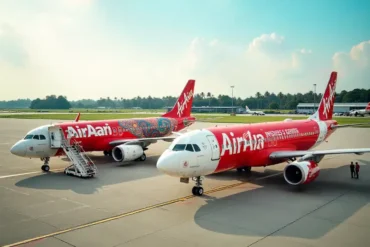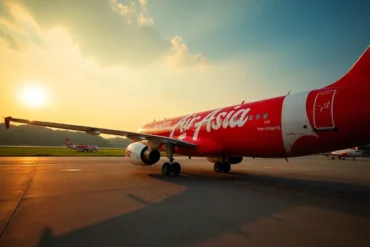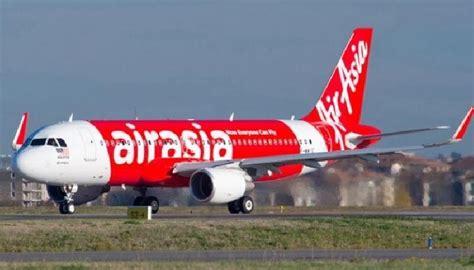
Indonesia’s low-cost aviation powerhouse, AirAsia, has taken a bold leap in regional connectivity with the official launch of four new flight routes from Surabaya. As of July 2025, passengers can now fly directly from East Java’s bustling capital to Bangkok in Thailand, and to Balikpapan, Berau, and Tarakan in Kalimantan. These new services are a pivotal part of AirAsia’s strategy to position Surabaya as a crucial domestic and international hub, driving tourism, trade, and economic integration across Southeast Asia.

Expanding Air Links: Surabaya Takes Center Stage
The decision to focus expansion from Surabaya is no coincidence. As Indonesia’s second-largest city, Surabaya is rapidly transforming into an economic magnet and a cultural beacon. By anchoring new flight paths in Surabaya, AirAsia is strategically tapping into the city’s rising demand for both outbound and inbound air travel.
According to Captain Achmad Sadikin Abdurachman, Acting CEO of Indonesia AirAsia, Surabaya stands alongside Jakarta, Bali, and Medan as a strategic priority for the airline’s growth. “With these new routes,” he emphasized, “we’re opening wider access between Indonesia’s key cities and global destinations to make travel more convenient for both our domestic citizens and international visitors.”
Connecting to Thailand: A Global Gateway Through Bangkok
Among the new services, the route to Bangkok Don Mueang International Airport is a standout addition. This direct international link not only offers Surabaya residents a gateway to Thailand’s vibrant capital, but also unlocks AirAsia’s Fly-Thru connectivity, allowing seamless transit to multiple destinations across Asia. Travelers can now reach cities like Chiang Mai, Chiang Rai, Da Nang, Hanoi, and even Tokyo via Bangkok with streamlined ease.
This expansion is especially significant for the Indonesian tourism sector. Between January and May 2025, over 41,000 Thai tourists visited Indonesia, signaling the strong and growing bilateral tourism relationship between the two nations. The new Surabaya-Bangkok route will not only serve outbound Indonesian travelers but also act as a feeder for inbound Thai tourists, further boosting regional tourism.
Unlocking Kalimantan: Domestic Growth with Strategic Depth
Complementing its international ambitions, AirAsia is doubling down on domestic connectivity with the launch of three new routes to East and North Kalimantan — specifically to Balikpapan, Berau, and Tarakan. These destinations, long valued for their natural beauty, economic potential, and emerging infrastructure, are crucial links in Indonesia’s vision of nationwide connectivity.
Berau and Tarakan, known for their rich ecological heritage and coastal charm, are increasingly popular among eco-tourists and adventure seekers. Balikpapan, on the other hand, is a major business hub, especially in the context of Indonesia’s plans to relocate its capital to Nusantara, located in East Kalimantan.
The Central Statistics Agency (BPS) revealed that East Kalimantan received over 6.5 million domestic tourists in just the first half of 2025, while North Kalimantan attracted over 640,000 domestic visitors during the same period. These figures underline the massive tourism and economic opportunity tied to improved air access.
Surabaya as a Southeast Asian Aviation Powerhouse
Surabaya’s elevation into a regional aviation powerhouse is more than symbolic. Its Juanda International Airport is being shaped into a dynamic hub, bridging the Indonesian archipelago with greater Asia. With AirAsia’s ongoing investments, Surabaya is expected to surpass many traditional air travel corridors by volume and importance in the next few years.
AirAsia’s move is a direct response to the Indonesian Ministry of Tourism and Creative Economy’s push to position Surabaya as a top origin city for international tourism. This strategic alignment between private enterprise and government vision creates a solid foundation for growth.
Economic Multipliers: Business, Trade, and Affordability
Besides leisure tourism, the implications of these new routes ripple deeply into the business and trade ecosystem. Surabaya, already a manufacturing and commercial hub, will now enjoy direct access to Kalimantan’s rich resource zones and Bangkok’s international trade circuits.
Lower airfares, more frequent flights, and enhanced scheduling flexibility will facilitate more spontaneous and cost-effective travel for business executives, investors, and entrepreneurs. This will not only stimulate regional commerce but will likely catalyze new ventures and bilateral trade agreements, especially in sectors like energy, tourism, and agriculture.
At the same time, AirAsia’s affordable ticketing strategy is designed to democratize air travel in Indonesia. By making these routes accessible to middle-class and budget travelers, the airline is expanding the tourism pie — and ensuring that its growth narrative is inclusive.
Future-Focused Growth: Positioning for Tomorrow
These route launches are part of a larger momentum-building campaign by AirAsia to capture a larger share of Indonesia’s domestic and international markets. The airline has made it clear that this is not a one-off expansion, but rather a systematic evolution of its flight network.
More routes from Surabaya — and possibly other second-tier cities — are expected in the coming quarters. This approach aligns with the broader regional trend where low-cost carriers are not only surviving but thriving by catering to secondary city air corridors, previously underserved by traditional carriers.
Additionally, AirAsia’s increased presence will pressure competitors to either match frequency, pricing, or customer service — all of which will benefit consumers and improve the overall aviation ecosystem in Indonesia.
Tourism Ecosystem Benefits: Local to National Impact
The reverberations of these new connections go beyond the airports. For cities like Berau and Tarakan, greater accessibility means a potential boom in local enterprises, such as hotels, tour operators, and restaurants. These sectors have struggled to reach their full potential due to logistical bottlenecks, which AirAsia’s new flights now help solve.
In Bangkok and Surabaya, hotels, transport providers, and tourism bureaus are already aligning their offerings to accommodate expected passenger growth. Destination marketing organizations are exploring joint promotions and cultural exchanges to capitalize on this newfound connectivity.
AirAsia’s Role in Shaping Indonesia’s Aviation Future
AirAsia is more than a passenger airline — it is an architect of modern travel infrastructure in Southeast Asia. By launching these new routes, the airline is not only expanding its own network, but helping to redefine how Indonesia is connected internally and externally.
These additions, particularly the Bangkok service, also position AirAsia as a gateway airline that funnels Southeast Asian travelers through Indonesia — with Surabaya as the centerpiece. Such a model will be instrumental in achieving Indonesia’s ambition of being a transit and tourism leader in the Asia-Pacific region.
Looking ahead, AirAsia’s sustained focus on low-cost expansion, digital innovation, and customer-centric operations is likely to set the benchmark for future carriers, especially as competition grows fiercer in the post-pandemic skies.
Conclusion: A Defining Move in Indonesia’s Aviation Timeline
AirAsia’s bold step to link Surabaya with Bangkok, Balikpapan, Berau, and Tarakan represents a watershed moment in the evolution of Indonesian air travel. It’s a multidimensional play — part tourism strategy, part economic policy, and part visionary foresight.
As these new routes take off, they carry more than just passengers. They carry the aspirations of regions eager for growth, the ambitions of a city ready to lead, and the blueprint of an airline determined to redefine accessibility in the archipelago.
With the world reopening and travel surging once more, AirAsia’s expansion is both timely and transformative — a launchpad for a new era of regional integration, tourism, and opportunity across Indonesia and beyond.