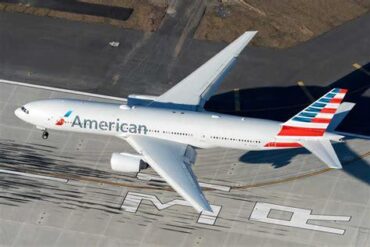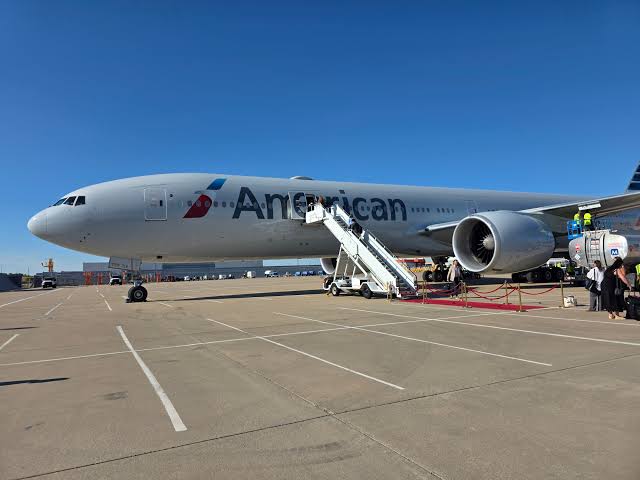
American Airlines has moved quietly to secure two more long-haul airframes, committing to purchase a pair of Boeing 777-200ERs that already fly in its own fleet, according to its latest quarterly filing. The Fort Worth-based carrier disclosed the commitment in its most recent 10-Q filing, confirming that the twinjets will transfer from leaseholders into direct ownership, a transaction expected to close this quarter. The language was deliberately low-key, buried among routine quarterly disclosures rather than announced with fanfare, yet it signals something more consequential than two secondhand airplanes changing hands. It is a tactical, cost-conscious response to a problem every major airline is wrestling with: how to keep capacity flying on aging equipment while manufacturers struggle to deliver replacements on schedule.
“As noted in the most recent 10-Q filing, American has committed to purchase 2 Boeing 777-200ERs that currently operate in its fleet from leaseholders,” an airline spokesperson confirmed, adding that the carrier had also exercised options for five additional A320 family deliveries. The confirmation came only after Simple Flying reached out for comment, underscoring how quietly the transaction entered the public record. For a carrier of American’s scale, two airframes rarely merit a headline, but the filing language tells its own story: this was a deliberate, unglamorous choice made with full awareness of what it costs to keep a quarter-century-old widebody flying versus what it costs to replace one.
Why Buying Out Leases Makes Immediate Financial Sense
The economics behind the move are straightforward and revealing. By purchasing aircraft it already operates, American eliminates the ongoing lease rental fees attached to those airframes, immediately lowering operating cash expenses on two long-haul jets that are already generating revenue. Every dollar previously flowing to a lessor now stays inside the airline, available for flight operations, crew costs, or margin. Given the aircraft’s advanced age, the purchase price will have been a fraction of what a factory-fresh widebody commands, making this one of the cheapest paths to permanent control of long-haul capacity available to any carrier today. The transaction also gives American fleet flexibility it cannot enjoy under a lease, allowing planners to shift the jets between routes without consulting an owner on the other side of the table.
A 47-Strong 777-200ER Subfleet Averaging 25 Years Old
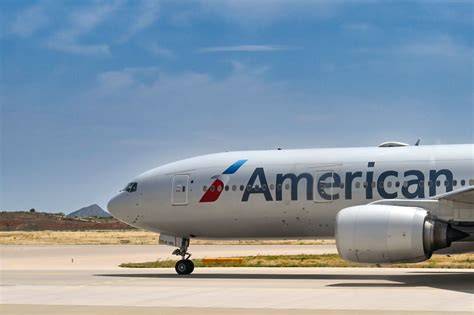
ch-aviation data shows American operates 47 Boeing 777-200ERs, a mixed subset of purchased and leased airframes whose average age now sits at roughly 25 years. That figure matters because it places the type firmly in the window where airlines begin weighing expensive life-extensions against replacement. American has already opened talks with Airbus and Boeing over a successor for the aging fleet, described internally as the search for its next big twinjet, but a decision of that magnitude takes years to translate into metal on the ramp. Purchasing two aircraft outright buys time without committing the airline to a single OEM while it evaluates 787s, A350s, and whatever Boeing ultimately offers as a 777X-derived option.
Boeing and Airbus Backlogs Leave Few Fast Options
The decision rests on a supply reality that has reshaped fleet planning across the industry. A brand-new 787 Dreamliner or competing widebody would cost vastly more than the 25-year-old jets American just agreed to buy, and the wait for either manufacturer stretches well beyond any airline’s ideal timeline given persistent production delays in Seattle and Toulouse. American’s own purchase commitments illustrate the constraint: it expects six additional 787s next year alongside 27 Airbus A320s and 14 Embraer E175s in 2027, part of a backlog totaling 365 new aircraft including the 737 family. With fewer than 100 new jets arriving over the next two years, ownership of already-proven long-haul equipment allows the carrier to protect international schedules without standing in a queue it cannot influence.
Ownership Unlocks Cabin Control, Parts Value, and Retained Equity
Full title to an aircraft carries benefits that rarely appear on a press release. American gains unfettered authority over cabin configuration, able to install new interiors, reconfigure premium cabins, or adjust seat counts without seeking a lessor’s approval. Should the jets reach the end of viable service within the next decade, the carrier can harvest them for parts, feeding components into a fleet that shares the same GE90 engines, avionics, and structural systems. Ownership also converts monthly lease outflows into retained asset value, giving finance teams a tangible balance-sheet item where before there was only an expense line.
Retrofits and Deliveries Reshape the Onboard Experience
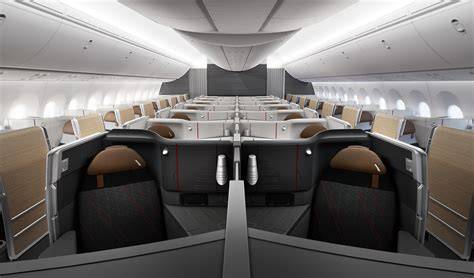
The purchase lands amid a broader push to improve what passengers actually experience. American is retrofitting existing widebodies with new Flagship Suites and upgraded premium economy cabins, while narrowbodies will gain additional First Class and Main Cabin Extra seats, with seat-back screens returning by 2028. The airline has also redesigned its mobile app, expanded free Wi-Fi across much of the fleet, and added more buy-on-board meal options. Its fleet now exceeds 1,030 aircraft, spanning Airbus and Boeing narrowbodies alongside an all-Boeing widebody operation, making it the second-largest commercial fleet in the world behind United Airlines.
Against that scale, two purchased 777-200ERs represent a small number but a clear philosophy: extract maximum value from assets already in hand while the next generation of aircraft remains stubbornly out of reach.