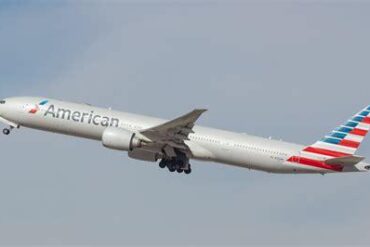
American Airlines is entering the 2026 summer travel season with the largest operational plan in its history, positioning itself for a record-breaking wave of passengers, expanded international connectivity, and one of the busiest schedules ever operated by a US carrier. Between May 21 and September 8, the airline expects to transport nearly 75 million travelers across more than 750,000 flights, a scale that translates into approximately five takeoffs every minute throughout the peak travel period.
The aggressive summer expansion arrives at a symbolic moment for the Fort Worth-based airline as it celebrates its 100th anniversary. The centennial milestone is being matched with a sweeping modernization strategy touching nearly every aspect of the operation, from hub redesigns and scheduling systems to new aircraft deliveries and upgraded airport facilities.
Travel demand continues to surge beyond pre-pandemic levels, and American Airlines is betting heavily that travelers will continue prioritizing international vacations, domestic leisure trips, and premium travel experiences throughout 2026. Memorial Day weekend alone is expected to generate more than 4.2 million passengers on over 40,000 flights, signaling the start of what could become the airline’s busiest summer ever.
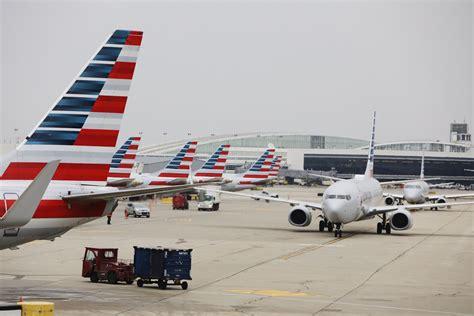
The scale of the operation is staggering even by legacy-carrier standards. Every hour during peak days, hundreds of aircraft will depart from hubs stretching from Dallas/Fort Worth to Miami, Chicago, Philadelphia, and Charlotte, feeding an increasingly global route network designed to maximize both connectivity and direct long-haul demand.
Dallas/Fort Worth Becomes the Engine Behind American’s Summer Expansion
At the center of American Airlines’ operational overhaul is Dallas/Fort Worth International Airport (DFW), the airline’s largest and most strategically important hub. The carrier introduced a new 13-bank scheduling structure at the airport, fundamentally changing how flights arrive and depart throughout the day.
The redesigned banking system has already produced measurable operational improvements. By spacing traffic more efficiently, American has reduced gate conflicts, shortened connection times, and minimized cascading delays that previously affected flights nationwide. Since DFW acts as the airline’s operational heartbeat, improvements there often ripple across the broader network.
Executives believe the upgraded structure is one of the key reasons American recently posted the strongest block-time performance among major US airlines. Faster aircraft turns and more reliable scheduling are now critical as passenger volumes push toward historic highs.
Chief Operating Officer David Seymour emphasized that the airline has spent years preparing for this level of demand, pointing to investments in scheduling technology, staffing, and infrastructure upgrades that were specifically designed to withstand summer operational pressure.
Philadelphia and Miami Drive New Transatlantic Growth
While DFW anchors domestic operations, American’s international ambitions are becoming increasingly visible on the East Coast and in Florida. Philadelphia International Airport has emerged as a major transatlantic gateway following schedule redesigns intended to reduce congestion while improving European connectivity.
The airline is aggressively targeting leisure-heavy international markets instead of relying exclusively on traditional business corridors. New and expanded services now include routes to Budapest, Prague, Athens, Zurich, and Milan, destinations that have seen rising demand from US travelers seeking nonstop access to Europe.
American’s strategy reflects a broader shift occurring across the airline industry. Rather than funneling all passengers through mega-hubs like London Heathrow or New York JFK, carriers are increasingly launching direct point-to-point flights to secondary European cities with strong tourism appeal.
Flights from Philadelphia to Central Europe are expected to perform particularly well during the summer months, while Dallas/Fort Worth’s growing long-haul reach further strengthens its position as one of the world’s largest airline hubs.
Chicago O’Hare Operations Return to Full Strength
Another major focus area for American Airlines in 2026 is Chicago O’Hare International Airport, where the carrier is preparing for a dramatic rebound in traffic following the Federal Aviation Administration’s restoration of full operational capacity.
The FAA had previously imposed temporary reductions at O’Hare after severe congestion and repeated systemwide delays created operational instability. Daily movements were cut significantly as regulators attempted to stabilize traffic flow at one of the nation’s busiest airports.
With upgraded ground systems and revised scheduling procedures now in place, American expects more than 5 million passengers to travel through O’Hare this summer alone. That figure represents a massive 48% increase compared to 2023 levels.
The airline has also strengthened its competitive position at ORD by acquiring two additional gates from Spirit Airlines in a deal reportedly valued at $30 million. Those gates will allow American to expand departure flexibility while improving passenger movement during peak travel windows.
Operational changes at O’Hare extend beyond simple gate expansion. American has redesigned boarding flows, optimized aircraft parking procedures, and increased staffing levels to support an anticipated 11% increase in traffic versus last summer.
A Centennial Year Designed Around Scale and Reliability
American Airlines’ summer strategy ultimately revolves around balancing enormous scale with operational consistency. The airline plans to add 17 new destinations while simultaneously introducing 59 additional aircraft into its fleet during 2026.
The challenge is immense. Running a network where aircraft depart every few seconds requires precision timing across crew scheduling, maintenance operations, baggage systems, and air traffic coordination. Even small disruptions can rapidly spread through interconnected hubs.
Yet American appears determined to turn its centennial year into a statement about resilience and modernization. With upgraded hubs, expanded international service, and record passenger forecasts, the airline is positioning itself not simply for a busy summer, but for a defining moment in its modern history.
If projections hold, the carrier’s centennial season could become one of the most significant operational achievements ever recorded in commercial aviation.