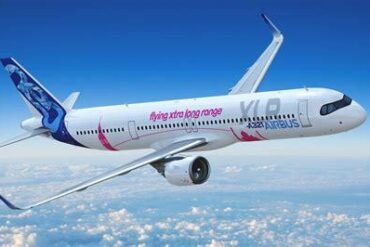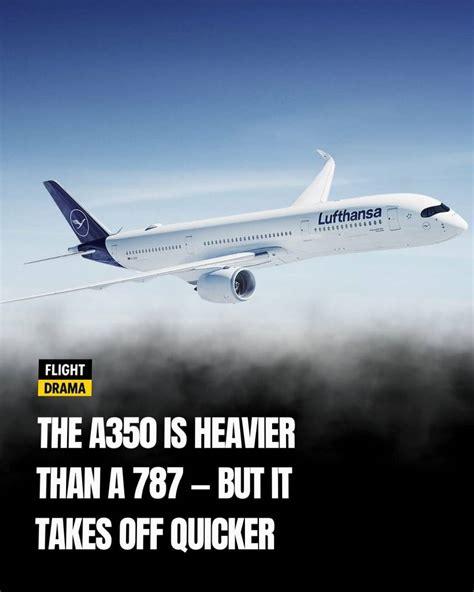
The modern era of aviation is no longer defined by speed alone—it is defined by distance without interruption. The ability to connect continents nonstop, to stretch a flight beyond 18 or even 20 hours, represents the ultimate engineering challenge. At the center of this frontier stands the Airbus A350, a machine designed not merely to fly far, but to operate at the absolute edge of what physics allows.
Ultra-long-haul operations are not simply longer versions of standard flights. They are precision-controlled endurance missions, where every kilogram, every degree of temperature, and every aerodynamic force must be carefully balanced. The A350 thrives in this extreme environment, transforming routes once considered impossible into routine services.
Airlines pursuing these routes are not chasing novelty—they are unlocking direct connectivity between global megacities, eliminating stopovers and redefining passenger expectations. But achieving this requires pushing the aircraft to its limits in ways that expose the hidden complexities of flight.
Maximum Takeoff Weight: The Invisible Barrier That Defines Range
At the heart of every ultra-long-haul flight lies a hard limit: Maximum Takeoff Weight (MTOW). For the A350-1000, this ceiling reaches approximately 322 tons, representing the maximum structural load the aircraft can safely lift into the sky.
This is not a flexible guideline—it is a non-negotiable boundary dictated by physics and engineering. Every additional kilogram of fuel, cargo, or passenger must fit within this limit. When airlines aim for maximum range, they quickly encounter a fundamental trade-off: fuel versus payload.
The paradox becomes immediately apparent. To fly farther, the aircraft must carry more fuel. But fuel itself is heavy, and carrying more of it consumes additional fuel during the early stages of flight. This phenomenon, often called the “fuel to carry fuel” penalty, creates diminishing returns where each extra kilometer becomes exponentially more expensive in energy terms.
In practical terms, this means ultra-long-haul flights often depart with:
- Reduced cargo loads
- Lower passenger counts
- Strictly optimized onboard weight distributions
The aircraft becomes less of a transport vehicle and more of a carefully balanced energy system, designed to extract maximum efficiency from every drop of fuel.
The Slow Climb to Efficiency: A Battle Against Gravity
When an A350 departs at near maximum weight, it cannot immediately ascend to its most efficient cruising altitude. The physics of lift demand a different strategy.
In the early hours of flight, the aircraft remains at lower altitudes, where denser air provides the necessary lift for its heavy mass. This phase is critical. The engines—specifically the Rolls-Royce Trent XWB—consume fuel at a significant rate, gradually reducing the aircraft’s weight.
Only after several hours can the aircraft begin a process known as step climbing, where it incrementally ascends to higher altitudes as it becomes lighter. This slow climb is not inefficiency—it is a calculated progression toward optimal aerodynamic performance.
The result is a flight profile that looks less like a straight line and more like a carefully staged ascent, proving that long-range flight is as much about patience as it is about power.
Fuel Architecture: Turning the Aircraft Into a Flying Reservoir
Standard long-haul aircraft rely primarily on wing tanks for fuel storage. However, pushing range beyond traditional limits requires fundamental design changes.
For ultra-long-range variants like the A350-1000ULR, engineers introduced the Rear Center Tank (RCT)—a structural modification that significantly increases fuel capacity. This addition allows the aircraft to carry tens of thousands of extra kilograms of fuel, effectively transforming it into a long-duration energy platform.
This modification is not without consequences. Adding such a large volume of fuel:
- Shifts the aircraft’s center of gravity
- Requires structural reinforcement of the fuselage
- Alters aerodynamic balance throughout the flight
The flight management system must constantly adjust for these changes, recalculating performance metrics in real time. The aircraft is no longer static—it is a dynamic system evolving continuously as fuel is burned.
The payoff is extraordinary. Routes exceeding 17,000 kilometers, such as Sydney to London, become achievable within a single flight envelope.
Cold Soak: The Silent Threat at 40,000 Feet
While weight and fuel dominate visible challenges, the most dangerous threats often remain unseen. At cruising altitudes above 40,000 feet, temperatures can plunge below -60°C, creating a phenomenon known as cold soak.
This extreme cold gradually penetrates the aircraft’s wings, chilling the fuel inside. Jet fuel, such as Jet A-1, has a freezing point near -47°C. On ultra-long flights, the risk is not theoretical—the fuel temperature can approach this threshold.
If the fuel begins to solidify or “wax,” it can:
- Restrict fuel flow
- Clog filters
- Starve engines of power
To counter this, pilots and onboard systems must actively manage fuel temperature. Solutions include:
- Descending into warmer air layers
- Increasing speed to generate aerodynamic heating
- Utilizing fuel recirculation systems
The A350’s composite wing structure provides a crucial advantage. Unlike traditional aluminum, carbon-fiber materials act as thermal insulators, slowing heat loss and extending safe operating time.
Cabin Trade-Offs: When Fewer Passengers Mean Greater Range
One of the most counterintuitive realities of ultra-long-haul aviation is that fewer passengers can enable longer flights.
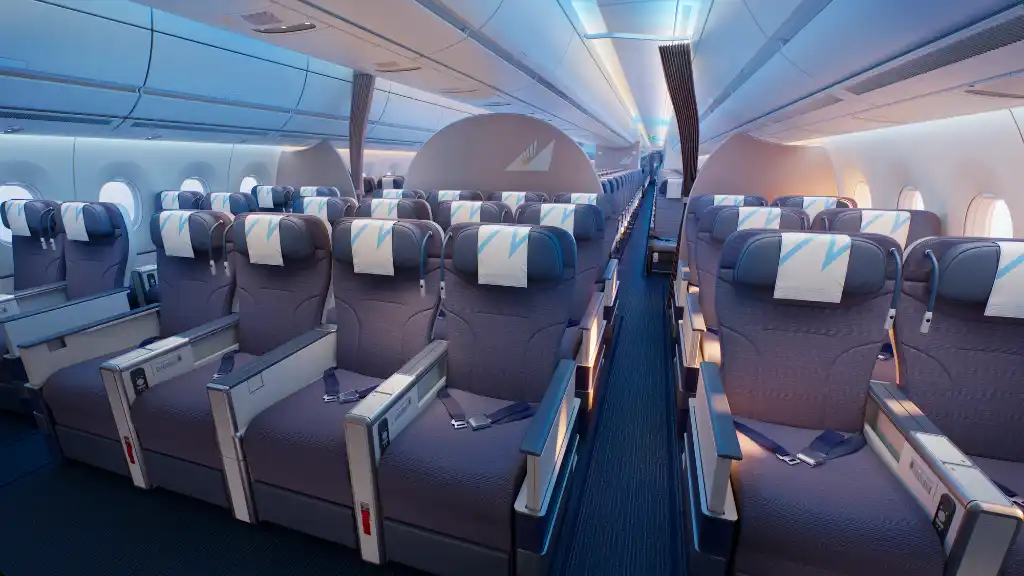
To maximize range, airlines often reduce seating density dramatically. A striking example comes from Singapore Airlines, which configures its A350-900ULR aircraft with only 161 seats, eliminating traditional economy class entirely.
This approach delivers multiple benefits:
- Lower overall weight
- Reduced need for catering supplies and potable water
- Improved center-of-gravity management
Every removed seat translates into additional fuel capacity or extended range. The aircraft becomes lighter, more efficient, and better suited to extreme missions.
This strategy challenges conventional airline economics. Instead of maximizing passenger numbers, carriers focus on premium-heavy configurations, where fewer passengers generate higher revenue per seat.
Real-World Routes: Connecting the Previously Impossible
The theoretical capabilities of the A350 are impressive, but real-world operations prove its true value. Airlines have deployed the aircraft on routes once considered unattainable without stopovers.
Among the most notable examples:
- Nonstop flights between New York and Singapore
- Direct connections from Los Angeles to Singapore
- Ultra-long routes linking Atlanta and Johannesburg
These routes consistently exceed 8,000 to 9,000 miles, pushing the aircraft into the upper limits of its operational envelope.
What makes these flights remarkable is not just their length, but their consistency. The A350 performs across diverse conditions—jet streams, headwinds, and varying atmospheric pressures—demonstrating a level of reliability that redefines global connectivity.
Composite Engineering: The Material Advantage That Makes It Possible
A defining feature of the A350 is its carbon-fiber-reinforced polymer (CFRP) airframe, a departure from traditional aluminum construction.
This material provides several critical advantages:
- Reduced structural weight
- Increased resistance to fatigue and corrosion
- Improved thermal insulation
The result is an aircraft capable of enduring extreme pressurization cycles and prolonged exposure to high-altitude conditions without the degradation seen in older designs.
This structural resilience is essential for ultra-long-haul operations. Flights lasting 18 to 22 hours place sustained stress on every component, from the fuselage to the wings. The A350’s composite structure ensures that these stresses remain within safe limits while maintaining optimal performance.
Operational Precision: The Role of Data and Flight Planning
Flying at maximum range is not simply a function of aircraft design—it is a triumph of operational precision.
Airlines rely on advanced analytics to optimize every aspect of the journey. This includes:
- Real-time weather data to exploit favorable winds
- Precise fuel calculations with minimal margins for error
- Continuous monitoring of aircraft performance throughout the flight
Flight paths are rarely straight lines. Pilots may deliberately deviate hundreds of miles to capture tailwinds that reduce fuel consumption, effectively extending range without additional fuel.
This level of precision transforms each ultra-long-haul flight into a data-driven operation, where decisions are constantly refined to maintain efficiency.
The Future Frontier: Toward 22-Hour Nonstop Flights
The next milestone in aviation is already within reach. Projects like Sydney to London nonstop flights aim to push endurance beyond 20 hours, redefining what is possible in commercial travel.
These missions represent the ultimate test of the A350’s capabilities. Every system—from fuel management to cabin design—must perform flawlessly over nearly an entire day of continuous operation.
The implications extend far beyond engineering. Ultra-long-haul flights reshape:
- Airline route networks
- Passenger expectations for direct travel
- The economics of global aviation
As these flights become reality, the concept of distance itself begins to change. Cities once separated by multiple connections are now linked by a single, seamless journey.
Pushing Beyond Limits: Redefining the Boundaries of Flight
The Airbus A350 is more than a long-haul aircraft—it is a platform that redefines the limits of human mobility. By operating at the edge of its performance envelope, it demonstrates how engineering, physics, and operational discipline can converge to achieve extraordinary outcomes.
Every ultra-long-haul flight is a delicate balance:
- Between weight and fuel
- Between temperature and performance
- Between efficiency and endurance
There is no single breakthrough that enables these journeys. Instead, it is the accumulation of thousands of precise decisions, from aircraft design to flight execution.
As aviation continues to evolve, the boundaries set by the A350 will not remain fixed. They will be challenged, extended, and eventually surpassed. But for now, it stands as the benchmark—a machine that proves the world is not as vast as it once seemed, provided you are willing to push to the very edge of what is possible.