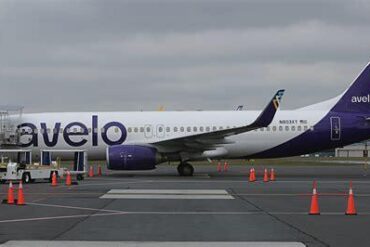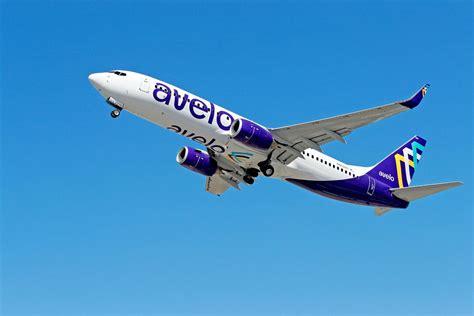
The winds of change are sweeping across Avelo Airlines, as the ultra-low-cost carrier embarks on its most significant retreat since its inception. In a bold but necessary move aimed at long-term stability, Avelo has confirmed the closure of two operational bases and the elimination of over 20 routes, triggering major realignments across its national network.
Major Base Closures Reshape Avelo’s Operational Landscape
Effective immediately, Avelo Airlines will cease operations at Raleigh–Durham International Airport (RDU) and Wilmington International Airport (ILM). This decision marks a significant pullback from the southeastern corridor, a region that had previously been key to the airline’s eastward expansion. The carrier is also withdrawing from Phoenix-Mesa Gateway Airport (AZA), driven largely by the termination of its controversial charter flights for U.S. Immigration and Customs Enforcement (ICE).
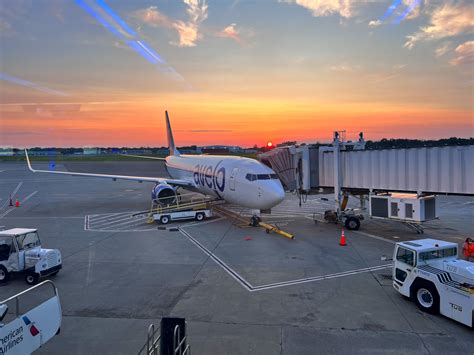
In a statement, Avelo emphasized that this move will allow it to consolidate operations around four key bases—New Haven (HVN), Wilmington, DE (ILG), Concord-Padgett, NC (USA), and Lakeland Linder, FL (LAL). Additionally, a new base at Dallas McKinney National Airport (TKI) is planned to launch in late 2026, a strategic move signaling the airline’s long-term ambitions to re-establish a robust presence in the heart of Texas.
Over 20 Routes Axed Amid Fleet and Network Restructuring
The route reductions are sweeping. Avelo will no longer serve at least nine U.S. and international airports, including:
- Cancún (CUN)
- Destin–Fort Walton Beach (VPS)
- Hartford (BDL)
- Manchester, NH (MHT)
- Montego Bay, Jamaica (MBJ)
- New Orleans (MSY)
- Punta Cana, Dominican Republic (PUJ)
- Traverse City, MI (TVC)
- Washington Dulles (IAD)
These cuts were concentrated heavily in North Carolina and Virginia, with nine routes slashed from Wilmington and five from Raleigh alone. While the exits are dramatic, Avelo is not abandoning these cities entirely. Limited service will remain: Raleigh will still be connected via New Haven and Rochester, and flights to Wilmington will continue from Nashville, New Haven, Tampa, and Baltimore/Washington (BWI).
This measured scaling back aims to enable the airline to recalibrate its service offerings, focusing on high-performance routes and improving aircraft utilization.
Avelo Ends Controversial Deportation Flights for ICE
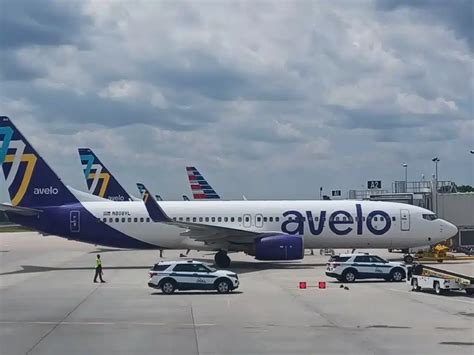
Perhaps the most politically and reputationally charged announcement is Avelo’s complete withdrawal from ICE deportation operations. After entering into deportation flight contracts as a stopgap revenue measure earlier this year, the airline quickly became the target of public backlash. The Phoenix-Mesa base, which housed three Boeing 737-800 aircraft dedicated to these charter operations, will be shuttered by January 27, formally ending Avelo’s involvement with ICE.
Spokesperson Courtney Goff addressed the move, acknowledging that while the initiative provided some financial relief, it failed to offer “consistent and predictable revenue” to justify the “operational complexity and costs” incurred.
This strategic disengagement reflects a broader commitment to simplify Avelo’s business model, realigning it with its original identity as a low-cost leisure-focused airline.
Fleet Simplification: Retirement of Boeing 737-700s
In tandem with network reductions, Avelo is embarking on a fleet streamlining program. The airline will retire six of its eight Boeing 737-700s, trimming its current fleet from 22 to 16 aircraft. This move reduces complexity and operating costs while setting the stage for the next chapter in its fleet evolution.
Avelo is betting big on the Embraer E195-E2, having placed a major order for up to 100 units of the fuel-efficient jet. The first aircraft is scheduled for delivery in mid-2027, with plans to eventually replace most of its 737s. This signals a long-term shift toward right-sized jets for underserved markets, which could unlock new growth corridors, particularly in regional and secondary cities.
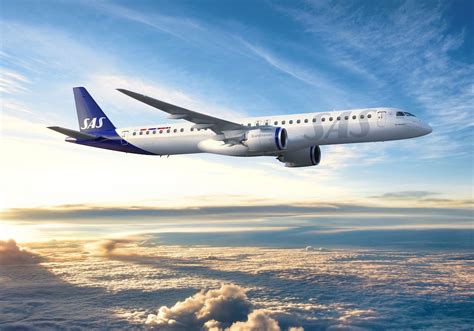
The Embraer fleet will likely support Avelo’s anticipated return to West Coast operations, a market the airline had largely exited in 2025 due to logistical and economic challenges.
Strategic Pivot Toward Core Markets and Sustainable Growth
Avelo’s overarching goal is clear: focus on five sustainable bases, optimize fleet operations, and prepare the ground for a measured resurgence in the latter half of the decade. The current restructuring is seen as an essential step toward achieving profitability and ensuring the airline’s long-term survival in a fiercely competitive ultra-low-cost carrier (ULCC) space.
In a statement, the company remarked:
“These changes enable Avelo to focus on sustainably scaling five core bases in 2026 and to prepare the company for growth in the coming years, facilitated by the company’s recent order for up to 100 Embraer 195-E2 aircraft.”
Despite the cuts, Avelo’s future is not one of retreat, but of reconfiguration. The carrier is betting that leaner operations, a modernized fleet, and a sharp focus on high-demand, underserved routes will allow it to re-emerge stronger and more agile.
A Cautionary Yet Calculated Step Forward
For an airline that burst onto the scene with ambitious goals to democratize air travel, this retreat may appear drastic. However, it is emblematic of a maturing airline willing to make difficult but strategic decisions to survive and thrive.
As Avelo trims its sails and waits for its Embraer fleet to arrive, the coming years will determine whether this repositioning was a smart recalibration or a sign of deeper turbulence. But for now, the airline appears committed to learning from its missteps, doubling down on what works, and abandoning what doesn’t—an approach many in the aviation industry will be watching closely.
In a volatile market defined by razor-thin margins and shifting traveler expectations, Avelo’s bold pivot may be the recalibration it needs to chart a more stable and sustainable future.