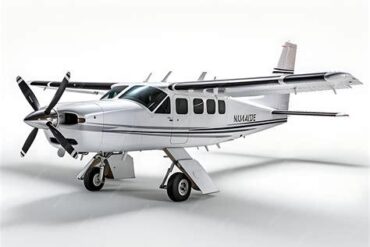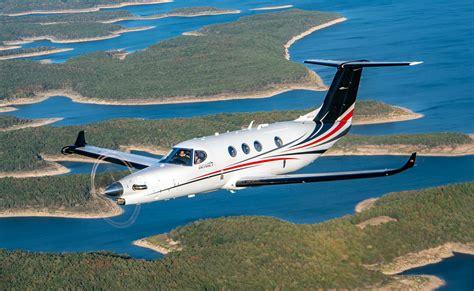
The Beechcraft Denali, developed by Textron Aviation, represents a major leap forward in the world of single-engine turboprop aircraft. Designed to disrupt a market long dominated by models such as the Pilatus PC-12, Epic E1000, and SOCATA TBM, the Denali is not a rehashed airframe from a legacy product line but a completely new aircraft built from the ground up. With its cutting-edge GE Catalyst engine, spacious flat-floor cabin, and standard Garmin Emergency Autoland, this aircraft is engineered to set a new standard in performance, safety, and passenger comfort.
A Bold Vision Born from Innovation
Textron first announced its plan for a revolutionary single-engine turboprop at EAA AirVenture Oshkosh in 2015. Initially referred to as the Textron Single Engine Turboprop (SETP), the aircraft quickly garnered attention due to its bold promise of jet-like performance, increased fuel efficiency, and superior avionics integration. The program was later formally introduced as the Cessna Denali in 2016 and subsequently rebranded under the Beechcraft banner, aligning with Textron’s streamlined aircraft branding.
Development milestones were ambitious. From ground tests of the fuel system to static and fatigue testing of airframe components, Textron invested heavily in not just innovation, but also in precision manufacturing techniques. Milestones included the first flight of the GE Catalyst engine aboard a King Air 350 testbed and the Denali’s own maiden flight on November 23, 2021, from Wichita, Kansas.
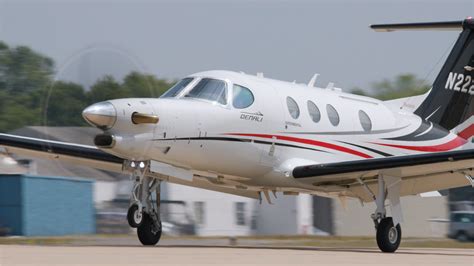
This initial flight lasted nearly three hours, reaching 15,600 feet and a speed of 180 knots, marking the successful culmination of years of advanced engineering. Two more flight test aircraft soon joined the program, and as of 2025, over 2,700 hours across 1,100 flights had been logged — a testament to the program’s rigorous approach to FAA certification.
Engineered Around the GE Catalyst
At the heart of the Denali is the General Electric Catalyst engine, a 1,300 horsepower turboprop that is reshaping expectations in this category. Unlike conventional turboprops that rely on legacy engine designs, the Catalyst is full FADEC-controlled and includes 3D-printed components, allowing for lighter weight, better fuel efficiency, and more precise performance metrics.
One of the standout benefits of this engine is its compatibility with Jet-A1 fuel and its ability to cruise at 285 knots over distances up to 1,600 nautical miles — all with a full-fuel payload capacity of 1,100 lbs. The engine’s certification in early 2025 after 8,000+ hours of testing marked a major step forward, finally paving the way for the Denali’s full certification in 2026.
Redefining Cabin Comfort and Versatility
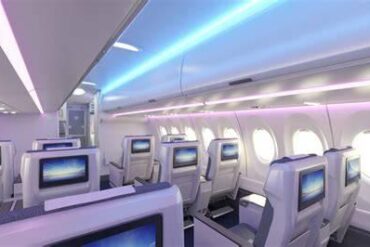
The Denali’s cabin dimensions set a new bar for luxury and flexibility in the single-engine turboprop segment. Measuring 58 inches high, 63 inches wide, and 16 feet 9 inches long, the cabin is notably wider and more spacious than that of the Pilatus PC-12, offering a truly flat-floor configuration. This translates to more headroom, elbow room, and ease of movement for passengers.
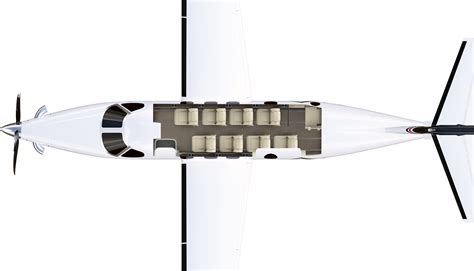
The aircraft seats 7 to 9 passengers, depending on configuration, with executive layouts featuring club seating, work tables, and ample luggage space. A key design feature is its oversized cargo door, measuring 59×53 inches, which facilitates loading of bulky items — again surpassing key rivals like the PC-12.
Cabin altitude remains comfortable even at the aircraft’s service ceiling of 31,000 feet, where internal pressure maintains an equivalent altitude of just 6,130 feet — minimizing fatigue on long hauls and enhancing passenger well-being.
Advanced Manufacturing and Safety Technologies
Textron’s commitment to precision and structural integrity is evident throughout the Denali’s design. Key structures like the wing spar and main doors are monolithically machined from solid aluminum billets, significantly reducing the need for multiple fasteners and minimizing potential points of failure.
The metal-bonded wings are more resistant to fuel leaks, and new automated drilling systems reduce labor while ensuring exact tolerances. Additionally, the chemically milled titanium firewall adds robust protection without excessive weight.
A standout safety feature is the Garmin G3000 avionics suite, which integrates Garmin’s Emergency Autoland system. This capability allows the aircraft to autonomously determine the nearest suitable airport, navigate, communicate with air traffic control, and land itself safely in the event of pilot incapacitation — an extraordinary leap in general aviation safety.
Performance and Operational Efficiency
From a pilot’s perspective, the Denali delivers intuitive control, simplified startup procedures, and intelligent automation through its G3000 glass cockpit. With an expected takeoff distance of 2,950 feet, the Denali is ideal for operations from short and unimproved runways, opening access to remote destinations.
The aircraft achieves a maximum cruise speed of 285 knots, with a range of 1,800 miles, comfortably flying four passengers with full fuel. Combined with its single-pilot certification, this performance profile enables business travelers, cargo operators, and owner-pilots alike to operate the Denali with unmatched flexibility and efficiency.
Competitive Landscape and Market Positioning
Textron’s strategy with the Denali clearly aims to undercut competitors like the Pilatus PC-12 not just in performance, but in acquisition and operating costs. While the PC-12 has long enjoyed dominance due to its reliability and utility, it relies on older powerplant technology and a narrower cabin.
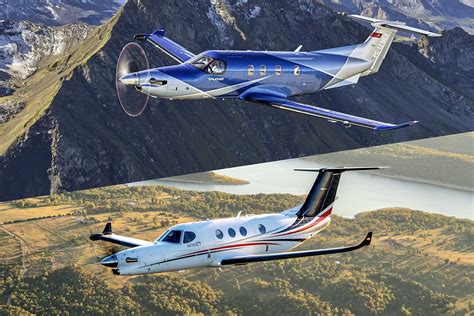
In contrast, the Denali’s base price of $6.45 million (as of 2023) is competitive given its modern avionics, enhanced automation, and luxurious cabin finishes. Its maintenance-friendly construction, bolstered by fewer fasteners and modular systems, positions it as a cost-effective long-term solution for operators seeking new-generation performance with low lifecycle costs.
The Denali also challenges smaller turboprops like the Piper M700 Fury and Epic E1000 GX by offering greater range, cabin volume, and payload. Its ability to operate from more restrictive airports gives it an edge in real-world mission capabilities across business, medical, and utility sectors.
Certification, Production, and Entry Into Service
After several postponements primarily linked to engine development delays, the FAA certification of the GE Catalyst in February 2025 marked a turning point for the Denali. With certification flights underway and production aircraft expected in 2026, Textron is entering the final phase of a program that spans a decade of design, testing, and validation.
Three dedicated prototypes and additional ground test articles will support final certification efforts. By mid-2025, the aircraft is expected to enter full-scale production, with Textron committing to timely deliveries and worldwide support through its established Beechcraft and Cessna service networks.
Conclusion: A Disruptor with Staying Power
The Beechcraft Denali is not simply an upgrade; it is a redefinition of the single-engine turboprop category. Its introduction will mark one of the most significant shifts in general aviation in recent years — not just because of its engine or avionics, but because of how comprehensively modernized the entire aircraft is.
From its monolithic components to its autonomous safety systems, the Denali exemplifies what happens when a legacy manufacturer invests in clean-sheet innovation. For operators, this translates into an aircraft that offers more comfort, range, and efficiency than any of its peers — all without compromising safety or style.
As the Denali moves toward full certification and commercial rollout in 2026, it is clear that Textron has not only built a new aircraft — it has raised the bar for what the future of personal and business aviation should be.