The moment a fighter jet is critically damaged, time collapses into fractions of a second. A pilot traveling at hundreds of miles per hour must process chaos with surgical clarity: alarms screaming, systems failing, and the violent shock of a nearby explosion. In that instant, survival hinges on a single irreversible decision—eject.
What follows is not just an emergency escape. It is a brutal transition from high-tech aerial warfare to raw human endurance in hostile territory, where every movement can determine life, capture, or death.
The Split-Second Decision to Abandon the Aircraft
A modern combat aircraft is designed to absorb damage and keep flying, but there is a threshold beyond which survival inside the cockpit becomes impossible. Missile strikes, catastrophic engine failures, or uncontrollable fires force pilots into a narrow window of action.
Ejection is not hesitation-friendly. The pilot must assess altitude, speed, aircraft attitude, and terrain—all while enduring disorientation from the blast or system failures. At speeds exceeding 500 miles per hour, even a delay of a second can mean losing the chance to escape entirely.
The psychological shock is equally intense. One moment, the pilot commands a multi-million-dollar machine; the next, they are preparing to be violently expelled into open sky. The transition is abrupt, unforgiving, and deeply disorienting.
Ejection: A Controlled Explosion of Survival
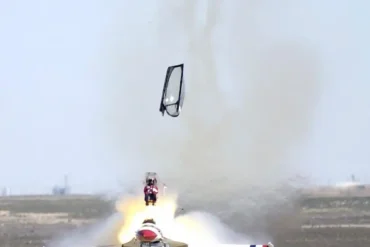
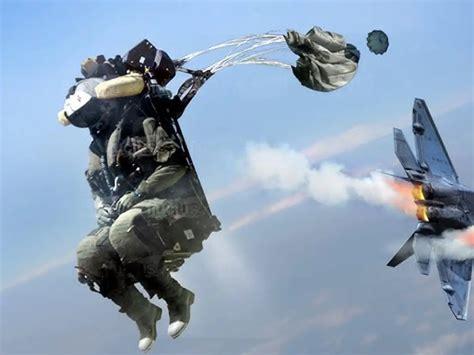
Pulling the ejection handle triggers a precisely engineered explosive sequence. The canopy either shatters or blasts away, and a rocket-powered seat launches the pilot upward with immense force. This is not a gentle exit—it is closer to being fired from a cannon.
The physical toll is immediate. Acceleration forces can exceed 12 to 20 Gs, compressing the spine and slamming the body upward. Improper posture can result in severe injuries, including fractured vertebrae or limb damage caused by violent flailing in the slipstream.
Altitude complicates everything. At high altitudes, the air is thin and oxygen scarce. To counter this, ejection seats are equipped with emergency oxygen supplies, ensuring the pilot remains conscious during descent. At lower altitudes, the margin for parachute deployment shrinks dramatically, leaving almost no room for error.
Despite international conventions discouraging attacks on descending pilots, reality in combat zones is unpredictable. Even while parachuting, the pilot remains exposed, vulnerable, and acutely aware that safety is far from guaranteed.
The Descent: Vulnerability in Open Sky
Once clear of the aircraft, the pilot separates from the seat at a calculated altitude, allowing the parachute to deploy. The sudden silence after the roar of jet engines is surreal—but it brings no comfort.
Descending slowly over hostile terrain creates a dangerous paradox: visibility. The parachute, while essential, also acts as a beacon. Enemy forces can track the descent, predict the landing zone, and mobilize quickly.
During this phase, the pilot must already begin planning. Observing terrain features—forests, rivers, roads, or urban areas—becomes critical. A dense forest may offer concealment but complicate rescue. Open ground may allow easier extraction but increases exposure.
Wind drift adds another layer of uncertainty, often carrying the pilot far from the anticipated landing point. Control is limited, and adaptability becomes essential.
Impact and Immediate Survival Priorities
Landing is not the end of danger—it is the beginning of a new phase. The pilot must quickly detach from the parachute, especially in windy conditions where it can drag them across the ground.
The first priority is brutally simple: stay alive. This means conducting a rapid self-assessment for injuries. Ejections frequently result in spinal compression, concussions, or joint damage. Even minor injuries can become critical in hostile environments without immediate medical support.
Situational awareness follows. The pilot must determine:
- Current location and terrain
- Proximity of enemy forces
- Availability of concealment
- Immediate threats such as patrols or civilians
Every second spent exposed increases risk. Movement must be deliberate, quiet, and calculated.
SERE Training: The Blueprint for Survival Behind Enemy Lines
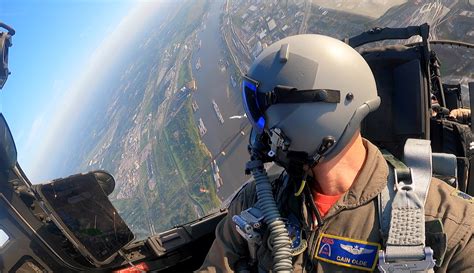
This is where SERE training—Survival, Evasion, Resistance, Escape—becomes the pilot’s lifeline. It transforms a stranded aviator into a disciplined survivor capable of navigating hostile territory.
Survival begins with fundamentals: water, shelter, and temperature regulation. Pilots carry compact survival kits containing essentials like signaling devices, water purification tools, and emergency rations. These kits are minimal by design, forcing reliance on training and improvisation.
Evasion is the art of remaining unseen. Movement is typically conducted at night, using terrain features such as dense vegetation or uneven ground to break visual detection. Even footprints, broken branches, or disturbed soil can betray position.
Communication with friendly forces is critical but dangerous. Radios and beacons can guide rescue teams—but they can also be intercepted. Pilots must balance the urgency of extraction with the risk of revealing their location.
The Hunt: Evading Capture in Hostile Territory
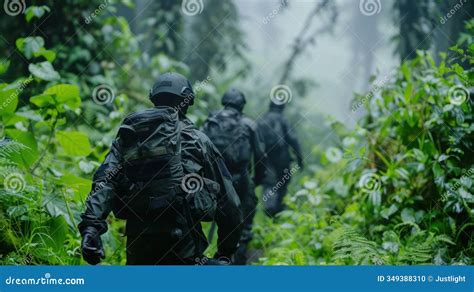
Once on the ground, the pilot is no longer just surviving—they are being hunted. Enemy forces often deploy search teams immediately after a shootdown, using visual tracking, thermal imaging, and local intelligence.
Evasion requires patience and restraint. Moving too quickly or too often increases the chance of detection. Instead, pilots are trained to blend into the environment, using camouflage and minimizing noise and movement.
If contact becomes unavoidable, the situation escalates rapidly. Pilots are equipped with sidearms, but engagement is a last resort. The objective is not combat—it is survival and eventual extraction.
Psychological resilience plays a massive role here. Isolation, fear, and exhaustion can degrade judgment. SERE training prepares pilots to manage stress, maintain discipline, and avoid panic-driven mistakes.
Resistance and the Risk of Capture
Capture remains a very real possibility. If it happens, the mission shifts again—from evasion to resistance. Pilots are trained to withstand interrogation, limit the information they provide, and adhere to codes of conduct under extreme pressure.
Mock interrogation exercises during training simulate the psychological strain of captivity, conditioning pilots to endure tactics designed to extract intelligence. The goal is not heroics—it is controlled, disciplined resistance.
Even in captivity, escape remains a consideration. Opportunities are rare and risky, but preparation ensures that if a chance arises, the pilot can act decisively.
Extraction: The Race Against Time
Rescue operations, often referred to as Combat Search and Rescue (CSAR), begin as soon as a pilot is confirmed down. These missions are among the most complex in military operations, involving helicopters, escort aircraft, and coordinated intelligence efforts.
For the pilot, survival is about buying time. Staying hidden, conserving energy, and transmitting location data when safe all increase the chances of successful extraction.
Terrain heavily influences rescue feasibility. Dense forests, mountainous regions, or urban environments can delay or complicate operations. In some cases, pilots may remain isolated for days, relying entirely on their training and resilience.
The moment of extraction is both relief and risk. Rescue helicopters are high-value targets, and enemy forces may attempt to intercept. Even then, the operation must be executed with precision and speed.
The Lasting Impact: Physical and Psychological Aftermath
Surviving ejection and evasion is not the end of the story. The physical effects—spinal injuries, compression trauma, and fatigue—can linger long after recovery. Some pilots even experience measurable changes in height due to spinal compression.
The psychological impact is equally profound. The transition from high-speed combat to isolation and survival leaves a lasting imprint. Yet, it also reinforces the effectiveness of rigorous training and the resilience required to endure such extremes.
In the end, what happens when a pilot ejects behind enemy lines is not a single event—it is a relentless sequence of challenges. From explosive escape to silent evasion, every phase demands precision, discipline, and an unyielding will to survive.