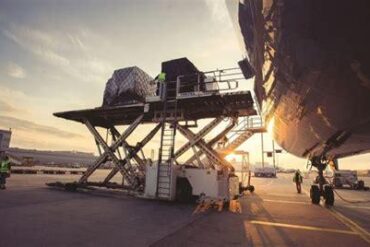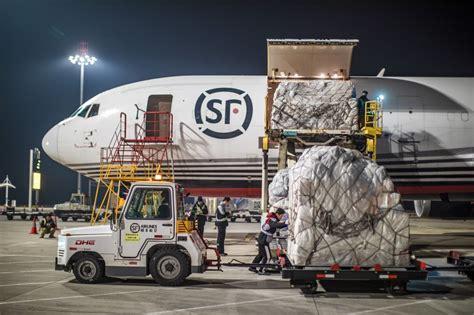
The abrupt suspension of the “de minimis” tariff exemption for low-value shipments from China to the United States has delivered a sharp jolt to transpacific air freight, cutting capacity by nearly a third and forcing major Asian carriers to recalibrate their operations. With air cargo revenues under pressure, the aftermath is reshaping logistics strategies, trade flows, and even retail distribution models.
Collapse of a Key E-Commerce Pipeline
The de minimis rule, which allowed duty-free imports into the U.S. for packages valued under $800, had long served as a powerful engine for e-commerce firms like Shein and Temu. These companies relied heavily on frequent, low-volume shipments to the U.S., exploiting the exemption to sustain rapid delivery cycles without the burden of customs duties. But after Washington revoked this provision in early May, air freight capacity between China and the U.S. plummeted by 30% compared to the average of the previous month.
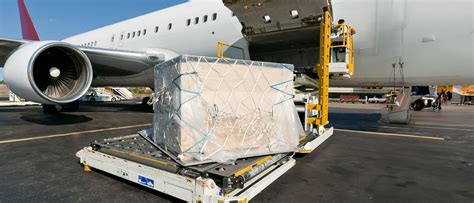
This reversal is particularly stark given the consistent upward trajectory in previous months. According to data from Rotate, between May 2 and May 13, the volume of U.S.-bound air cargo from China and Hong Kong nosedived 26% year-on-year. South Korea, another regional logistics hub that benefitted from China’s e-commerce boom, also saw a 22% drop in capacity to the U.S. during this period.
Economic Fallout for Asian Airlines
Major carriers in Asia are now facing significant revenue challenges. For Cathay Pacific and Korean Air, air cargo constitutes around 25% of total revenues, a crucial buffer especially in a post-pandemic environment where passenger traffic remains volatile.
During the pandemic, cargo became a financial lifeline as international travel was all but suspended. Airlines invested heavily in freighters and route development to service growing demand. For example, Cathay, operating out of Hong Kong International Airport—the world’s busiest air cargo hub—ramped up its fleet to accommodate soaring volumes.
But the sudden decline in demand has left these investments vulnerable. Cargo yields and revenues, which had previously outperformed passenger segments, are now stagnating or reversing. China Southern Airlines experienced a 30% drop in freight capacity to the U.S., while Atlas Air, the largest transpacific cargo carrier, reported a 28% year-on-year capacity cut.
Strategic Realignments and Rerouting
With core trade lanes disrupted, Asian airlines are hastily redeploying aircraft to alternative routes. Airlines such as Cathay and Singapore Airlines are seeking to diversify cargo corridors, including new destinations in Latin America and intra-Asia.
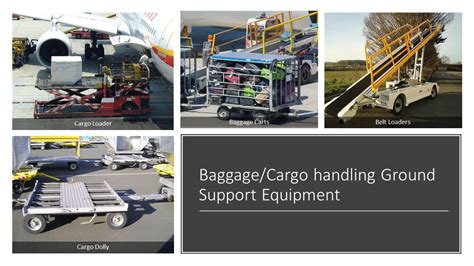
According to Marco Bloemen, Managing Director at Aevean, about 70 freighters have paused operations on Transpacific routes, with several being rerouted to Mexico, Brazil, and other non-U.S. destinations. Dimerco, a logistics firm focused on Asia-Pacific, confirmed widespread cancellations of scheduled freighter services between China and the U.S.
While some redeployment has been opportunistic, driven by demand pockets elsewhere, others reflect a more permanent strategic shift. Fast fashion giant Shein, for instance, is reportedly leasing a massive warehouse in Vietnam, signaling a push to decentralize its distribution and reduce overreliance on direct China-U.S. lanes.
Long-Term Impacts on E-Commerce Logistics
The growth of e-commerce has been astonishing. In 2023, low-value shipments accounted for 1.2 million tonnes of goods from China to the U.S. by air—55% of total volume, up from just 5% in 2018. This transformation made air freight the logistics backbone of cross-border fast fashion, electronics, and small consumer goods.
But now, without the de minimis exemption, this model becomes less economically viable. Retailers are increasingly looking at sea freight consolidation and regional warehousing in Southeast Asia to mitigate tariff costs. This represents a paradigm shift: instead of just-in-time fulfillment via air, companies may opt for bulk ocean shipping, followed by domestic distribution.

Furthermore, the e-commerce giants’ logistics recalibration is reshaping regional trade. Southeast Asian countries—especially Vietnam, Thailand, and Malaysia—could emerge as winners if they are able to support bulk distribution infrastructure and maintain trade-friendly policies.
Temporary Relief or Ongoing Volatility?
While the U.S. and China reached a temporary trade détente on May 13, easing reciprocal tariffs, it failed to reinstate the de minimis privilege. As a result, cargo volume recovery has been limited, with most industry experts predicting only a partial and slow rebound.
Cathay warned last month of a projected decline in air cargo demand from mainland China to the U.S., aligning with the tariff increase timeline. Korean Air echoed these concerns, forecasting increased volatility in freight demand.
In this volatile environment, trade analysts argue that ongoing uncertainty will persist. Goh Choon Phong, CEO of Singapore Airlines, highlighted that while the tariff situation is not as severe as the pandemic-induced disruptions, it introduces unpredictable challenges that will continue to affect network planning and profitability.
Wider Economic Ramifications
This disruption extends far beyond aviation. It’s now evident that the suspension of de minimis benefits is not merely a customs issue—it is reverberating through supply chains, altering procurement decisions, and even influencing where businesses set up operations.
Retailers reliant on rapid fulfillment are having to make tough decisions: ship slower and cheaper or incur higher costs through duties and air freight. Some may pivot to U.S.-based warehousing, while others lean more heavily into markets that offer more favorable trade terms.
The implications for Chinese exporters are equally significant. The loss of seamless access to American consumers via air cargo means increased friction in one of their most lucrative export channels. This friction could spur greater regional diversification, with China-based firms accelerating moves to countries like Vietnam or India for manufacturing and final assembly.
Conclusion: Navigating a New Normal in Global Air Cargo
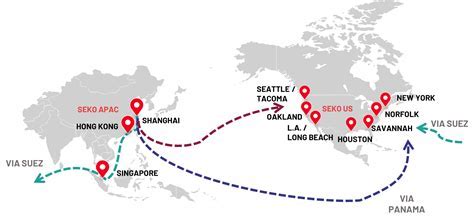
As we move deeper into 2025, it’s clear that the transpacific air freight ecosystem is undergoing a structural transformation. The era of low-cost, high-frequency air shipments from China to the United States appears to be drawing to a close. In its place, we see the emergence of a multi-nodal logistics landscape, where air, sea, and warehousing strategies must be balanced with geopolitical risk.
For airlines, logistics firms, and e-commerce giants alike, the path forward will require agility, innovation, and an acute awareness of shifting trade policies. The post-de minimis world is not one of collapse, but of recalibration—and those who adapt quickest will likely define the new frontier of global commerce.