In the evolving landscape of aerospace defense technology, China is making strategic strides toward the development of ejectable cockpits for high-supersonic aircraft. This emerging focus—backed by research papers, visual test data, and activity at key radar cross-section (RCS) facilities—signals a potentially disruptive advance in pilot survivability systems and future aircraft design. The implications of this initiative stretch far beyond national interest, challenging the longstanding dominance of Martin-Baker, the UK-based leader in ejection seat technology.
The Rise of Modular Escape Systems in China
China’s aerospace ambitions have historically been ambitious but shrouded in secrecy. However, the recent surfacing of a research paper discussing modular escape systems—cockpits designed to detach entirely during flight—along with sightings of unidentified flying wing aircraft at the Gaobeidian RCS range, offers unprecedented insight into a radical safety solution for hypersonic missions.
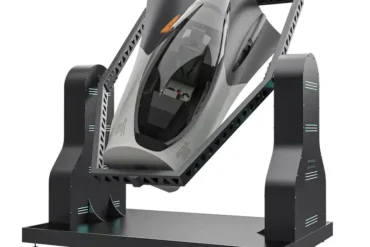
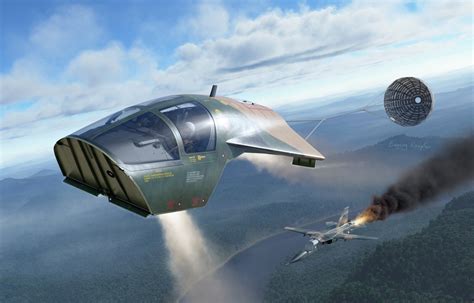
The Chinese ejectable cockpit concept diverges from conventional ejection seats by incorporating the entire crew module. As detailed in the 2020 research paper, this ejection module is carefully modeled to account for variables such as center of gravity, trajectory, aerodynamic loads, and environmental survivability. Its aim is clear: ensuring safe escape at speeds potentially exceeding Mach 6 or 7—a condition where standard ejection seats might result in catastrophic injury or death.
Reimagining Crew Survival at Hypersonic Velocities
Modern aircraft are being designed for hypersonic deployment, and that raises critical questions about pilot and crew safety. Traditional ejection seats, no matter how sophisticated, are fundamentally challenged at such speeds. The aerodynamic stress, thermal buildup, and body exposure to low-pressure environments are beyond the limits of even the most advanced individual ejection systems.
This is where China’s capsule ejection design finds its relevance. Echoing the F-111 Aardvark’s escape capsule and the Rockwell B-1A Lancer prototypes, China’s system encapsulates the crew within a pressurized and aerodynamically stable pod. This not only shields occupants during high-velocity escape but also serves as a survival module post-landing, enhancing rescue operations in remote or hostile territories.
Revisiting the History of Capsule Ejection
Though novel in current headlines, ejectable cockpit technology is not without precedent. The General Dynamics F-111 pioneered this concept in operational aircraft, followed by experimental integrations in the Convair B-58 Hustler, North American XB-70 Valkyrie, and early MiG-21 variants. These programs, however, were eventually phased out due to limitations in weight, cost, and complexity.
The major drawback of such systems lies in the mass and power requirements. Ejecting an entire capsule demands more thrust, advanced sequencing, and robust parachute systems. Moreover, failure risk is heightened due to added complexity in launch and stabilization mechanisms. Yet, with China’s significant advancement in composite materials, miniaturized actuators, and AI-guided avionics, many of these legacy drawbacks are potentially being mitigated.
Emerging Evidence: Gaobeidian Radar Facility Tests
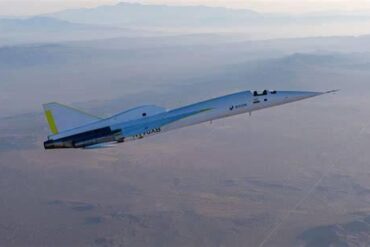
In October 2023, a dart-shaped aircraft, unlike any conventional model, was spotted at the Gaobeidian radar cross-section site. Its design—a compound delta wing extending past twin exhausts—closely resembled early illustrations of the U.S. Next Generation Air Dominance (NGAD) program. Analysts believe this could be an unmanned or optionally manned test platform for aerodynamic and ejection validation.
Another cranked-kite wing aircraft, seen in August 2024 at the same facility, possibly complements these tests. Together, they signal active prototyping, likely linked to the conceptual work laid out in 2020. While not much is known about internal components or onboard systems, the frequency and location of these sightings near Lop Nur’s secretive military base heighten their significance.
Martin-Baker: The Incumbent Leader
Any discussion of ejection technology is incomplete without mention of Martin-Baker, the UK aerospace firm that has defined safety standards for over seven decades. With over 70,000 ejection seats delivered and a record of 7,802 lives saved as of November 2025, Martin-Baker’s legacy is unmatched.
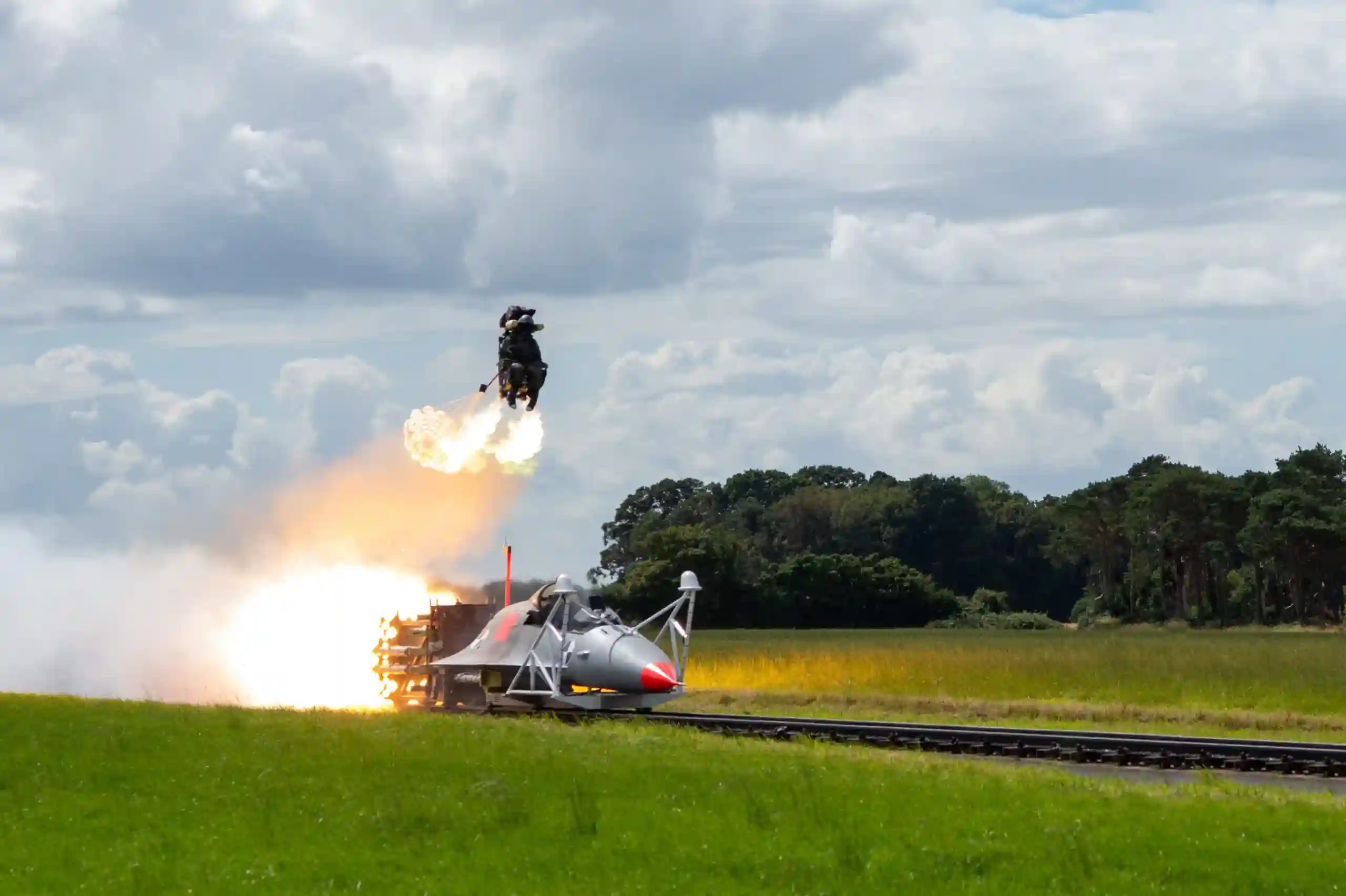
The company’s ejection systems are used in 93 air forces, and their products span from fighter jets to trainer aircraft. Their systems boast “zero-zero” capability (ejection at zero altitude and airspeed), multi-stage rocket propulsion, and integration with survival kits. However, they are largely designed for single-pilot or tandem-seat ejection, not for high Mach, high-altitude crew modules.
The Competitive Landscape: Can China Lead?
While Martin-Baker remains the global standard, China’s focus on capsule ejection for hypersonic applications positions it uniquely in a niche few have ventured into. The market landscape, currently dominated by firms like Collins Aerospace (USA), NPP Zvezda (Russia), RUAG (Switzerland), and Safran SA (France), may soon witness a paradigm shift.
China’s AVIC (Aviation Industry Corporation of China)—despite limited public details—appears to be spearheading ejection seat development. The GJ-11 UCAV and CH-7 stealth drones, both flying-wing designs, might serve as technology testbeds for future ejection innovations. Moreover, the under-development H-20 stealth bomber, expected to match the B-21 Raider, is also a flying wing and may integrate this capsule-based safety system.
The Physics and Engineering of Capsule Ejection
Designing a successful ejectable cockpit system involves more than physical detachment. The aerodynamic profiling, structural load distribution, and trajectory prediction models must align seamlessly. The capsule must not only resist shockwaves and vibration during separation but also transition smoothly into descent mode with parachutes and landing protection.
China’s research, filled with equation-rich simulations, shows focus on solving these issues, particularly around shock mitigation and landing dynamics. Concepts from space capsule design, such as re-entry vehicle orientation control and inflation-based landing dampers, are being studied for integration.
Future of Civil Aviation and Space Control
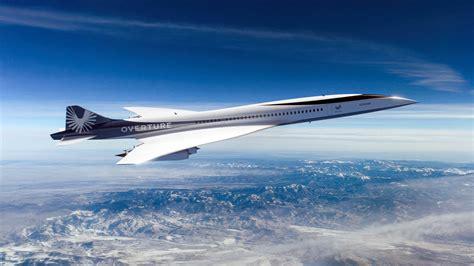
The implications of capsule ejection technology go far beyond military use. Civilian applications, particularly for hypersonic passenger aircraft, are increasingly relevant. As nations work to develop platforms capable of London-to-Sydney flights in under two hours, the need for emergency escape mechanisms becomes not only desirable but potentially regulatory.
A full passenger module detachment system, though technically daunting, is theoretically viable. Parachute-assisted descent combined with inflatable landing buffers could safeguard dozens—if not hundreds—of lives. Moreover, the emerging concept of “space planes” for suborbital travel would benefit greatly from this safety architecture.
India’s Quest for Ejection Seat Autonomy
India, another major aerospace player, currently depends on Martin-Baker for most of its ejection seat requirements. While Hindustan Aeronautics Limited (HAL) has capabilities for overhauls and limited production, indigenous design efforts are still in their infancy.
To bridge the gap, a Joint Venture (JV) model may prove fruitful. Indian firms have decades of experience in maintenance and refurbishment but need strategic investment and technology transfer to achieve parity. Meanwhile, initiatives from the Ministry of Civil Aviation (MoCA) and Ministry of Defence (MoD) toward a positive indigenisation list (PIL) will play a crucial role.
Conclusion: The Race for Hypersonic Safety Supremacy
As nations sprint toward hypersonic readiness, the ability to ensure pilot survivability at extreme speeds will be a decisive factor. China’s pursuit of ejectable cockpits—though still in its experimental phase—demonstrates vision, technical depth, and a willingness to challenge aerospace orthodoxy.
While the global benchmark still belongs to Martin-Baker, and rightly so, China’s ambition to redefine aircrew escape mechanisms could lead to a technological tipping point. Should these developments mature into operational systems, Beijing may not only safeguard its pilots but also claim leadership in a new era of aerospace survivability engineering.
The implications are vast—from future stealth bombers and hypersonic fighters, to space planes and rapid civilian airliners. The next decade will reveal whether capsule-based safety systems will become standard—or remain another chapter in aviation’s long journey of innovation.